
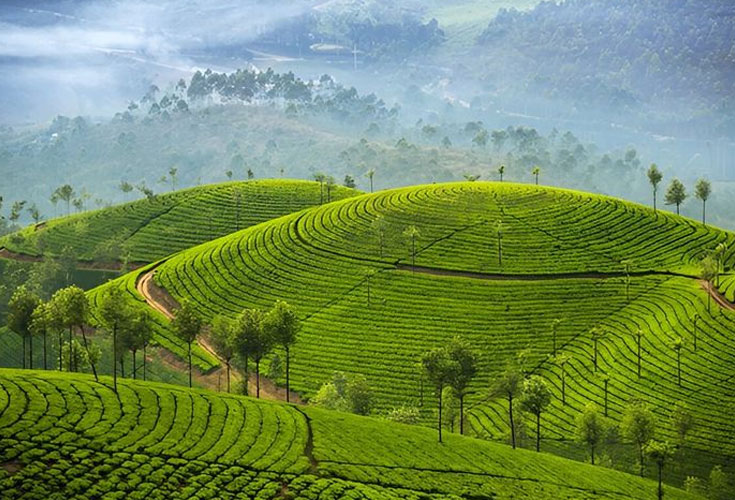
Two remarkably different regions of India come together in this 14-day route linking the historic cities of the north with the tropical landscapes of Kerala. The Golden Triangle with Kerala Tour begins among Delhi’s layered monuments, moves through the Mughal legacy of Agra and the royal architecture of Jaipur, then travels south to a world of spice-scented streets, tea-covered hills, quiet lakes and Kerala’s famous backwaters.
Arrive at Delhi International Airport, where a local representative will meet you after immigration, baggage collection and customs. Continue by private vehicle to the hotel and complete check-in. India’s capital makes an appropriate beginning for a journey spanning the north and south because its streets contain visible evidence of several different historical periods. Medieval ruins, Mughal monuments, colonial avenues and contemporary districts sit within the same enormous metropolitan area.
The arrival day is deliberately kept clear of scheduled monument visits. Long-haul flights frequently reach Delhi early in the morning, late at night or after several hours of connecting travel, so immediate sightseeing can make the first day unnecessarily tiring. Once settled into the hotel, use the time to rest, enjoy the facilities or take a short orientation drive if your arrival hour and energy level make this appealing.
Your representative can assist with practical arrangements and confirm the following day’s programme. Dinner remains flexible, allowing you to eat at the hotel or select a nearby restaurant without committing to a fixed evening schedule. The first night provides time to adjust before a full day that will move between the intimate lanes of Old Delhi and the broad ceremonial avenues of the modern capital.
Overnight: Delhi
Begin in the former Mughal city of Shahjahanabad, today better known as Old Delhi. Visit Jama Masjid before entering the dense commercial streets around Chandni Chowk. The neighbourhood remains organised around long-established trades, with lanes devoted to spices, fabrics, jewellery, food and household goods. Religious buildings belonging to different communities appear amid the markets, reflecting the complex social history of an area that has functioned as a commercial centre for centuries.
A cycle-rickshaw ride through selected lanes can be included before continuing towards Raj Ghat, the memorial associated with Mahatma Gandhi. From here, travel into New Delhi and watch the urban landscape change. The compact streets of the old city give way to broad roads, landscaped circles and monumental government architecture. Pass India Gate and the administrative district while your guide explains the planning of the twentieth-century capital and its later role in independent India.
Spend the afternoon at Humayun’s Tomb, whose garden layout and architectural proportions played an important role in the development of later Mughal funerary architecture. If time permits, Qutub Minar or another significant Delhi monument can be incorporated according to the final programme. Return to the hotel in the evening after a day that establishes the historical background for the Mughal sites awaiting you in Agra.
Overnight: Delhi
Leave Delhi after breakfast in your private air-conditioned vehicle and travel south towards Agra. Modern road connections make this one of the more comfortable overland sectors of the Golden Triangle, while the route also offers glimpses of the flat agricultural plains surrounding the capital region. Stops can be taken according to your comfort, giving the journey a more flexible rhythm than travelling with a fixed departure group.
On reaching Agra, check into the hotel before visiting Agra Fort. Its massive walls enclose an extensive complex created and altered by successive Mughal emperors. Walk through formal audience areas, palace courtyards and private royal chambers while learning how Agra functioned as an imperial centre. Red sandstone architecture associated with Akbar gradually gives way to the more delicate marble work favoured during later periods.
Several points within the fort offer views towards the Taj Mahal across the Yamuna River, connecting the political history of the Mughal court with the monument that defines Agra today. If daylight and timing permit, continue to a river viewpoint for another perspective of the Taj before sunset. Return to the hotel afterwards and keep the evening free, reserving the main Taj Mahal visit for the following morning.
Overnight: Agra
Rise early for the Taj Mahal, when the marble surfaces often appear at their most subtle in the softer morning light. Enter through the main gateway and walk through the formal garden towards the mausoleum commissioned by Emperor Shah Jahan for Mumtaz Mahal. The monument’s fame rests not only on its romantic association but also on the extraordinary control of symmetry, scale, stonework and landscape evident throughout the entire complex.
Move closer to examine calligraphic inscriptions, carved floral decoration and pietra dura inlay created from coloured stones fitted into white marble. Your guide will explain the architecture and historical background while allowing time to appreciate the monument independently. The mosque, guest pavilion, gardens and riverfront platform are all part of the design and help reveal why the Taj Mahal became one of the defining achievements of Mughal architecture.
After the visit and breakfast, leave Agra for Jaipur. Stop at Fatehpur Sikri, Emperor Akbar’s former capital, to walk through its courtyards, royal buildings and audience halls. Continue into Rajasthan and reach Jaipur later in the day. Check into the hotel and spend the evening at leisure after a day that has connected two of the Mughal period’s most important architectural sites with the road into Rajput territory.
Overnight: Jaipur
Set out for Amber Fort after breakfast, leaving central Jaipur for the rugged hills that surround the former Kachwaha capital. The fort rises above Maota Lake and is approached through a series of defensive gateways. Inside, the atmosphere changes as military architecture gives way to ceremonial courtyards, audience halls and private palace rooms. The combination illustrates how a royal residence could function simultaneously as a fortified stronghold and an elaborate court.
Spend time in the decorated palace sections, where mirrored surfaces, painted details, carved screens and carefully designed openings demonstrate the sophistication of Rajasthan’s courtly architecture. From higher terraces, look across the Aravalli landscape and the fortification walls extending along the ridges. Your guide will also explain the historical relationship between Jaipur’s rulers and the Mughal emperors, an important connection after the previous days in Agra.
Return to the old city and see Hawa Mahal before visiting the City Palace and Jantar Mantar. The palace’s collections and ceremonial courtyards provide a closer view of Jaipur’s royal heritage, while the enormous astronomical instruments at Jantar Mantar demonstrate Maharaja Sawai Jai Singh II’s scientific interests. End the sightseeing with optional time in the markets before returning to your hotel.
Overnight: Jaipur
After breakfast, transfer to Jaipur Airport for the flight south towards Kochi, using the most practical available connection for the confirmed travel date. This flight marks the major geographical transition of the itinerary. Within the same day, the dry landscape and fortified architecture of Rajasthan are replaced by Kerala’s humid tropical climate, coconut palms, waterways and coastal vegetation.
On arrival at Kochi Airport, meet your local representative and continue privately to the hotel. Kochi’s history differs considerably from the imperial capitals visited in North India. Its development was closely linked to the spice trade and maritime networks connecting the Malabar Coast with merchants and travellers from the Middle East, Asia and Europe. Portuguese, Dutch and British influence later added further layers to an already diverse trading port.
No demanding sightseeing is scheduled after the flight. Once checked in, use the remaining time to relax or take a gentle walk if the hotel is conveniently located near the historic quarters. Dinner provides the first opportunity to encounter Kerala’s regional cooking, where coconut, rice, seafood and locally grown spices feature prominently. Rest overnight before beginning the detailed exploration of Kochi the following morning.
Overnight: Kochi
Begin in Fort Kochi, whose streets preserve traces of the different communities and foreign powers that shaped this old port. Walk through areas of colonial-era architecture and continue towards the waterfront, where the distinctive Chinese fishing nets have become closely associated with Kochi’s coastal identity. Their presence reflects the city’s long engagement with maritime trade routes that extended far beyond southern India.
Continue towards Mattancherry, an area historically connected with spice trading and several of Kochi’s established communities. Visit the Mattancherry Palace where open, with its notable mural paintings and displays connected with Kerala’s former rulers. Continue through the streets around Jew Town and the historic synagogue area, subject to opening schedules and religious holidays. Antique shops, spice businesses and old commercial buildings give the neighbourhood a character very different from the formal royal architecture of Jaipur.
The afternoon can include time for local galleries, cafés, waterfront streets or a traditional cultural performance where arranged. Kochi is best appreciated without racing between monuments, so some walking time is intentionally built into the day. Return to the hotel in the evening after gaining an introduction to Kerala through the history of a port where local traditions and international influences have interacted for centuries.
Overnight: Kochi
Leave the coast after breakfast and drive inland towards Munnar. The route gradually climbs into the Western Ghats, replacing Kochi’s flat tropical landscape with forested slopes, plantations and winding mountain roads. Waterfalls and small settlements appear along the route, while rubber, spice and other cultivated areas demonstrate how dramatically Kerala’s agricultural landscape can change over a relatively short distance.
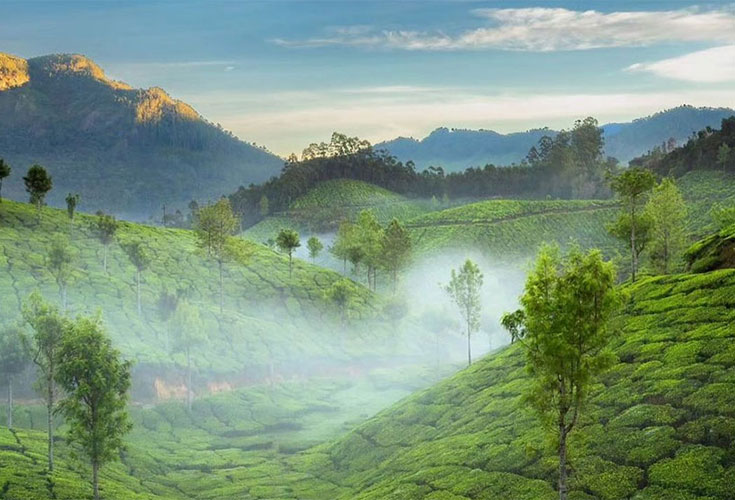
As the elevation increases, extensive tea plantations begin to cover the hillsides. Munnar developed as an important tea-growing district during the colonial period, and the carefully planted slopes now form one of Kerala’s most distinctive landscapes. Stops can be made at suitable viewpoints during the journey, subject to weather and road conditions. Travelling privately allows these pauses to remain flexible rather than being restricted to predetermined coach stops.
Arrive in Munnar and check into your hotel or plantation-style property. The remainder of the day is intentionally unhurried after the mountain drive. Take in the cooler climate, walk around the property or simply enjoy views across the surrounding hills. The next day will look more closely at Munnar’s tea heritage and highland environment, so no lengthy sightseeing programme is required on arrival.
Overnight: Munnar
Wake to the cooler air of the Western Ghats and begin the day among Munnar’s rolling tea estates. Vast sections of the hills have been shaped into carefully maintained plantations, creating a landscape of green terraces that follows the natural contours of the mountains. Drive through the principal tea-growing areas with stops at suitable viewpoints, allowing time to understand how altitude, rainfall and temperature have made this part of Kerala particularly well suited to tea cultivation.
Visit a tea museum, factory or plantation facility according to the operating schedule available on the day. The visit provides an introduction to the journey from freshly picked leaves to the finished tea, including withering, rolling, oxidation, drying and grading where demonstrated. Munnar’s tea industry has played an important role in the region’s economic history, and seeing the production process adds useful context to landscapes that might otherwise be appreciated only for their appearance.
Continue through selected highland areas around Munnar, with the exact route adjusted for weather, road conditions and seasonal access. There may be opportunities to stop beside reservoirs, mountain viewpoints or areas of natural vegetation between the plantations. Return to the hotel later in the afternoon and keep the evening free. A second night in Munnar allows the hill country to be appreciated properly instead of treating it as a single-night photographic stop between Kochi and the backwaters.
Overnight: Munnar
Leave Munnar after breakfast and begin the descent from the Western Ghats towards Kerala’s lowlands. The road passes through changing agricultural zones as tea-covered hills gradually give way to spice-growing areas, rubber plantations, villages and increasingly tropical vegetation. The journey itself demonstrates the geographical variety compressed within Kerala, moving from cool mountain country towards one of India’s largest lake systems within a single travel day.
Continue towards Kumarakom, a waterside settlement on the banks of Vembanad Lake. On arrival, check into your resort and take time to settle into the markedly different surroundings. Coconut palms, narrow waterways and broad stretches of water replace the steep plantation slopes of Munnar. Many properties in this area are designed around the lake and gardens, making Kumarakom particularly suitable for a quieter stage in a longer India itinerary.
The remainder of the afternoon is intentionally light. Walk through the resort grounds, sit beside the lake or arrange a spa or Ayurvedic treatment independently if desired. As evening approaches, the waterways become quieter and the changing light across Vembanad Lake provides a peaceful conclusion to the day. No formal monument sightseeing is necessary; Kumarakom’s appeal lies primarily in its landscape, birdlife, water and slower local rhythm.
Overnight: Kumarakom
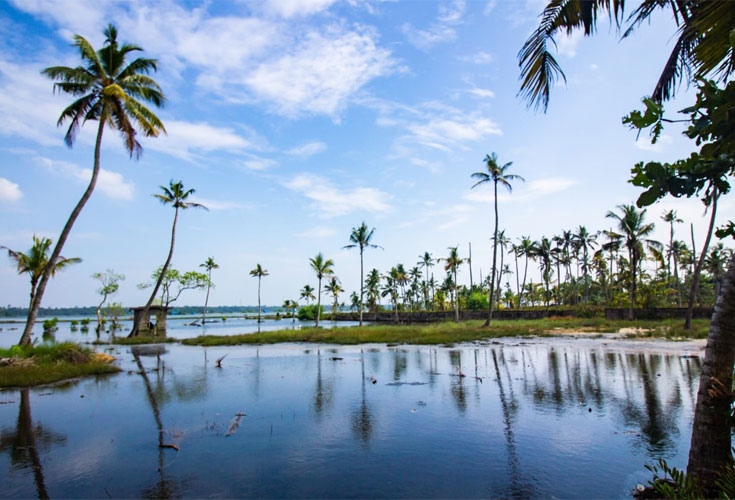
Begin the morning without an early road departure. Kumarakom offers the opportunity to understand Kerala’s backwater region at a more intimate scale before boarding a houseboat later in the journey. Depending on the selected resort and season, the morning can include a guided village visit, a short canoe journey or a walk through nearby areas where canals, homes, small farms and coconut groves are closely connected with the water.
The backwaters function as much more than a scenic setting. For local communities, canals and lakes have historically provided transport routes, fishing grounds and access between settlements. During a carefully arranged local excursion, observe boats carrying residents and goods, narrow strips of cultivated land beside waterways and the everyday activities of villages built around this unusual geography. The experience provides useful context before the longer cruise through the Alleppey region.
Return to the resort for a leisurely afternoon. Guests interested in birdlife may choose an optional visit to the Kumarakom Bird Sanctuary or another suitable nature activity depending on seasonal conditions. Others may prefer to remain beside the lake, use the resort facilities or book a wellness treatment. The second night at Kumarakom preserves the relaxed character of this section rather than filling the Kerala itinerary with daily hotel changes.
Overnight: Kumarakom
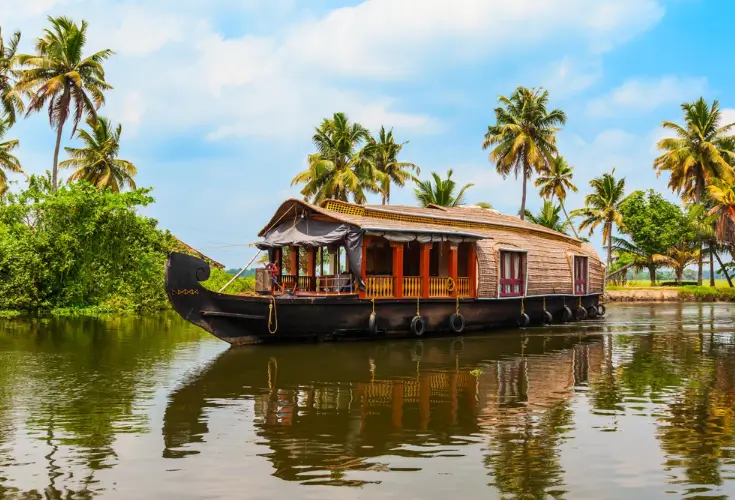
After breakfast, check out and travel the short distance towards the embarkation point for your Kerala houseboat journey. Board a privately arranged traditional-style houseboat, subject to the category selected in the final programme, and settle into your cabin before the vessel begins moving through the waterways. These boats evolved from the kettuvallams once used for transporting rice and other goods through Kerala’s extensive network of canals and lakes.
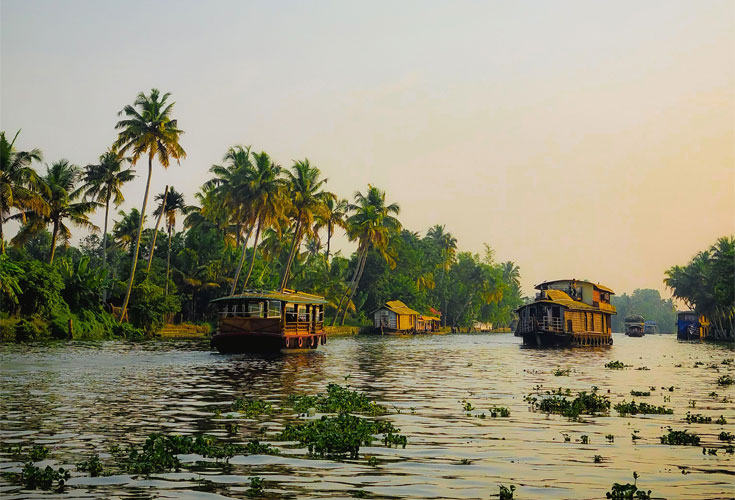
As the cruise proceeds towards the Alleppey backwaters, watch the landscape unfold at water level. Coconut palms lean over narrow canals, houses stand close to the banks, small boats connect villages and cultivated fields stretch behind embankments. Unlike sightseeing from a road vehicle, the houseboat moves slowly enough to observe everyday activity along the water. Lunch is normally prepared and served on board according to the selected houseboat meal plan, with regional dishes forming an important part of the experience.
Continue cruising through wider lakes and smaller waterways during the afternoon before the houseboat anchors at the designated location for the night, in accordance with local navigation regulations. Spend the evening on board as activity along the canals gradually quietens. Dinner is served by the houseboat crew, followed by an overnight stay surrounded by one of Kerala’s most distinctive landscapes.
Overnight: Private Houseboat / Alleppey Backwaters
Wake aboard the houseboat and watch morning life begin along the waterways. Local boats start moving between settlements, fishermen work near the banks and villages become active while breakfast is prepared on board. The final stretch of the cruise provides another opportunity to appreciate the backwaters before disembarking after breakfast at the scheduled point near Alleppey.
Meet your private chauffeur and drive north towards Kochi. The road journey returns you to the coastal city where the Kerala section began, completing a circuit through port heritage, mountain plantations, Vembanad Lake and the backwaters. On arrival, check into your hotel and keep the remainder of the afternoon flexible. This final night in Kochi is useful for international flight connections and avoids relying on a lengthy same-day transfer from the houseboat to the airport.
Use the final evening according to personal preference. Return to Fort Kochi for a waterfront walk, browse selected shops for spices or local crafts, or enjoy a farewell dinner featuring Kerala cuisine. Travellers who have already spent sufficient time sightseeing may simply relax at the hotel. The programme deliberately avoids introducing another full excursion at the end of a journey that has already covered two very different regions of India.
Overnight: Kochi
Breakfast and check-out arrangements will be coordinated with your onward flight. Travellers departing later in the day can enjoy a relaxed morning at the hotel, while early departures will be transferred directly to the airport at the appropriate time. Late check-out can be requested when necessary, subject to hotel availability and additional charges.
Meet your chauffeur for the private transfer to Kochi International Airport. Sufficient travel time will be allowed according to local traffic conditions and airline reporting requirements. Depending on your international ticket, you may depart India directly from Kochi or connect through another Indian or international aviation hub. Any additional flight or hotel arrangements can be incorporated when the final travel schedule is confirmed.
Your 14 Days Golden Triangle with Kerala Tour concludes after travelling from North India’s imperial cities to the tropical south. Delhi, Agra and Jaipur provided Mughal and Rajput history; Kochi introduced the maritime culture of the Malabar Coast; Munnar brought the highland tea country; and Kumarakom and Alleppey revealed the waterways of Kerala. The route gives first-time visitors two distinct sides of India without turning the holiday into a succession of rushed one-night stops.
What the price includes
What it does not
Starting from
On request
per person · twin share
Get In Touch
No planning fee, no obligation. A curator replies within two hours - or call +91 97990 02277.
 13 Nights / 14 Days
Route Delhi - Varanasi - Agra - Ranthambore - Jaipur - Delhi
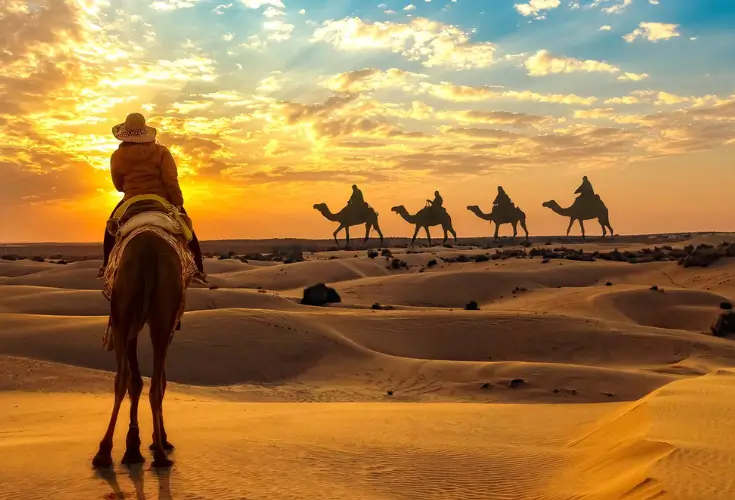 12 Nights / 13 Days
Route Delhi - Agra - Jaipur - Jodhpur - Jaisalmer - Delhi
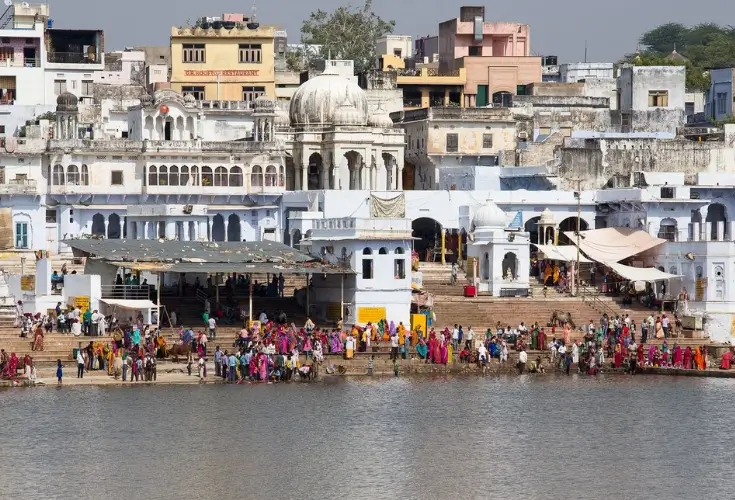 8 Nights / 9 Days
Route Delhi - Agra - Jaipur - Pushkar - Delhi
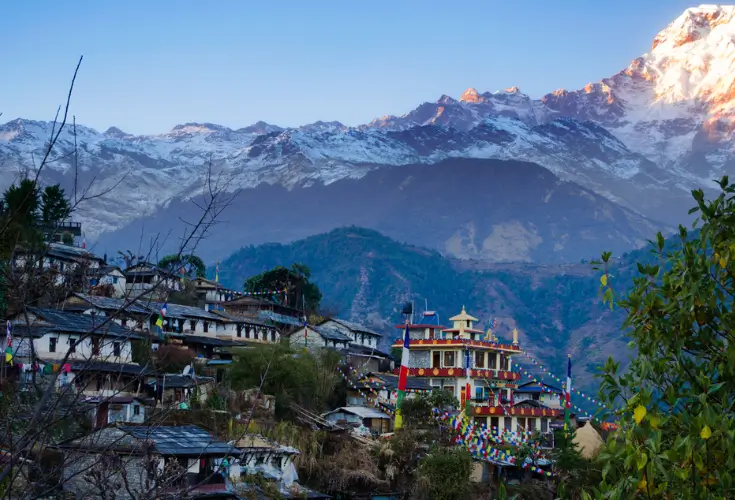 11 Nights / 12 Days
Route Delhi - Agra - Jaipur - Kathmandu - Pokhara
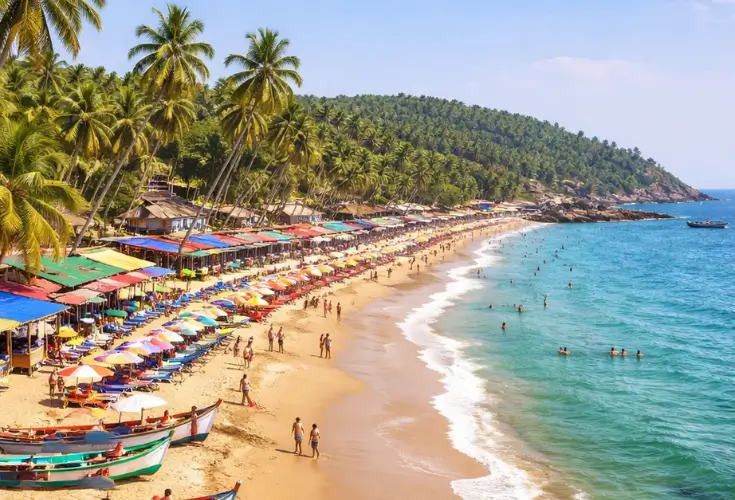 11 Nights / 12 Days
Route Delhi - Agra - Jaipur - Goa
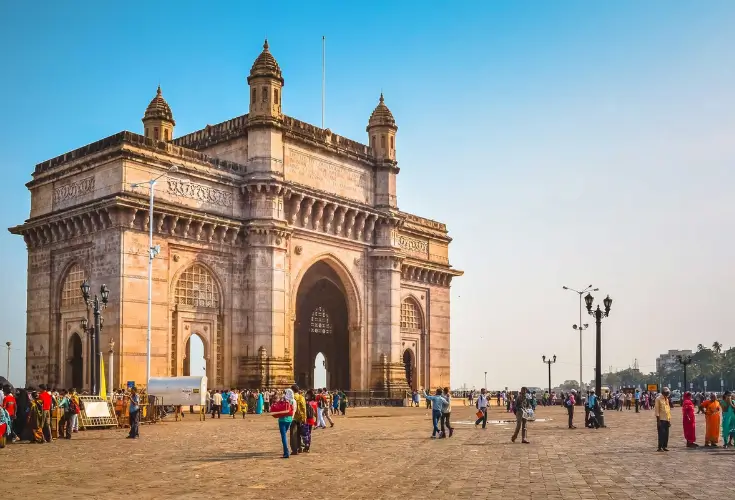 9 Nights / 10 Days
Route Delhi - Agra - Jaipur - Mumbai
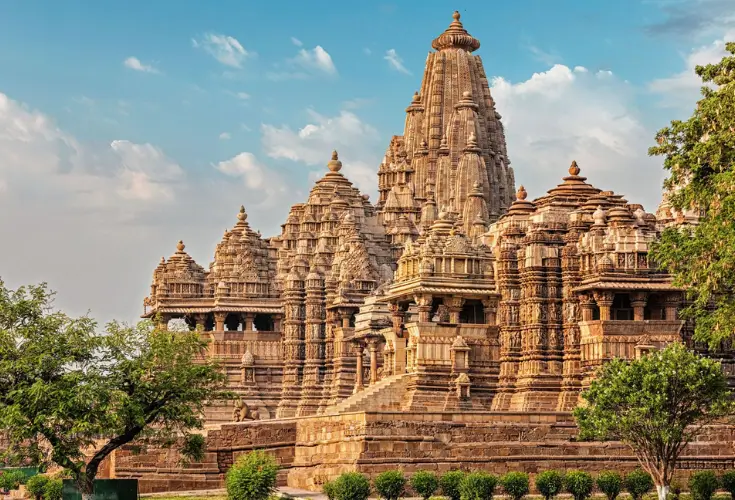 10 Nights / 11 Days
Route Delhi - Jaipur - Agra - Orchha - Khajuraho - Delhi
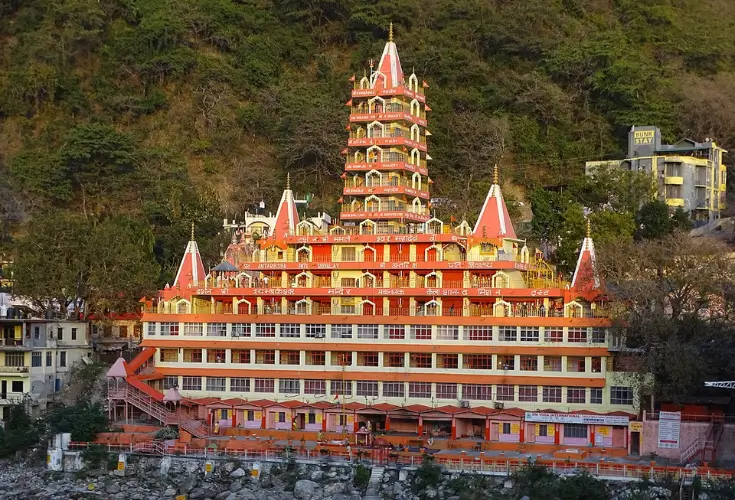 10 Nights / 11 Days
Route Delhi - Haridwar - Rishikesh - Agra - Jaipur - Delhi
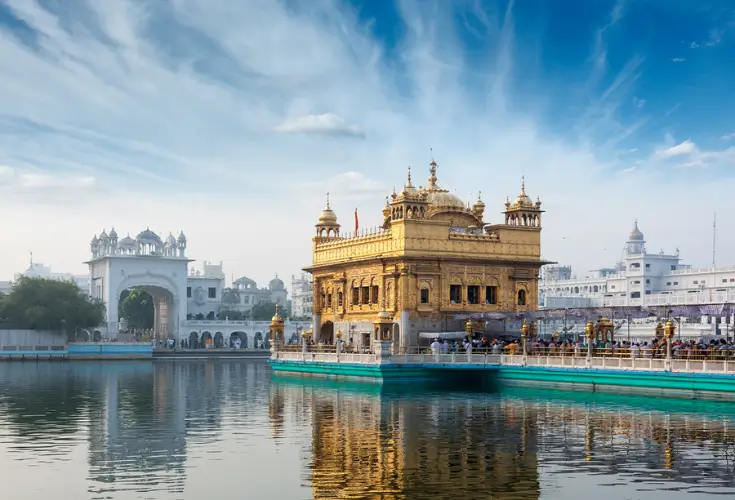 9 Nights / 10 Days
Route Delhi - Amritsar - Agra - Jaipur - Delhi
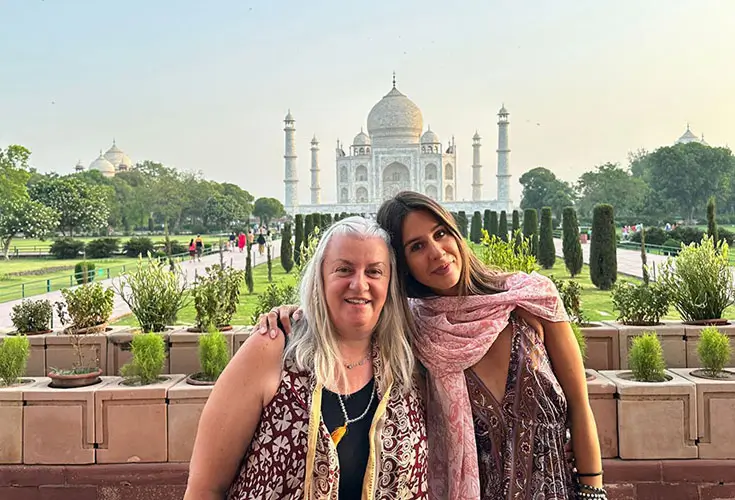 6 Nights / 7 Days
Route Delhi - Agra - Jaipur - Delhi
 8 Nights / 9 Days
Route Delhi - Agra - Jaipur - Delhi
 9 Nights / 10 Days
Route Delhi - Agra - Ranthambore - Jaipur - Delhi
 10 Nights / 11 Days
Route Delhi - Agra - Jaipur - Udaipur - Delhi
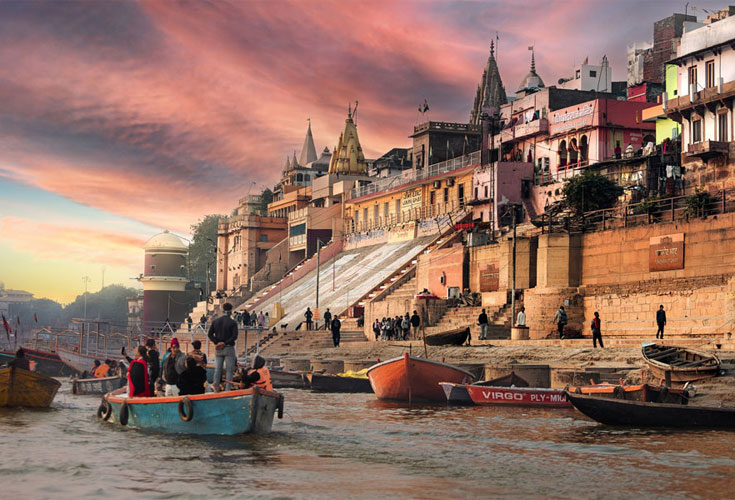 10 Nights / 11 Days
Route Delhi - Varanasi - Agra - Jaipur - Delhi
 13 Nights / 14 Days
Route Delhi - Agra - Jaipur - Jodhpur - Udaipur - Delhi
Let Us Plan It
Send dates and interests. A written proposal follows within 48 hours.
Start the brief →Ready When You Are
Speak to a curator directly — +91 97990 02277.
WhatsApp A CuratorIndia & Beyond
Chauffeur-driven travel nationwide, by the day or the fortnight.
See the fleet →