
Varanasi gives the Golden Triangle a completely different emotional and cultural dimension. Delhi, Agra and Jaipur are defined by dynasties, fortifications, royal courts and monumental architecture, while Varanasi is shaped by ritual, riverfront life, pilgrimage, learning and a continuity that feels more intimate than ceremonial. Adding the city to the classic northern India route creates a journey that moves not only through different regions, but through very different ways of understanding India.
Arrive in Delhi and complete airport formalities before meeting the local representative for your private transfer to the hotel. The first day is deliberately uncomplicated, with no formal sightseeing immediately after a long international journey. Once checked in, take time to rest, unpack and adjust to the local time. This creates a more comfortable beginning and avoids turning the arrival day into a compressed sightseeing session.
Delhi provides the historical framework for much of what follows. The city contains the remnants of medieval kingdoms, Mughal capitals, colonial planning and modern political life, all spread across a large metropolitan area. Understanding those layers gives later visits in Agra and Jaipur greater context. The following day begins this process properly, when you are rested and able to absorb the scale and complexity of the capital.
The remainder of the day is at leisure. Depending on your arrival time, you may choose to enjoy the hotel, take a gentle walk nearby, have an early dinner or simply retire for the night. No additional activity is required. The itinerary is designed to gather pace gradually rather than beginning with an exhausting schedule.
Overnight: Delhi
After breakfast, meet your private guide and begin in Old Delhi, where the day opens around Jama Masjid and the streets of the former Mughal capital of Shahjahanabad. A cycle-rickshaw ride through ChandniChowk provides a close view of markets, shrines, small shops and residential lanes that have evolved over centuries. The density of this area is best understood on the ground, not through a windshield, and your guide will help explain how commerce, religion and neighborhood life overlap here.
Continue through the historical district, seeing the vicinity of the Red Fort before visiting Raj Ghat, the memorial to Mahatma Gandhi. From there, the urban atmosphere changes considerably as you move into New Delhi. Broad avenues, government buildings and ceremonial spaces reflect a completely different planning philosophy. See India Gate and the principal administrative district from suitable viewpoints while your guide explains how the modern capital developed.
Later, visit Humayun’s Tomb, where garden design, symmetry and monumental scale provide an important bridge toward the Mughal architecture you will see later in Agra. The site rewards a measured visit and gives useful context before the TajMahal. Return to the hotel in the late afternoon and keep the evening free. Dinner can be taken independently at the hotel or at a suitable restaurant according to preference.
Overnight: Delhi
After breakfast, transfer privately to Delhi airport for the scheduled flight to Varanasi. On arrival, meet the local representative and continue to your hotel. The shift in atmosphere is immediate. Varanasi is less about formal urban planning and more about riverfront life, narrow lanes, temples, local neighborhoods and a long tradition of pilgrimage and learning. Settle into the hotel and take some time for lunch and rest before the evening program.
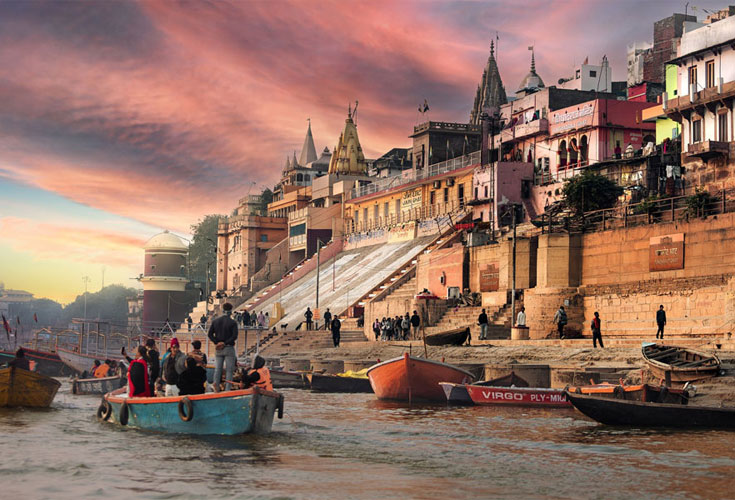
Later, travel toward the river for the evening Ganges ceremony, one of the city’s most recognizable public rituals. Priests perform synchronized offerings of light, incense and sound beside the river while pilgrims, local residents and visitors gather along the ghats and boats. Rather than treating the ceremony as spectacle alone, your guide will explain the religious context and how the river functions within the daily life of the city.
After the ceremony, return to the hotel by the most appropriate route according to local conditions. The evening is otherwise free, and a quiet dinner is recommended after the sensory intensity of the riverfront. This first encounter with Varanasi is intentionally atmospheric rather than analytical. The following morning, when the city is quieter and the light softer, provides a very different perspective.
Overnight: Varanasi
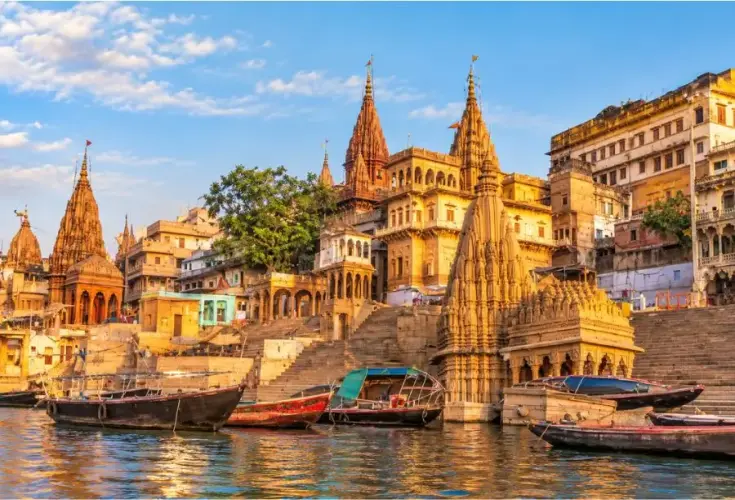
Rise before sunrise and travel to the river for an early-morning boat ride on the Ganges, subject to local conditions. As the city wakes, the ghats gradually fill with people bathing, praying, exercising, washing clothes and beginning everyday routines. Temples, old residences and stepped riverbanks create a continuous architectural edge along the water. The experience is quieter and more observational than the evening ceremony, making it one of the most important parts of the Varanasi stay.
After the boat ride, continue on foot through selected sections of the old city with your guide. Narrow lanes connect shrines, small businesses, residences and religious institutions in a pattern that can feel almost labyrinthine. Your guide will help interpret the city without overloading the walk with explanation. The value lies in seeing how sacred and ordinary life exist side by side rather than in trying to cover a large number of individual monuments.
Return to the hotel for breakfast and some rest before visiting Sarnath later in the day. This site, located outside the dense old city, is associated with the Buddha’s first teaching after enlightenment and introduces a very different religious history. Visit the principal archaeological remains and museum areas where operationally possible. Return to the hotel by late afternoon and keep the evening unstructured, allowing time to reflect on the contrast between the city and the quieter archaeological setting.
Overnight: Varanasi
After breakfast, transfer to Varanasi airport for the onward journey toward Agra via the most practical scheduled connection available for the confirmed travel date. Depending on airline schedules, this sector may involve a flight to Delhi followed by private road transfer to Agra. The logistics are arranged to minimize unnecessary waiting while recognizing that domestic flight schedules can influence the exact shape of the day.
On arrival in Agra, check into your hotel and take time to rest. The mood of the journey shifts again. Varanasi is rooted in ritual and riverfront life, whereas Agra presents the architecture of the Mughal court on a monumental scale. This contrast is one of the strengths of the itinerary, and keeping the arrival afternoon relatively light allows the transition to feel natural rather than abrupt.
If timing permits, visit a suitable viewpoint toward the TajMahal or spend time with a carefully selected craft specialist connected with Agra’s stone-inlay traditions. Otherwise, the day can remain entirely at leisure. Dinner is at your own pace, and an early night is recommended because the next morning begins with the TajMahal.
Overnight: Agra
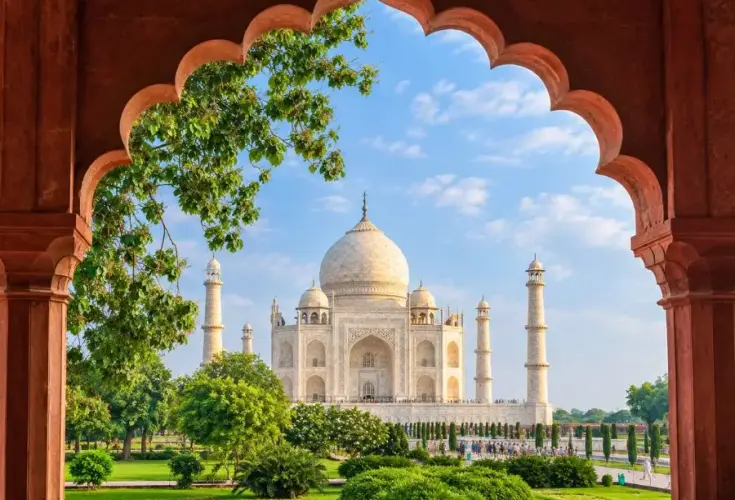
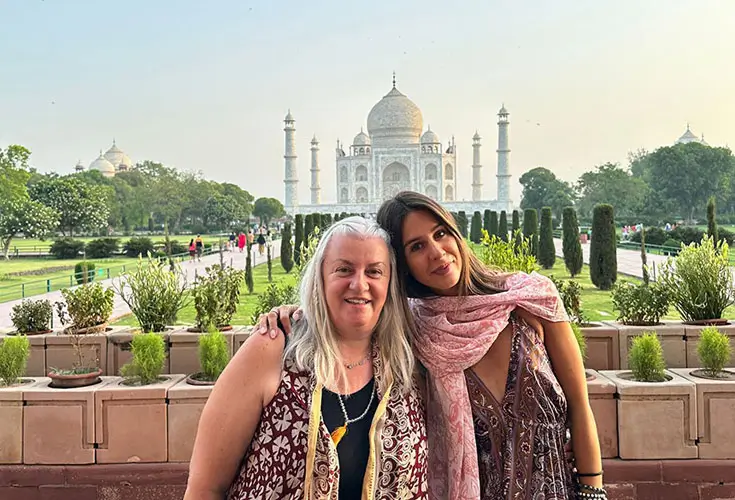
Begin early with the TajMahal, when the softer morning light reveals subtle changes in the marble and the gardens are generally more comfortable to walk through. Spend time understanding the full composition, including the gateway, reflecting pools, formal garden, mosque and river setting. Your guide will point out calligraphy, carving and inlay work while explaining the historical context of the monument.
Return to the hotel for breakfast before visiting Agra Fort. The fort provides a broader perspective on Mughal imperial life through audience halls, residential areas, courtyards and later marble additions. Its relationship with the Yamuna River and the TajMahal in the distance connects the two major monuments physically as well as historically. The contrast between the fort’s defensive scale and the TajMahal’s refined geometry is especially striking when both are seen on the same day.
After lunch, begin the private drive toward Jaipur. Depending on the agreed schedule, a stop may be made at FatehpurSikri, the former imperial city associated with Emperor Akbar. Continue into Rajasthan and arrive in Jaipur later in the day. Check into your hotel and keep the evening free for rest, dinner and time to enjoy the property.
Overnight: Jaipur
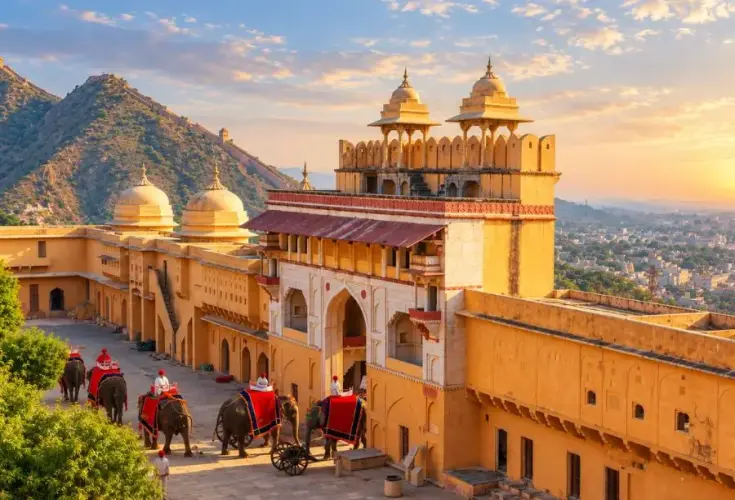
After breakfast, drive toward Amber Fort, which rises above the old settlement of Amer outside Jaipur. The route gives a sense of how the fort was positioned in relation to the surrounding hills before you enter through its main gateways. Inside, move through public courtyards and private royal spaces while your guide explains the site’s development under successive rulers. Decorative surfaces, mirror work and carved stone reveal a very different courtly aesthetic from the Mughal monuments seen in Agra.
Return toward the city with a stop for a view of JalMahal, the palace within Man Sagar Lake. Continue to the City Palace, where gateways, ceremonial courtyards, royal collections and residential spaces reflect Jaipur’s political history. The complex offers a more urban form of royal architecture compared with Amber Fort and helps explain how the ruling family functioned within the planned city.
Nearby, visit JantarMantar, where large-scale astronomical instruments demonstrate the scientific interests of Jaipur’s founder, Sawai Jai Singh II. Finish with a view of HawaMahal, whose façade was closely connected with royal life and street observation. Return to the hotel after a full but balanced day. The evening remains entirely at leisure.
Overnight: Jaipur
Today focuses less on monumental architecture and more on Jaipur’s living traditions. After breakfast, meet your guide and spend part of the morning in selected parts of the old city, where market streets and craft businesses continue long-established commercial patterns. The city remains an important center for textiles, gemstone work, jewelry and other decorative arts. Visits can be arranged with reputable specialists according to your personal interests.
Walking through the older neighborhoods gives a different sense of Jaipur from the previous day’s palace sites. Painted façades, small shrines, food stalls and specialist shops reveal how the historic city functions on an everyday level. Travelers interested in photography can focus on street details, while those drawn to design may spend longer with textile or jewelry workshops.
The afternoon is left intentionally open. Return to the hotel for lunch, enjoy the pool or spa independently, or simply take a few hours without an appointment. A private trip should allow room for personal rhythm, and this lighter day is designed with that in mind. The final evening in Jaipur can include a special dinner or remain completely informal.
Overnight: Jaipur
After breakfast, check out and begin the drive back to Delhi in your private vehicle. The departure time will be arranged according to traffic expectations and your hotel schedule. This road day provides a natural pause after several culturally intensive stops and gives time to reflect on the differences between Varanasi, Agra and Jaipur.
On arrival in Delhi, check into your hotel for a two-night finish. Keeping this additional time in the capital makes the final portion of the journey more comfortable and avoids placing an international departure immediately after a long road transfer. The afternoon and evening are left open, allowing you to rest or revisit a neighborhood that interested you earlier in the trip.
Dinner is at leisure, and no formal sightseeing is required. Travelers who prefer to stay active can discuss an optional gallery, market or restaurant visit, but the day is intentionally uncomplicated. The following day provides one final chance to see another side of Delhi before departure.
Overnight: Delhi
The final full day is designed around personal preference rather than a fixed list of major monuments. After breakfast, you may choose to visit a museum, explore a quieter neighborhood, spend time with contemporary design or return to an area that interested you earlier in the journey. This flexibility allows the tour to end in a way that feels personal rather than formulaic.
If you are interested in architecture, a carefully chosen modern or historical district can be incorporated. Food-minded travelers may prefer a market visit or a relaxed lunch at a notable restaurant. Those more interested in art and craft can focus on galleries or specialist boutiques. The point is to use Delhi’s variety without trying to add another exhausting day of sightseeing.
Return to the hotel in the afternoon and keep the rest of the day free. Use the time to pack, rest, enjoy the property or have a final dinner in the city. After Varanasi’s riverfront, Agra’s Mughal monuments and Jaipur’s royal architecture, this quieter close gives the journey a more composed ending.
Overnight: Delhi
Enjoy breakfast at the hotel before checking out according to your international or onward flight schedule. A private transfer will be arranged to Delhi International Airport with sufficient allowance for city traffic and airline check-in requirements. The exact departure time will be confirmed in advance once your flight details are known.
The journey ends after moving through four very different cultural landscapes. Delhi provided the historical framework, Varanasi introduced the rhythms of the Ganges and old-city life, Agra brought Mughal architecture into focus, and Jaipur added the royal and artistic traditions of Rajasthan. The sequence has been designed to emphasize contrast rather than repetition.
On arrival at the airport, assistance concludes at the agreed point. Guests continuing elsewhere in India can connect with additional travel arrangements according to the final itinerary. The 11-day Golden Triangle, Varanasi & the Ganges tour concludes here, having combined architecture, river culture, pilgrimage traditions and Rajasthan within one private journey.
Meals: Breakfast
Tour Ends: Delhi
What the price includes
What it does not
Starting from
On request
per person · twin share
Get In Touch
No planning fee, no obligation. A curator replies within two hours - or call +91 97990 02277.
 6 Nights / 7 Days
Route Delhi - Agra - Jaipur - Delhi
 8 Nights / 9 Days
Route Delhi - Agra - Jaipur - Delhi
 9 Nights / 10 Days
Route Delhi - Agra - Ranthambore - Jaipur - Delhi
 10 Nights / 11 Days
Route Delhi - Agra - Jaipur - Udaipur - Delhi
 13 Nights / 14 Days
Route Delhi - Agra - Jaipur - Jodhpur - Udaipur - Delhi
Let Us Plan It
Send dates and interests. A written proposal follows within 48 hours.
Start the brief →Ready When You Are
Speak to a curator directly — +91 97990 02277.
WhatsApp A CuratorIndia & Beyond
Chauffeur-driven travel nationwide, by the day or the fortnight.
See the fleet →