
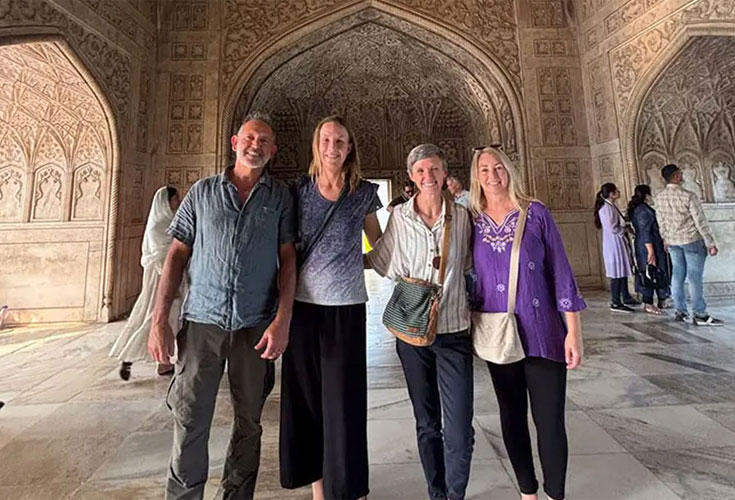
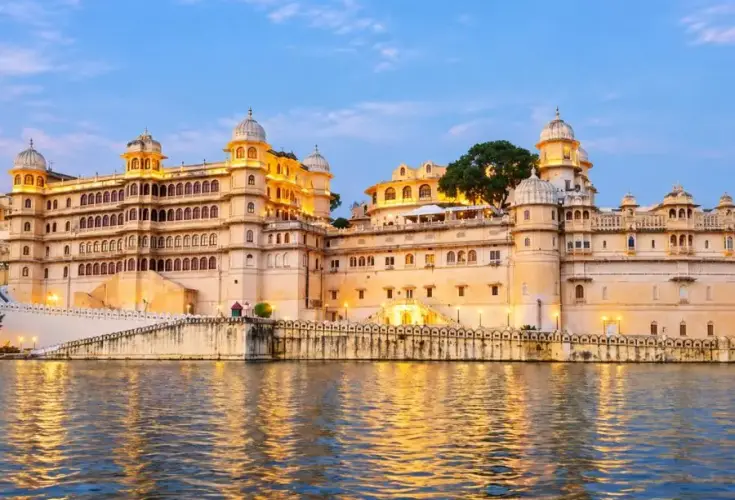
Adding Udaipur changes the character of the Golden Triangle in a meaningful way. Delhi, Agra and Jaipur introduce the political, architectural and royal traditions of northern India, while Udaipur brings a softer rhythm shaped by lakes, hill views, palace architecture and the character of southern Rajasthan. Instead of ending the journey after Jaipur, this route continues deeper into the state and finishes in a city where the pace naturally slows.
Arrive in Delhi and complete the usual airport formalities before meeting the local representative in the arrivals area. Assistance will be provided with luggage and your private transfer to the hotel. The first day is intentionally free from formal sightseeing, allowing you to recover from the flight and adjust to the local time without being moved immediately into a busy program. After check-in, take time to freshen up, unpack and become comfortable in your room. The pace of the trip begins gently because the days ahead already contain plenty of historical and cultural depth.
Delhi is an important starting point because it contains the traces of several different capitals and political eras. Medieval monuments, Mughal neighborhoods, colonial planning and present-day urban life sit side by side across a large metropolitan landscape. Over the next two days, your guide will help separate these layers and explain how they connect with the later stops in Agra and Rajasthan. This context adds meaning to the architectural transitions you will see later in the tour. It also helps prevent the journey from feeling like a disconnected sequence of monuments.
Depending on your arrival time, the evening may include dinner at the hotel, a quiet drink in the lounge or simply an early night. Travelers arriving in the morning can use the afternoon for rest, a spa appointment booked independently or time by the pool. No optional sightseeing is pushed into the first day unless you specifically want it. The purpose is to begin the Golden Triangle with Udaipur tour rested and comfortable. Tomorrow, the capital is approached properly rather than in fragments.
Overnight: Delhi
After breakfast, meet your private guide and travel toward Old Delhi, where the morning begins around Jama Masjid. The mosque stands above the former Mughal city of Shahjahanabad and provides a useful introduction to the scale and ambition of the imperial capital. From here, continue into the surrounding streets and markets where religious buildings, family businesses and specialist trades occupy the same dense urban fabric. A cycle-rickshaw ride through ChandniChowk gives a closer sense of the old city's movement and organization. The aim is to understand the neighborhood rather than simply photograph it from a vehicle.
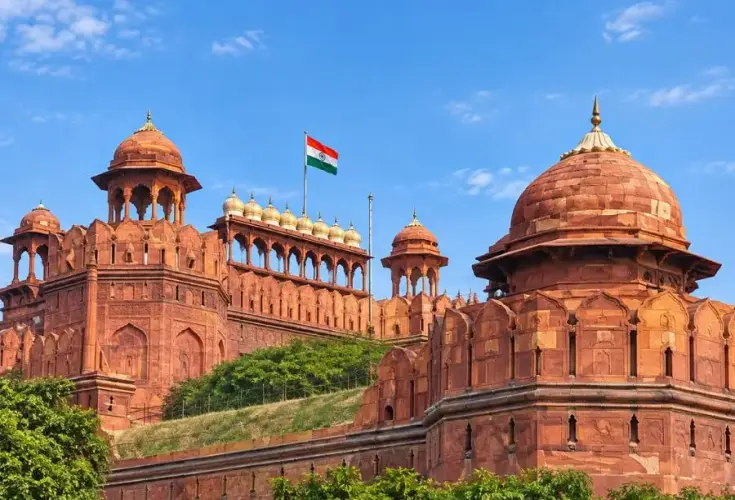
The morning also includes the area around the Red Fort, followed by Raj Ghat, the memorial associated with Mahatma Gandhi. Your guide will explain how the political history of Delhi shifts across very different periods and personalities. This gives the day more structure than a simple list of famous stops. Depending on traffic and timing, lunch can be taken at a suitable restaurant before moving toward the broader avenues of New Delhi. The change in urban form is immediately noticeable.
In the afternoon, see the ceremonial side of the capital, including India Gate and the principal government district from suitable viewpoints. Continue to Humayun’s Tomb, where formal gardens and balanced Mughal design anticipate architectural ideas that would later be developed further in Agra. Time is allowed to walk through the complex rather than making a short photographic stop. Return to the hotel in the late afternoon and keep the evening free. This full day establishes the historical framework for the journey ahead.
Overnight: Delhi
This morning begins with a different historical period at Qutub Minar, one of Delhi’s most important early monuments. The soaring minaret and surrounding archaeological complex belong to a very different architectural language from the Mughal buildings seen the previous day. Your guide will explain the site’s political and religious context while drawing attention to the variations in stone carving, inscriptions and construction methods. Walking through the complex provides a broader understanding of Delhi’s long architectural history. It also reinforces the idea that the city cannot be reduced to one dynasty or century.
From QutubMinar, continue according to your interests and energy level. The morning may include a carefully selected garden, museum or neighborhood that provides a quieter counterpoint to the headline monuments. Delhi has many worthwhile sites that do not need to be treated as compulsory items on every itinerary. The value of a private journey lies in choosing what adds depth rather than filling every available hour. Lunch can be taken at an appropriate restaurant or back at the hotel depending on the schedule.
The later afternoon is left lighter by design. You may wish to spend time at the hotel, visit a gallery, browse a well-known market area or simply rest before the drive to Agra the following day. Travelers interested in design, contemporary Indian fashion or food can use this period for a more personal activity. The evening remains free for dinner at your own pace. This second full day in Delhi allows the capital to feel more complete before the route moves south.
Overnight: Delhi
After breakfast, leave Delhi in your private vehicle and travel toward Agra. The road journey is comfortable and provides a useful break from intensive sightseeing. On arrival, check into your hotel and take time for lunch before beginning the afternoon program. The schedule avoids rushing directly to the TajMahal because that visit is reserved for the following morning. Instead, today focuses on the broader imperial history of Agra.
Visit Agra Fort, whose red sandstone walls enclose a complex of courtyards, audience halls, private residences and later marble additions. Several Mughal rulers shaped the fort over time, leaving architecture that reflects both political authority and domestic life. Your guide will explain how the complex functioned and how its different sections relate to the wider Mughal story. From selected areas, views extend toward the Yamuna River and the TajMahal. Seeing the fort first makes the following morning’s visit more meaningful.
Later, depending on time and interest, you may stop at a viewpoint across the river or spend time learning about Agra’s decorative arts. The city has a long connection with stone inlay and other forms of craftsmanship associated with Mughal architecture. These smaller encounters add texture without making the afternoon too demanding. Return to the hotel before evening and enjoy dinner at leisure. An earlier night is sensible because the next day begins with the TajMahal.
Overnight: Agra
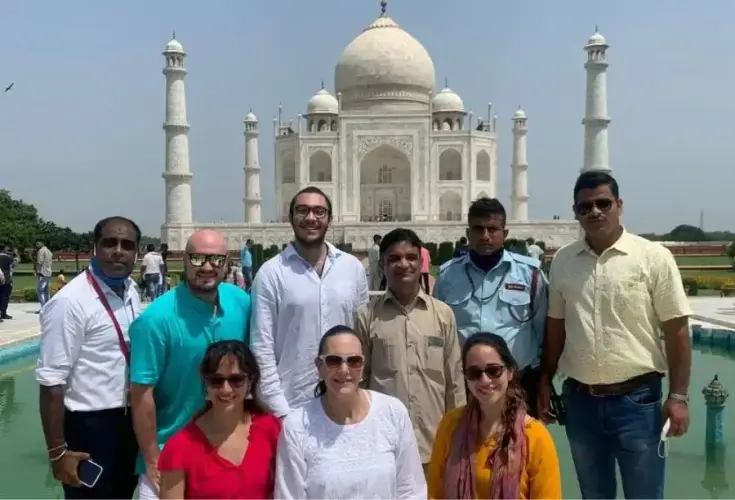
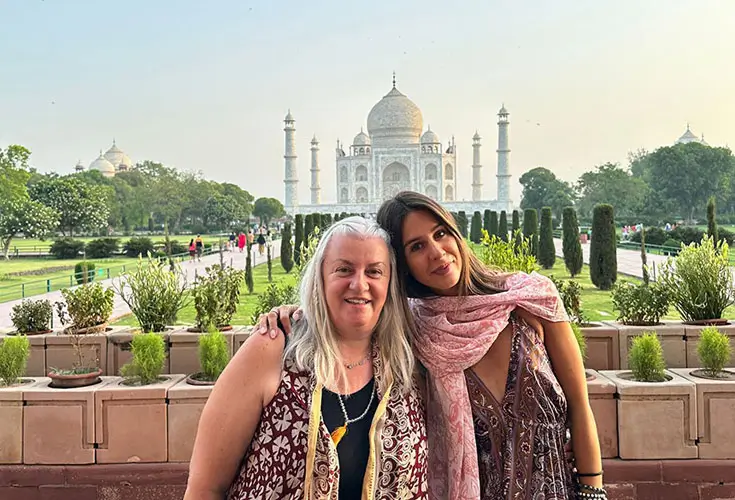
Begin before breakfast with a visit to the TajMahal, when the light is softer and the temperature generally more comfortable. Enter through the monumental gateway and spend time understanding the complex as a complete composition. The gardens, reflecting pools, mosque, riverfront setting and symmetrical planning are as important to the experience as the central marble mausoleum itself. Your guide will provide historical context while also pointing out calligraphy, carving and inlay work. Time is allowed for quiet observation rather than making the visit feel rushed.
Return to the hotel for breakfast, then check out and begin the road journey toward Jaipur. En route, stop at FatehpurSikri, the former Mughal capital associated with Emperor Akbar. The red sandstone city contains audience halls, courtyards, private spaces and monumental gateways arranged across an extensive complex. Walking through the site helps explain how Mughal political and ceremonial life was organized beyond Agra. The visit also creates a strong architectural transition between the TajMahal and the Rajasthan portion of the journey.
Continue west toward Jaipur, stopping for refreshments or lunch as needed. The landscape gradually changes as you move deeper into Rajasthan, and the city’s relationship with the surrounding hills becomes apparent on approach. Arrive in Jaipur later in the afternoon and check into your hotel. No formal sightseeing is scheduled after arrival. The evening is free for dinner, rest and time to enjoy the property.
Overnight: Jaipur
After breakfast, travel toward Amber Fort, located in the hills outside central Jaipur. The approach is dramatic, with the fortified complex rising above the surrounding landscape. Enter through the main gateways and move through the sequence of courtyards, audience areas and more private palace sections with your guide. Decorative mirror work, painted surfaces, carved stone and strategically placed openings reveal the combination of defense and refinement that characterizes the site. The fort is best appreciated with enough time to understand its spatial organization.
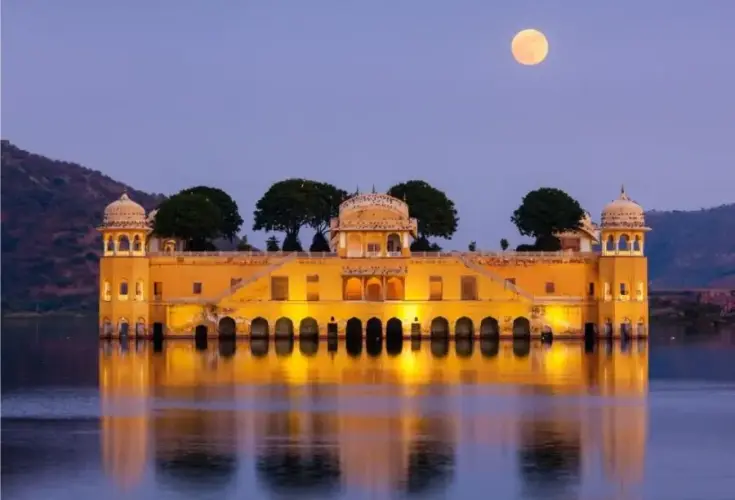
On the return toward Jaipur, pause at a suitable viewpoint for JalMahal, the palace positioned within Man Sagar Lake. Continue into the historic city for lunch before visiting the City Palace. The complex contains ceremonial spaces, gateways, museum collections and royal residences that reflect the city’s political history. Nearby, walk to JantarMantar, where monumental astronomical instruments demonstrate the scientific interests of Jaipur’s founder. Your guide will explain how selected instruments were used and why the observatory remains so unusual.
Finish the formal sightseeing with a view of the HawaMahal, whose distinctive façade is closely tied to the life of the royal household and the street beyond it. Rather than adding more monuments after a full day, return to the hotel in the late afternoon. The evening can remain completely free. Those staying in a palace or resort-style property may prefer to enjoy the hotel itself. Dinner can be arranged according to your preference.
Overnight: Jaipur
Today begins more slowly after the previous day’s substantial sightseeing. Following breakfast, meet your guide for a closer look at Jaipur’s commercial and craft traditions. The old city has long been associated with jewelry, gemstones, textiles, block printing, ceramics and decorative arts. Visits can be arranged with reputable workshops or specialists according to your interests. The emphasis is on understanding technique and tradition rather than making the day a shopping exercise.
Spend time walking through selected parts of the historic city, where planned streets, market zones and small temples reveal everyday Jaipur beyond the palace complexes. The guide can point out architectural details, local businesses and neighborhood patterns that are easily missed from a car. Travelers interested in photography may wish to focus on streets and market life, while those drawn to design can spend longer with textile or jewelry specialists. Food-focused travelers can also incorporate carefully chosen local tastings.
The afternoon is intentionally left open. Return to the hotel for lunch, use the pool, book a spa treatment independently or simply enjoy several unscheduled hours. If you prefer to remain active, a suitable optional visit can be discussed without forcing it into the standard program. The slower second Jaipur day creates space before the onward journey to Udaipur. It also makes the city feel less like a collection of monuments and more like a place with its own daily rhythm.
Overnight: Jaipur
After breakfast, check out and continue toward Udaipur according to the transport arrangement confirmed for your trip. Depending on the final operating plan, this sector may be covered by road or by the most appropriate scheduled flight connection. If traveling overland, the journey reveals a different side of Rajasthan as the terrain shifts toward the Aravalli Hills. Stops for refreshments and lunch can be made at suitable points along the way. The day is structured around reaching Udaipur comfortably rather than adding unnecessary sightseeing.
Udaipur occupies a very different setting from Jaipur. Lakes, hills and palace architecture soften the scale of the city and create a more relaxed atmosphere. Its royal history is closely associated with the rulers of Mewar, whose political and architectural traditions developed differently from those seen earlier in Jaipur. On arrival, transfer to your hotel and complete check-in. The rest of the afternoon is reserved for settling in and enjoying the surroundings.
If your hotel overlooks Lake Pichola or occupies a particularly attractive setting, this is a good evening to remain on the property. Alternatively, a gentle walk or dinner with lake views can be arranged depending on timing. No formal sightseeing is required on arrival day. Udaipur works best when it is not treated as another place to be covered quickly. The slower approach begins immediately.
Overnight: Udaipur
After breakfast, begin with the City Palace of Udaipur, one of the largest palace complexes in Rajasthan. Built and expanded over generations, it rises above Lake Pichola in a series of courtyards, terraces, gateways and residential spaces. Your guide will explain how different rulers contributed to the complex and how the architecture reflects both ceremonial and private royal life. Windows and terraces open toward the lake and surrounding hills, giving the palace an atmosphere quite different from Jaipur’s fortified settings.
Continue through selected parts of the old city, where temples, narrow lanes, craft shops and residential architecture create a more intimate scale. Depending on your interests, time can be given to a local temple, market area or specialist craft visit. Udaipur has longstanding traditions connected with miniature painting, textiles and decorative arts. The slower city layout allows these elements to be appreciated without needing to cover large distances. Lunch can be taken at a suitable restaurant or back at the hotel.
Later, take a boat ride on Lake Pichola, subject to local conditions and operational availability. From the water, the relationship between the City Palace, ghats, lakefront buildings and surrounding hills becomes much clearer. The changing light toward late afternoon can be particularly attractive, especially when the palace façades begin to take on warmer tones. Return to the hotel afterward and keep the evening free. This day gives Udaipur its own identity rather than presenting it as merely another palace city.
Overnight: Udaipur
Begin the day without an early start and enjoy breakfast at the hotel. The morning may include Saheliyon Ki Bari, a historic garden associated with the royal household, or another carefully chosen site depending on your interests. The garden provides a quieter contrast to the scale of the City Palace and demonstrates the role of landscape, fountains and enclosed green spaces in Udaipur’s courtly history. Your guide can also recommend viewpoints or smaller architectural stops according to current conditions.
The middle of the day can be directed toward a personal interest rather than a fixed checklist. Art-minded travelers may wish to spend time with miniature painting traditions, while others may prefer a local market, a private cooking experience or a relaxed lunch with views over the lake. Udaipur is especially well suited to this type of flexible day because many of its most rewarding moments come from slowing down rather than adding another major monument. The schedule is therefore shaped around quality of time rather than quantity of attractions.
Return to the hotel in the afternoon and leave several hours unscheduled. Use the pool, sit on a terrace, book a spa treatment independently or simply enjoy the property. Your final evening in Rajasthan can be reserved for a special dinner or kept completely informal. After several cities and significant monuments, this quieter day provides a more composed finish to the journey. It is one of the main reasons Udaipur works so well at the end of the Golden Triangle.
Overnight: Udaipur
Enjoy breakfast at the hotel before checking out according to your onward flight schedule. Transfer to Udaipur airport for the scheduled flight to Delhi, or follow the confirmed travel arrangement included in your final program. Sufficient connection time will be built into the plan when an international departure follows the same day. Where flight schedules make a same-day connection inconvenient, an additional Delhi hotel night can be arranged separately. The aim is to keep the final travel day practical rather than overly tight.
The journey concludes after moving through four cities with distinct historical and regional identities. Delhi established the broad political and architectural context, Agra concentrated on Mughal refinement, Jaipur introduced the fortified royal traditions of Rajasthan, and Udaipur provided a softer finish shaped by lakes and palace architecture. The extension south into Rajasthan adds meaningful depth without overcomplicating the route. It also gives the journey a stronger final chapter than simply returning home after Jaipur.
On arrival in Delhi, continue to the appropriate terminal or agreed transfer point for your onward travel. Guests staying longer in India can connect with additional arrangements to Mumbai, Goa, Varanasi, a wildlife reserve or southern India. Assistance will conclude according to the confirmed booking. The 11-day Golden Triangle with Udaipur private tour ends here. You leave with a broader understanding of both Mughal and Rajput India than the standard three-city circuit can provide.
Meals: Breakfast
Tour Ends: Delhi
What the price includes
What it does not
Starting from
On request
per person · twin share
Get In Touch
No planning fee, no obligation. A curator replies within two hours - or call +91 97990 02277.
 6 Nights / 7 Days
Route Delhi - Agra - Jaipur - Delhi
 8 Nights / 9 Days
Route Delhi - Agra - Jaipur - Delhi
 9 Nights / 10 Days
Route Delhi - Agra - Ranthambore - Jaipur - Delhi
 10 Nights / 11 Days
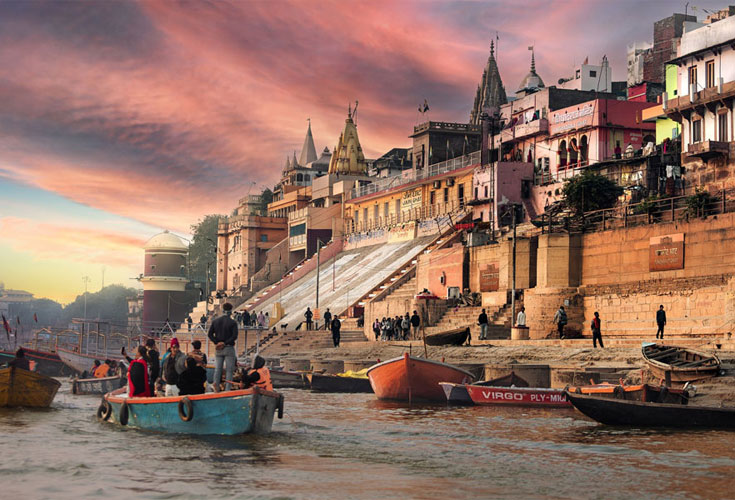
Route Delhi - Varanasi - Agra - Jaipur - Delhi
 13 Nights / 14 Days
Route Delhi - Agra - Jaipur - Jodhpur - Udaipur - Delhi
Let Us Plan It
Send dates and interests. A written proposal follows within 48 hours.
Start the brief →Ready When You Are
Speak to a curator directly — +91 97990 02277.
WhatsApp A CuratorIndia & Beyond
Chauffeur-driven travel nationwide, by the day or the fortnight.
See the fleet →