
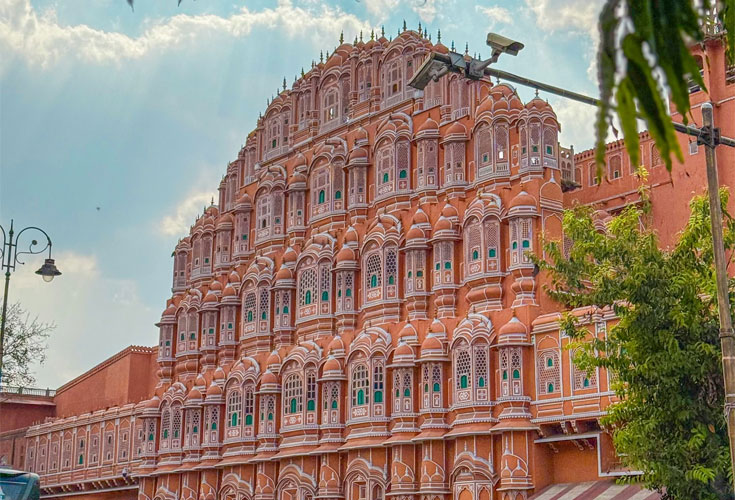
India’s celebrated Delhi–Agra–Jaipur circuit gains an entirely different dimension when Amritsar is added to the route. The Golden Triangle with Amritsar Tour combines the architectural landmarks of North India with Punjab’s spiritual heart, allowing travellers to see Mughal monuments, Rajput palaces, historic neighbourhoods, Sikh heritage and everyday Indian life within one carefully paced itinerary. Rather than treating Amritsar as a brief extension, this journey gives the city enough time to reveal both its sacred character and its powerful modern history.
Arrive at Delhi International Airport, where you will be met after completing immigration, baggage collection and customs formalities. A private representative will assist with your arrival and introduce you to your chauffeur before the transfer to your hotel. Delhi is often the first encounter international travellers have with India, and its scale becomes apparent almost immediately: broad modern roads, historic structures, tree-lined diplomatic districts and densely populated neighbourhoods all form part of the same metropolis. The first transfer is intentionally uncomplicated, giving you time to settle into the rhythm of the country rather than beginning with scheduled sightseeing immediately after a long international flight.
After reaching the hotel, complete check-in and spend some time resting. Depending on the arrival hour, the remainder of the day can be kept entirely free or used for a gentle orientation drive through New Delhi. This part of the capital was planned during the British period and differs markedly from the older quarters encountered on the following day. Wide avenues, government buildings and formal city planning provide an interesting introduction to Delhi’s more recent history while allowing the first evening to remain relaxed.
If your flight arrives early enough, you may choose to spend some time around the hotel or enjoy dinner at one of Delhi’s established Indian restaurants. No demanding programme is scheduled for the arrival day because international flights can land at widely varying hours and long-haul travellers generally benefit from a slower start. Your first night in Delhi provides time to recover from the journey and prepare for a full exploration of the capital the following morning.
Overnight: Delhi
After breakfast, begin with Old Delhi, where the street plan and atmosphere still reflect the city that grew around Shah Jahan’s seventeenth-century Mughal capital. Visit Jama Masjid, one of India’s great historic mosques, before entering the lanes surrounding Chandni Chowk. The district is dense with shops selling spices, fabrics, jewellery, food and everyday household goods, while narrow streets reveal religious buildings and trading communities that have occupied the area for generations. A cycle-rickshaw ride through selected lanes can be included, offering a close look at a part of Delhi that cannot be properly understood from the window of a vehicle.
Continue past the imposing walls of the Red Fort area before moving towards Raj Ghat, the memorial associated with Mahatma Gandhi. The transition from Old Delhi into New Delhi makes the capital’s layered history especially clear. Later, drive along the ceremonial avenues around India Gate, Parliament House and the principal government buildings. These monumental spaces were designed as part of British imperial New Delhi and today form the administrative centre of the Indian republic. Your guide will provide historical context rather than simply moving between photo stops, helping connect the city’s Mughal, colonial and contemporary identities.
The afternoon continues with some of Delhi’s most important architectural sites. Visit Humayun’s Tomb, whose garden-tomb design became an important architectural predecessor to later Mughal monuments, including the Taj Mahal. Depending on timing and local conditions, the programme can also incorporate Qutub Minar or another significant New Delhi landmark. Return to the hotel in the evening after a day that demonstrates why Delhi deserves more than being treated simply as an arrival point for a Golden Triangle India tour.
Overnight: Delhi
After breakfast, transfer to the railway station or airport for the journey from Delhi to Amritsar. The precise mode of travel can be selected according to the preferred hotel programme and available connections, with a fast train offering an interesting view of northern India’s changing landscape and a flight providing the quickest transfer. On arrival in Amritsar, meet your local representative and proceed privately to the hotel. The character of Punjab feels noticeably different from Delhi, with its own cuisine, language, religious traditions and strong regional identity becoming increasingly evident as you enter the city.
Once settled, take time for lunch and a short rest before beginning a gentle introduction to Amritsar. Depending on the arrival schedule, you can walk through parts of the historic centre and the streets leading towards the Golden Temple precinct. The surrounding neighbourhood contains markets, food stalls, traditional shops and restored façades that provide useful context before the principal sightseeing scheduled for the next day. Amritsar is not included merely as another sightseeing stop; its importance lies in understanding Punjab and the Sikh traditions that have shaped the city.
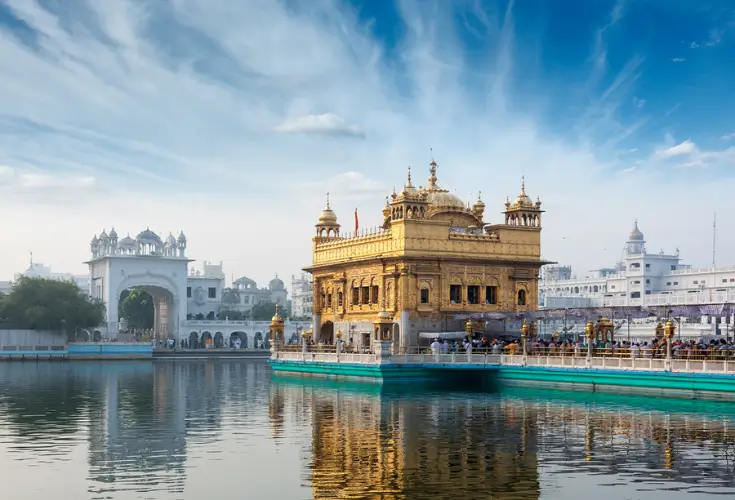
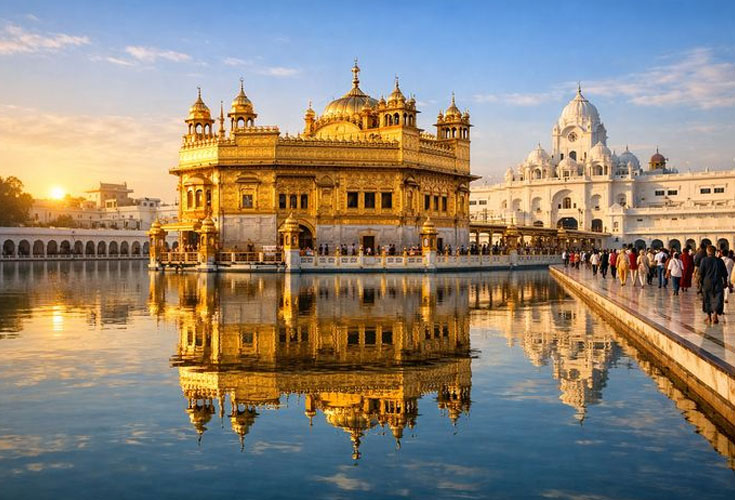
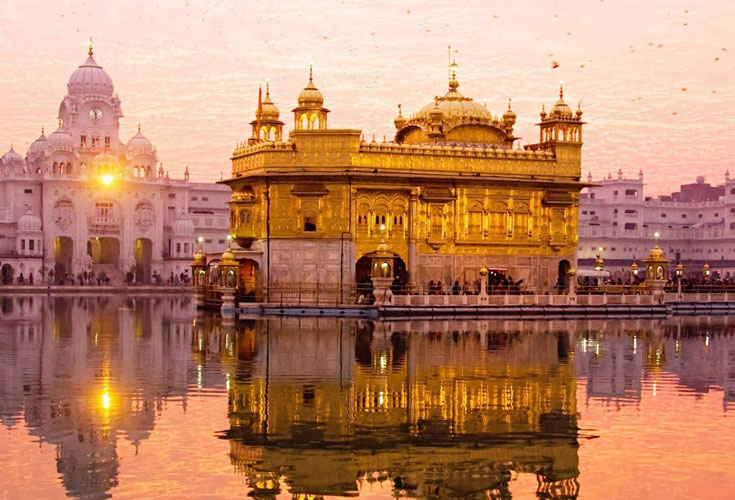
In the evening, visit the Golden Temple when the complex takes on a particularly striking appearance under illumination. Shoes are removed and heads covered before entering the sacred precinct, following the customs observed by visitors of every faith. The gold-covered sanctum appears to float above the Amrit Sarovar, while hymns carried across the water create an atmosphere quite unlike the palaces and forts encountered elsewhere on the itinerary. Seeing the shrine in the evening provides a quiet and memorable introduction before returning for a more detailed visit the following day.
Overnight: Amritsar
Return to the Golden Temple in the morning for a deeper visit to the spiritual centre of Sikhism. Walk around the sacred pool and learn about the principles that shape worship and community life within the complex. One of the most revealing parts of the visit is the community kitchen, or langar, where volunteers prepare and serve meals to visitors without distinction of religion, nationality or social background. Observing the organisation of the kitchen and dining halls offers insight into Sikh traditions of equality, service and hospitality that cannot be gained by simply photographing the shrine.
A short walk leads to Jallianwala Bagh, a memorial site associated with one of the most consequential episodes of British colonial rule in India. The enclosed garden commemorates the civilians killed when troops under Brigadier-General Reginald Dyer opened fire on a gathering in April 1919. Today, memorial structures and preserved sections of the site provide a sombre counterpoint to the spiritual atmosphere of the Golden Temple. Continue through the surrounding old quarter, with time to see Amritsar’s busy commercial streets and, where desired, sample traditional Punjabi cuisine at a carefully selected restaurant.
Later in the afternoon, drive towards the Attari–Wagah border, the road crossing between India and Pakistan. Before sunset, crowds gather on both sides for the daily flag-lowering ceremony conducted by the Indian Border Security Force and Pakistan Rangers. The precisely choreographed marching, ceremonial gestures and energetic spectators create one of the most unusual public rituals in the region. After the ceremony, return to Amritsar for dinner and an overnight stay, completing a day that brings together faith, colonial history, regional culture and modern national identity.
Overnight: Amritsar
After breakfast, check out from the hotel and transfer to Amritsar airport or railway station for the return journey to Delhi. The morning has intentionally been kept relatively light following the previous full day of sightseeing. Depending on the selected departure time, there may be an opportunity for a relaxed breakfast or a brief local stop before leaving the city. The return journey also creates a natural pause between the Punjab section of the itinerary and the classical Golden Triangle route that begins in earnest from Delhi.
On arrival in Delhi, meet your chauffeur and transfer privately to the hotel. The afternoon is deliberately flexible rather than filling the programme with another sequence of major monuments. Guests who would like additional sightseeing may use the time for a neighbourhood walk, contemporary shopping, a museum visit or one of Delhi’s established markets. Those preferring a slower pace can remain at the hotel and enjoy its facilities before the road journey to Agra the following morning.
The evening is at leisure. This second stay in Delhi serves an important logistical purpose, avoiding a tiring same-day Amritsar–Delhi–Agra transfer while keeping the overall Golden Triangle with Amritsar itinerary comfortable. It also allows travellers to see Delhi beyond a single sightseeing day. Dinner can be arranged independently or at the hotel, with your chauffeur and local team available to assist with practical recommendations according to your interests.
Overnight: Delhi
Leave Delhi after breakfast for Agra in your private air-conditioned vehicle. The journey follows a modern expressway across the plains of northern India and generally takes several hours depending on traffic and the exact location of your Delhi hotel. On reaching Agra, check in and take some time to settle before beginning the afternoon programme. Although the Taj Mahal gives Agra worldwide recognition, the city was once one of the principal centres of Mughal power, and its surviving architecture tells a much broader story than a single monument.
Visit Agra Fort, a vast fortified complex overlooking the Yamuna River. Successive Mughal emperors altered and expanded the fort, creating palaces, audience halls, courtyards and defensive structures within its massive red sandstone walls. The complex is closely connected with Emperor Akbar, Jahangir and Shah Jahan, and several sections provide distant views towards the Taj Mahal. Walking through the fort with a knowledgeable guide helps establish the political and architectural background necessary to appreciate the Taj in greater depth.
Later, depending on the season and timing, visit Mehtab Bagh or another suitable viewpoint across the Yamuna for a different perspective of the Taj Mahal. The monument’s symmetry becomes particularly clear from the opposite riverbank, while changing afternoon light can soften the white marble façade. Return to the hotel after sightseeing and spend the evening at leisure. The following morning is reserved for the Taj Mahal itself, allowing the visit to take place without combining too many major monuments into one hurried session.
Overnight: Agra
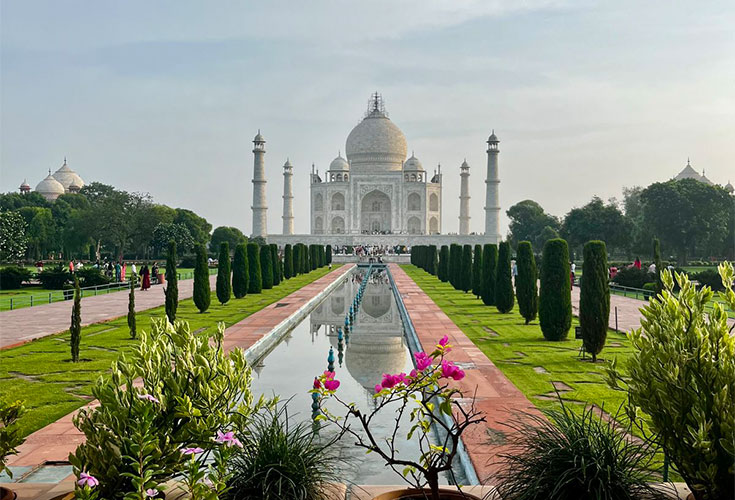
Rise early for the most anticipated monument on the journey: the Taj Mahal. Built by Mughal emperor Shah Jahan in memory of Mumtaz Mahal, the mausoleum is celebrated not simply for its scale but for the extraordinary precision of its proportions, marble work, calligraphy and decorative stone inlay. Entering through the monumental gateway gradually reveals the mausoleum at the end of its formal garden, one of the most recognisable architectural compositions in the world. An early visit generally provides softer light and a calmer setting in which to appreciate the complex.
Return to the hotel for breakfast before checking out and beginning the drive towards Jaipur. En route, stop at Fatehpur Sikri, the former Mughal capital established by Emperor Akbar during the sixteenth century. The remarkably preserved complex contains palaces, courtyards, administrative buildings and religious structures built largely in red sandstone. Its architecture reflects influences from different regions and traditions of the Mughal empire, making Fatehpur Sikri an important bridge between the monuments seen in Delhi and Agra and the Rajput architecture awaiting you in Rajasthan.
Continue across the changing landscape towards Jaipur, the capital of Rajasthan. Arrival is generally scheduled for the late afternoon or evening, allowing time to check into the hotel and rest after the drive. Jaipur marks another significant shift in the Delhi Amritsar Agra Jaipur tour: Mughal architecture gives way to Rajput forts, royal residences and a cityscape historically associated with the Kachwaha rulers. The evening is free, providing an opportunity for dinner at the hotel or a selected Jaipur restaurant.
Overnight: Jaipur
After breakfast, drive towards the hills outside central Jaipur to visit Amber Fort, the former seat of the Kachwaha rulers before the establishment of the present city. Rising above Maota Lake, the fortified palace combines defensive architecture with highly decorative royal chambers, gateways, courtyards and audience halls. Walk through the complex with your guide to understand how successive rulers developed the site and how Rajput architectural traditions interacted with Mughal influences. Particular attention can be given to the mirror work, painted surfaces and carefully planned private areas of the palace.
Return towards central Jaipur, stopping for an exterior view of the Hawa Mahal, whose distinctive multi-windowed façade has become one of Rajasthan’s best-known images. Continue to the City Palace, still closely associated with Jaipur’s former royal family. Its courtyards, gateways, museum collections and ceremonial spaces reveal the refinement of the Jaipur court and provide a different perspective from the military scale of Amber Fort. Nearby, visit Jantar Mantar, the remarkable collection of large astronomical instruments commissioned by Maharaja Sawai Jai Singh II.
Later in the day, spend time in Jaipur’s traditional market districts, known for textiles, gemstones, jewellery, block printing and handicrafts. Shopping is optional and can be tailored around genuine interest rather than being treated as a compulsory part of sightseeing. Guests interested in Jaipur’s food traditions, crafts or residential neighbourhoods can also use this period for a more specialised activity. Return to the hotel in the evening after a full day devoted to Rajasthan’s royal architecture and living craft traditions.
Overnight: Jaipur
Enjoy breakfast at the hotel before checking out and beginning the private drive back to Delhi. Rather than scheduling major sightseeing before a long road transfer, the morning remains comfortable and allows an unhurried departure from Jaipur. The journey crosses Rajasthan and Haryana before entering the expanding urban region surrounding the national capital. Comfort stops can be made en route, and the private vehicle arrangement gives considerably greater flexibility than a fixed coach itinerary.
On arrival in Delhi, check into your hotel for the final night of the tour. Depending on the arrival time and your interests, the remainder of the afternoon can be left free or used for activities not covered during the earlier Delhi stay. Travellers interested in contemporary India may choose an upscale shopping district or modern neighbourhood, while those interested in culture can select an additional museum, market or historical area. Keeping this period flexible also provides useful time for last-minute shopping before an international departure.
Your final evening offers an opportunity to look back over the contrasts encountered during the journey: Delhi’s layered capitals, Amritsar’s Sikh heritage, Agra’s Mughal masterpieces and Jaipur’s Rajput palaces. Although these cities lie within the broader northern Indian region, each represents a markedly different history and cultural tradition. The combination is precisely what gives the Golden Triangle with Amritsar Tour greater depth than the conventional Delhi–Agra–Jaipur circuit.
Overnight: Delhi
Breakfast is served at the hotel according to your flight schedule. With no sightseeing fixed for the final morning, departure arrangements can accommodate early, daytime or late-evening international flights. If the flight leaves later in the day, hotel check-out regulations will apply, although a late check-out can be requested in advance and remains subject to availability and any applicable hotel charge. Free time can otherwise be used for rest, dining or a final independent outing.
At the appropriate time, your private chauffeur will transfer you from the hotel to Delhi International Airport. Assistance can be provided with the departure arrangements before you proceed into the terminal for airline check-in and security formalities. The tour concludes after covering four of northern India’s most significant destinations while retaining sufficient time in each region to understand its distinct character rather than moving rapidly from one landmark to another.
Your 10 Days Golden Triangle with Amritsar Tour ends in Delhi, bringing together the capital’s historical layers, Sikh traditions in Punjab, the Mughal legacy of Agra and Rajasthan’s royal heritage. The route works particularly well for first-time visitors who want the Taj Mahal and Jaipur included in their India holiday but also want a meaningful destination beyond the standard Golden Triangle. Additional nights, luxury hotel upgrades or onward travel to another region of India can be incorporated when the itinerary is customised.
What the price includes
What it does not
Starting from
On request
per person · twin share
Get In Touch
No planning fee, no obligation. A curator replies within two hours - or call +91 97990 02277.
 13 Nights / 14 Days
Route Delhi - Varanasi - Agra - Ranthambore - Jaipur - Delhi
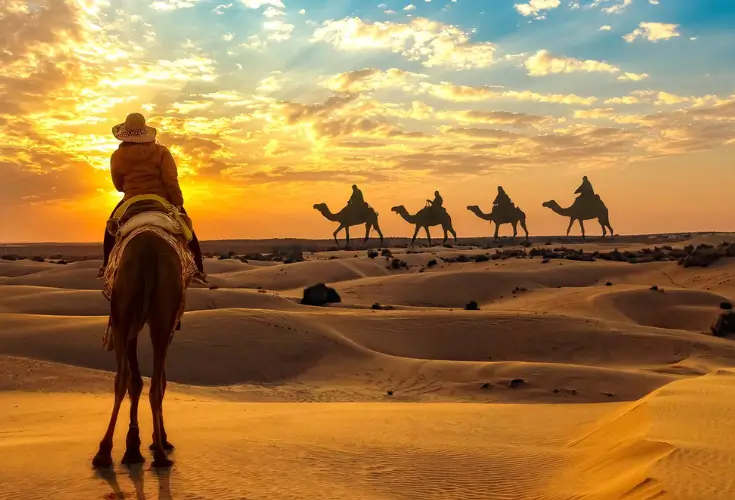 12 Nights / 13 Days
Route Delhi - Agra - Jaipur - Jodhpur - Jaisalmer - Delhi
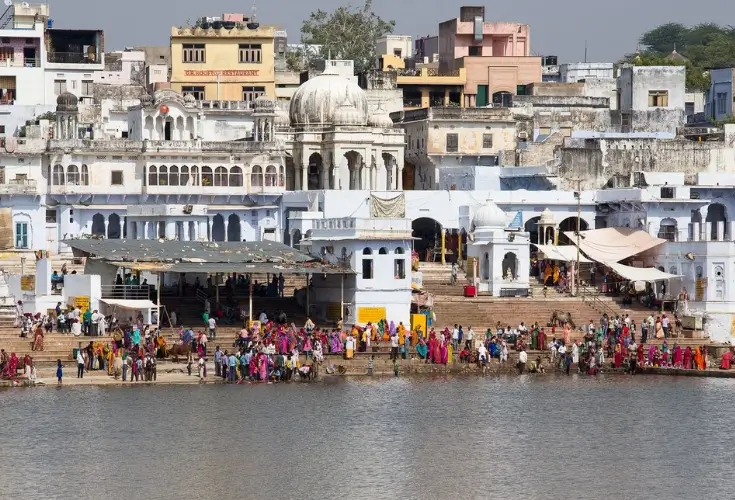 8 Nights / 9 Days
Route Delhi - Agra - Jaipur - Pushkar - Delhi
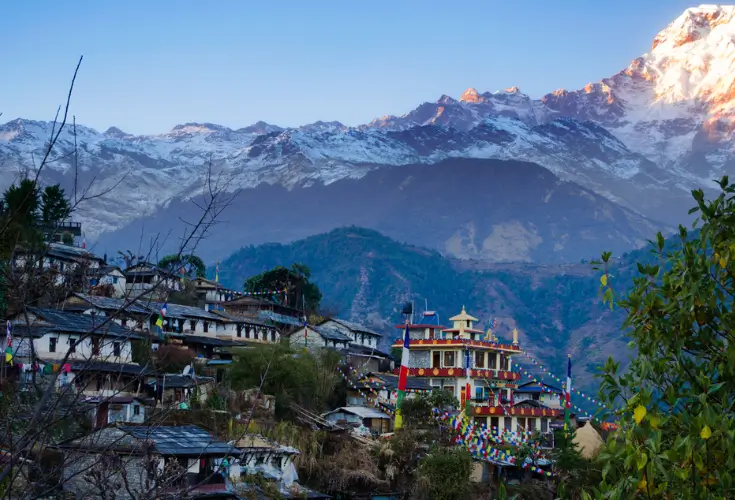 11 Nights / 12 Days
Route Delhi - Agra - Jaipur - Kathmandu - Pokhara
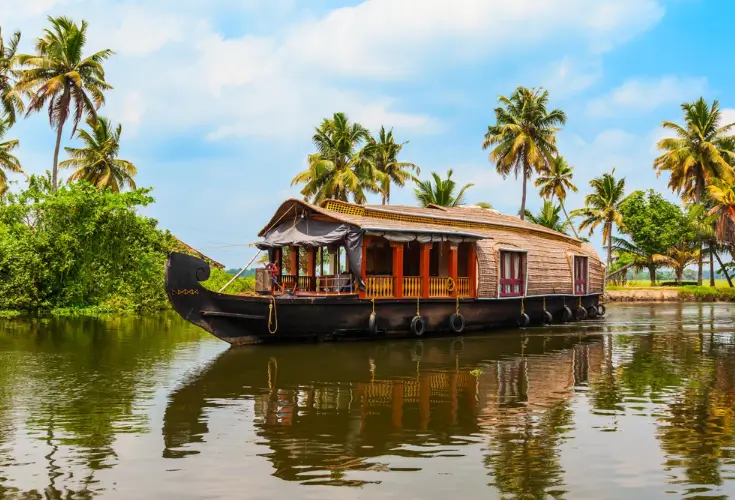 13 Nights / 14 Days
Route Delhi - Agra - Jaipur - Kochi - Munnar - Kumarakom - Alleppey
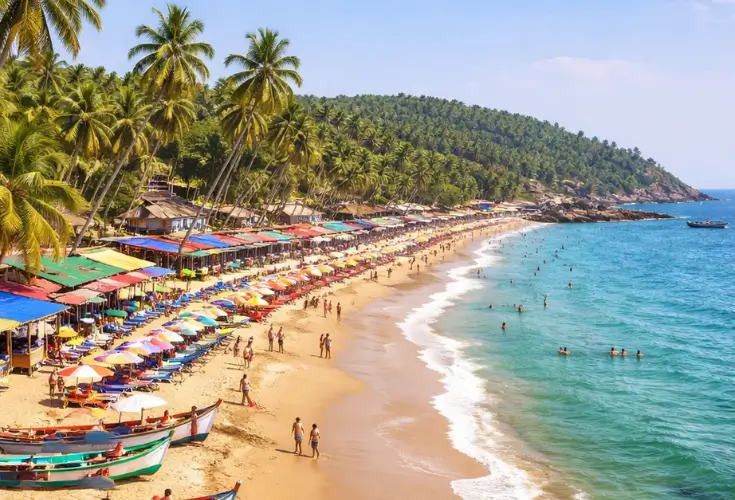 11 Nights / 12 Days
Route Delhi - Agra - Jaipur - Goa
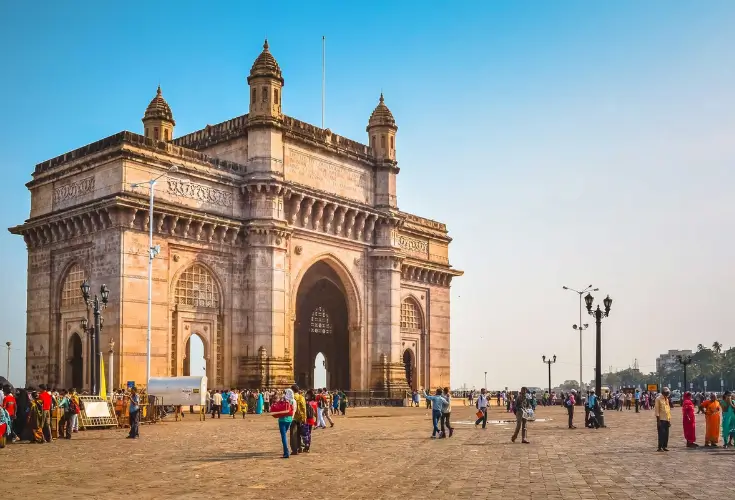 9 Nights / 10 Days
Route Delhi - Agra - Jaipur - Mumbai
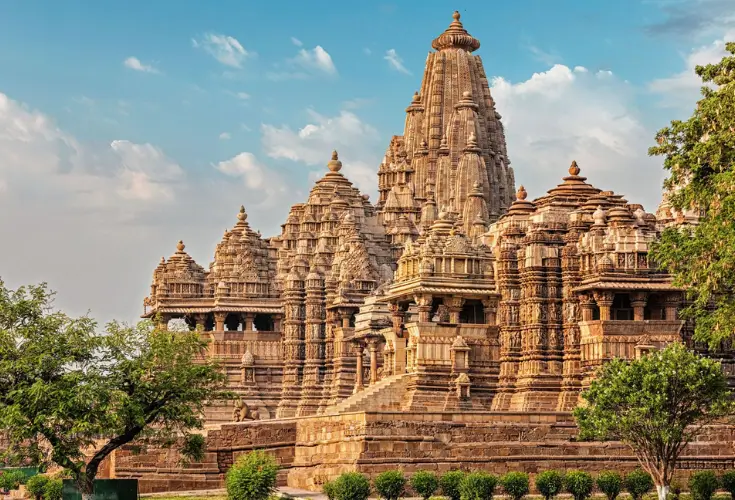 10 Nights / 11 Days
Route Delhi - Jaipur - Agra - Orchha - Khajuraho - Delhi
 10 Nights / 11 Days
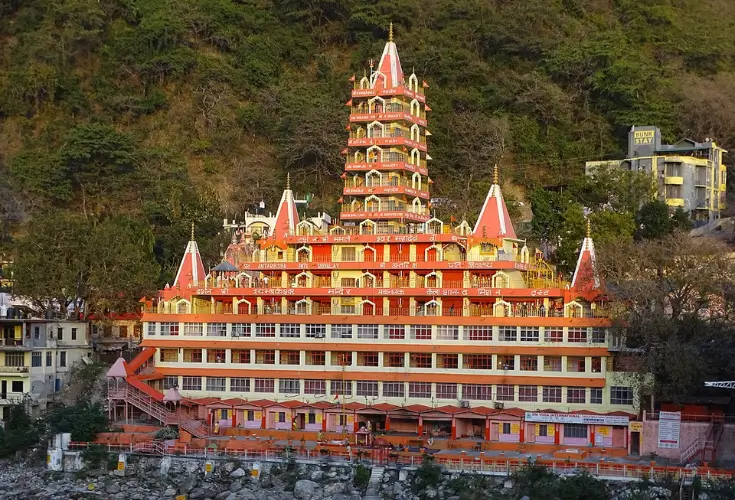
Route Delhi - Haridwar - Rishikesh - Agra - Jaipur - Delhi
 6 Nights / 7 Days
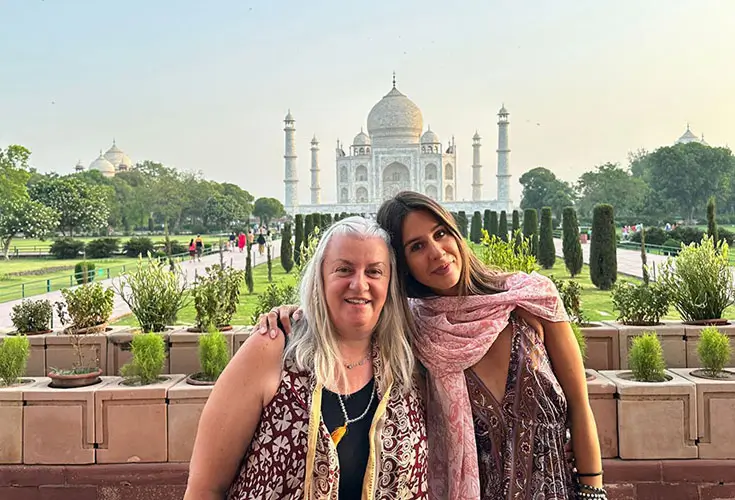
Route Delhi - Agra - Jaipur - Delhi
 8 Nights / 9 Days
Route Delhi - Agra - Jaipur - Delhi
 9 Nights / 10 Days
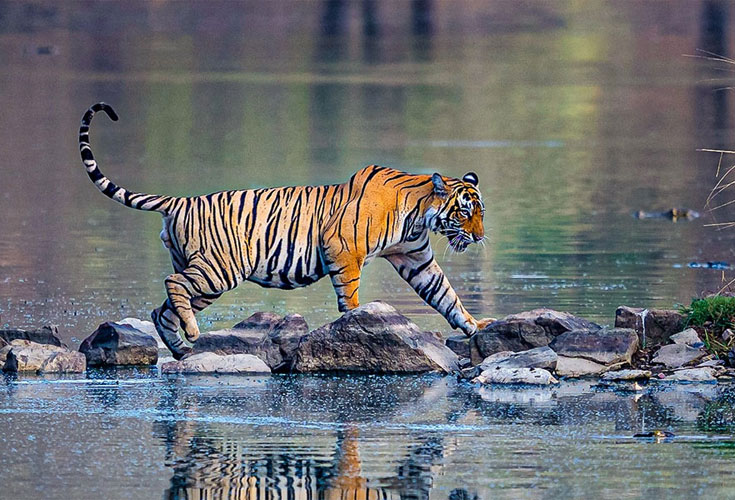
Route Delhi - Agra - Ranthambore - Jaipur - Delhi
 10 Nights / 11 Days
Route Delhi - Agra - Jaipur - Udaipur - Delhi
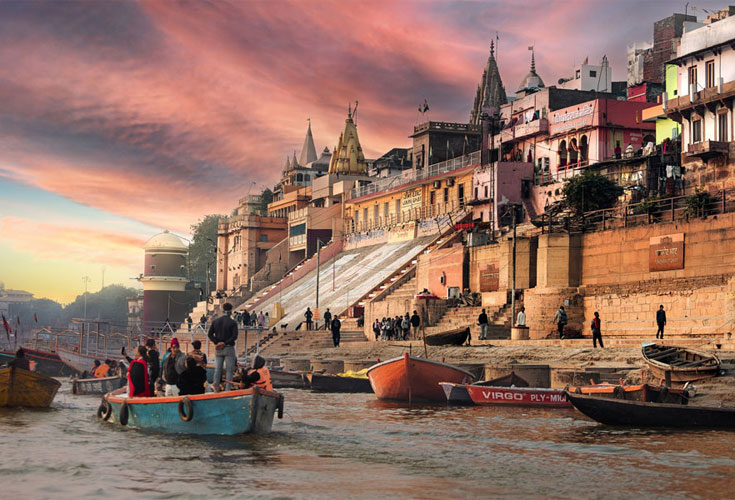 10 Nights / 11 Days
Route Delhi - Varanasi - Agra - Jaipur - Delhi
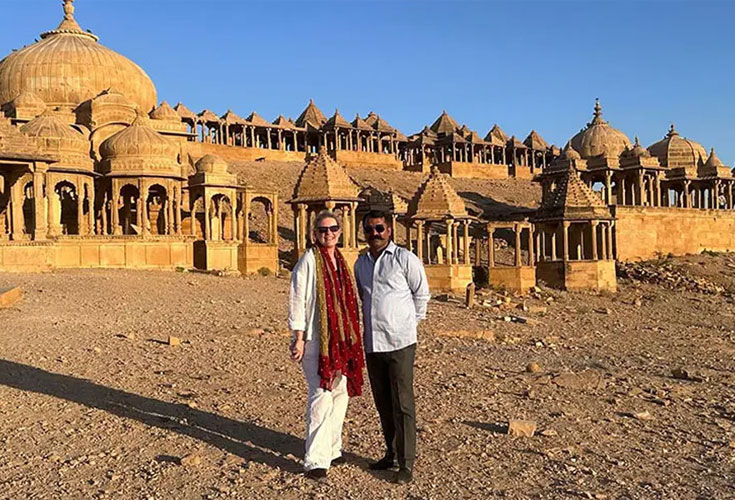 13 Nights / 14 Days
Route Delhi - Agra - Jaipur - Jodhpur - Udaipur - Delhi
Let Us Plan It
Send dates and interests. A written proposal follows within 48 hours.
Start the brief →Ready When You Are
Speak to a curator directly — +91 97990 02277.
WhatsApp A CuratorIndia & Beyond
Chauffeur-driven travel nationwide, by the day or the fortnight.
See the fleet →