
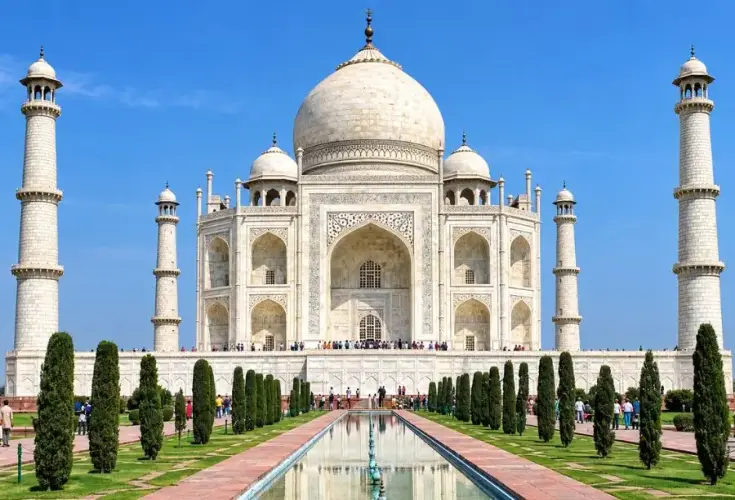
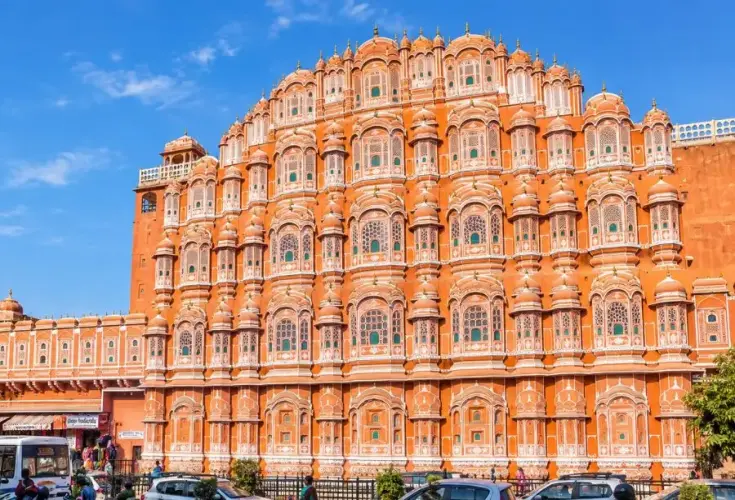
Three cities provide a compelling introduction to northern India, yet each speaks in a completely different architectural and cultural language. Delhi carries the remains of successive empires alongside the institutions and neighborhoods of a modern capital. Agra represents the height of Mughal artistic ambition, most famously in the marble perfection of the TajMahal. Jaipur shifts the setting again, bringing Rajput forts, royal residences, planned avenues, observatories, craft traditions and the distinctive character of Rajasthan into the journey.
Your private Golden Triangle journey begins in Delhi, where you will be met on arrival and assisted with the transfer to your hotel. After an international flight, the first day is deliberately uncomplicated. There is no need to move immediately from the airport into a demanding sightseeing schedule. Once you have checked in, the remainder of the arrival period is reserved for settling into your room, resting and becoming accustomed to the local time. Your hotel will be chosen according to your preferred style, whether that means a distinguished central address, a contemporary retreat or a property with a stronger sense of Delhi's history.
Delhi is an appropriate place to begin because the city introduces many of the historical layers that will continue through Agra and Jaipur. For centuries, rulers established capitals in and around present-day Delhi, leaving behind forts, tombs, mosques, ceremonial avenues and entire urban districts. The result is not one historical city preserved in isolation, but a modern metropolis in which very different periods exist surprisingly close to one another. The following day's sightseeing will make those contrasts much clearer, so the arrival day is intentionally kept free of major monuments.
Depending on your arrival time and energy, the evening can remain entirely at leisure. Guests arriving earlier may choose to enjoy the hotel, take a gentle walk in an appropriate nearby area or have an unhurried dinner before retiring for the night. There is no formal sightseeing requirement today, and that is intentional. A comfortable first evening makes a considerable difference before a full day in the capital and establishes the measured pace that will continue throughout this luxury Golden Triangle tour in India.
Overnight: Delhi
After breakfast, meet your private guide and begin with Old Delhi, an area whose lanes, religious buildings and commercial quarters retain the density of the Mughal-era city. Visit Jama Masjid, commissioned by Emperor Shah Jahan and positioned above the historic streets of Shahjahanabad. From here, the character of Old Delhi is best understood at street level. A rickshaw ride through the lanes around ChandniChowk provides a close view of markets, old merchant quarters, places of worship and businesses that operate within one of the capital's most historically important commercial districts.
Continue through the city while your guide places Old Delhi within the wider story of the capital. You will see the vicinity of the Red Fort from outside before moving toward Raj Ghat, the memorial associated with Mahatma Gandhi. Later, the architectural mood changes considerably as the route moves into New Delhi. Drive through the ceremonial heart of the capital, passing broad avenues and important government buildings before seeing India Gate, the monumental war memorial that remains one of the city's best-known landmarks. The shift from the enclosed streets of Old Delhi to the planned geometry of New Delhi is one of the day's most revealing contrasts.
The afternoon includes Humayun's Tomb, a particularly important stop before traveling to Agra. Built in the 16th century, the complex demonstrates ideas in garden planning, symmetry and monumental tomb architecture that would reach an even more ambitious expression during the later Mughal period. Time permitting, the day's program may also incorporate another carefully selected Delhi site according to opening hours and your interests. Return to your hotel in the late afternoon or early evening, leaving the remainder of the day free rather than extending sightseeing unnecessarily after a substantial introduction to the city.
Overnight: Delhi
Following breakfast, leave Delhi in your private vehicle for the drive to Agra. Modern highways have made this journey considerably more comfortable, and the transition provides a useful pause between two cities with very different scales. On arrival in Agra, check into your hotel and take time for lunch and a short rest before beginning the afternoon program. Depending on the property selected, your stay may offer views toward the TajMahal or a quieter resort atmosphere away from the busiest parts of the city.
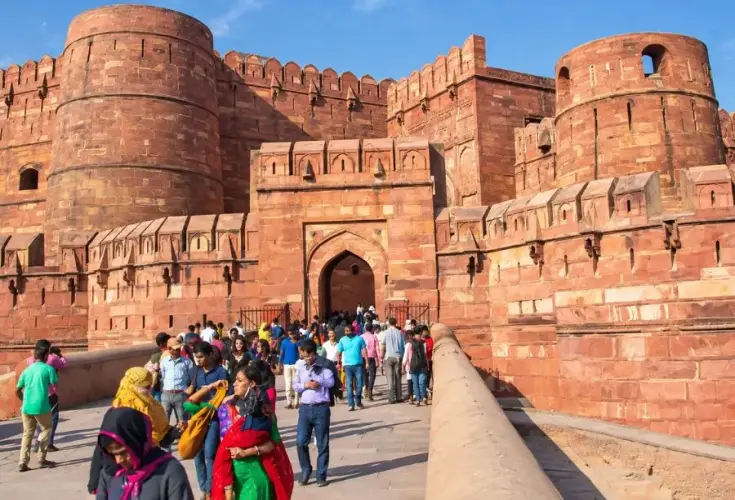
Later, visit Agra Fort, a vast fortified complex developed principally under Emperor Akbar and subsequently altered by later Mughal rulers. Behind its imposing red sandstone walls are audience halls, courtyards, residential areas and palace structures that reflect changing architectural tastes within the imperial court. The fort is valuable not merely as another monument but as historical context for the TajMahal. Parts of the complex overlook the Yamuna River, creating a physical and historical connection between two of Agra's most important sites.
As the afternoon softens, there may be time to appreciate the TajMahal from a different perspective before the following morning's closer visit, subject to local conditions and your chosen program. The evening is deliberately light. Return to the hotel for dinner or spend time enjoying the property rather than adding another formal activity. Agra is often treated as a brief stop between Delhi and Jaipur, but allowing a full night here makes it possible to approach its Mughal heritage at a more comfortable rhythm.
Overnight: Agra
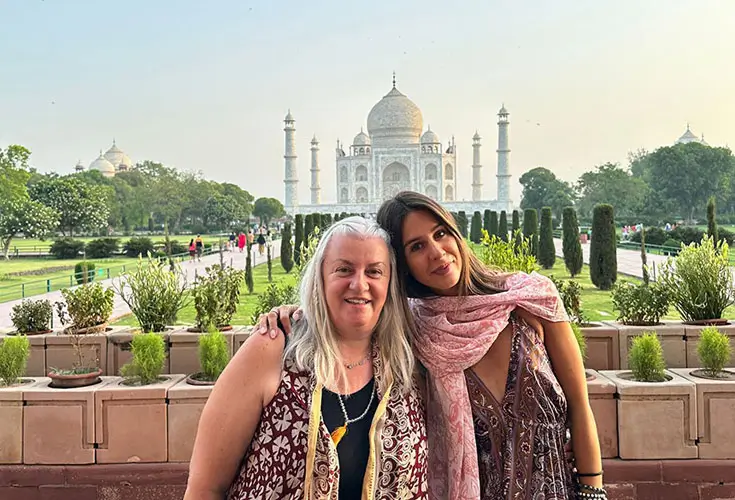
Begin early for the TajMahal, when the morning light and comparatively cooler air provide a particularly rewarding setting for the monument. Commissioned by Shah Jahan in memory of MumtazMahal, the complex is celebrated for much more than its white marble dome. Your guide will draw attention to its symmetry, calligraphy, stone inlay, gardens and carefully controlled architectural perspectives. Time is allowed to walk through the grounds and observe the monument from different positions rather than treating the visit simply as a photographic stop.
Return to the hotel for breakfast before departing for Jaipur. The road west marks a gradual transition away from the Mughal centers of Delhi and Agra toward Rajasthan. Depending on the agreed itinerary and available time, a stop may be made at FatehpurSikri, the remarkable imperial city established by Emperor Akbar. Its red sandstone courts, gateways, audience spaces and residential structures offer another perspective on Mughal architecture and imperial planning. The site is extensive enough to reward a thoughtful guided visit before continuing the journey.
Arrive in Jaipur later in the day and check into your hotel. Rajasthan's capital immediately feels different from both Delhi and Agra, with the Aravalli Hills forming a backdrop to forts and the historic city. Rather than beginning major sightseeing immediately after the road journey, the evening is kept at leisure. Enjoy the hotel's gardens, pool, spa or dining facilities, depending on your chosen property. This pause prepares you for a full day devoted to Jaipur's royal architecture and scientific heritage.
Overnight: Jaipur
After breakfast, drive toward Amber Fort, positioned above the old settlement of Amer outside central Jaipur. The approach itself is memorable, with the fortified complex rising across the hillside above Maota Lake. Enter the fort and move through its gateways, courtyards, halls and private apartments with your guide. Amber developed under successive rulers and incorporates both defensive architecture and highly decorative palace spaces. Mirror work, carved stone, painted surfaces and carefully arranged courtyards reveal how the complex functioned as both a seat of power and a royal residence.
Return toward Jaipur and stop for a suitable view of the HawaMahal, whose many-windowed façade has become closely associated with the city. Continue to the City Palace, still connected with Jaipur's former royal family and containing a combination of courtyards, gateways, museum collections and ceremonial spaces. Nearby stands JantarMantar, the astronomical observatory established by Maharaja Sawai Jai Singh II. Its monumental instruments demonstrate the scientific interests behind Jaipur's founding and offer a fascinating contrast to the decorative architecture encountered elsewhere during the day.
The later afternoon can be adapted to your interests. Jaipur remains an important center for jewelry, hand-block printing, textiles, blue pottery and other craft traditions, and travelers interested in design may choose to spend time with reputable workshops or specialists. Those who prefer a quieter schedule can return to the hotel and leave the rest of the day unscheduled. The objective is not to turn Jaipur into a succession of compulsory stops, but to provide enough historical grounding while preserving time for the aspects of the city that most appeal to you.
Overnight: Jaipur
The second day in Jaipur allows the city to be approached differently. After breakfast, return to the historic center for a closer look at the streets and neighborhoods beyond the major monuments. The old city was laid out according to a formal plan in the 18th century, and its markets continue to organize much of their trade around particular crafts and goods. With your guide, spend time observing everyday commerce, architectural details, small temples and traditional shopfronts that are easy to miss when moving only between Jaipur's headline attractions.
Depending on your interests, the morning can place greater emphasis on the city's craftsmanship. Jaipur has long been associated with gemstone cutting, jewelry, textiles and hand-block printing, and carefully chosen visits can provide useful context for how these traditions continue today. Alternatively, the program can focus more heavily on architecture, photography or food. This flexibility is particularly valuable on a private Jaipur tour, because time can be directed toward subjects that genuinely interest you instead of following a standardized shopping or sightseeing schedule.
The afternoon is intentionally less structured. Return to your hotel for lunch, spend time by the pool, book a spa treatment independently, or simply enjoy several hours without an appointment. Travelers who would like to continue sightseeing can discuss suitable options with their guide, while those staying in a palace or resort-style property may prefer to make the hotel part of the day. Your final evening in Rajasthan is free for dinner at the hotel or at a carefully chosen restaurant, bringing the active sightseeing portion of the Classic Golden Triangle to an unhurried close.
Overnight: Jaipur
Enjoy breakfast at the hotel before checking out for your private transfer toward Delhi. The final day's arrangements will depend on the timing of your onward or international flight. When schedules permit, departure can be kept relaxed, with sufficient time allowed for the road journey and airport formalities. Your driver will take the most appropriate route according to current conditions, and planned departure times should always account for the unpredictability that can accompany road travel around major Indian cities.
The drive provides a final transition from Rajasthan back toward the national capital and completes the triangular route that gives this itinerary its name. Over seven days, the journey has moved through several distinct periods of northern Indian history: the Mughal legacy of Delhi and Agra, the architectural achievement of the TajMahal, and the Rajput traditions represented by Amber and Jaipur. Just as importantly, the route has allowed those places to be encountered as living cities rather than only as collections of monuments.
On arrival in Delhi, transfer directly to the airport for your onward journey, subject to your flight schedule. Guests continuing elsewhere in India can instead connect with their next arrangements, and additional hotel accommodation can be planned when flight timings require it. The 7-day Golden Triangle tour ends here, having provided a compact but well-paced introduction to three of northern India's most significant destinations.
Meals: Breakfast
Tour Ends: Delhi
What the price includes
What it does not
Starting from
On request
per person · twin share
Get In Touch
No planning fee, no obligation. A curator replies within two hours - or call +91 97990 02277.
 8 Nights / 9 Days
Route Delhi - Agra - Jaipur - Delhi
 9 Nights / 10 Days
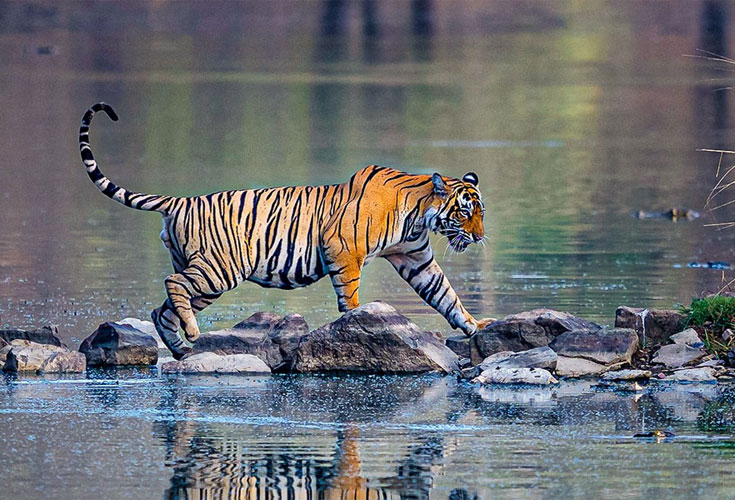
Route Delhi - Agra - Ranthambore - Jaipur - Delhi
 10 Nights / 11 Days
Route Delhi - Agra - Jaipur - Udaipur - Delhi
 10 Nights / 11 Days
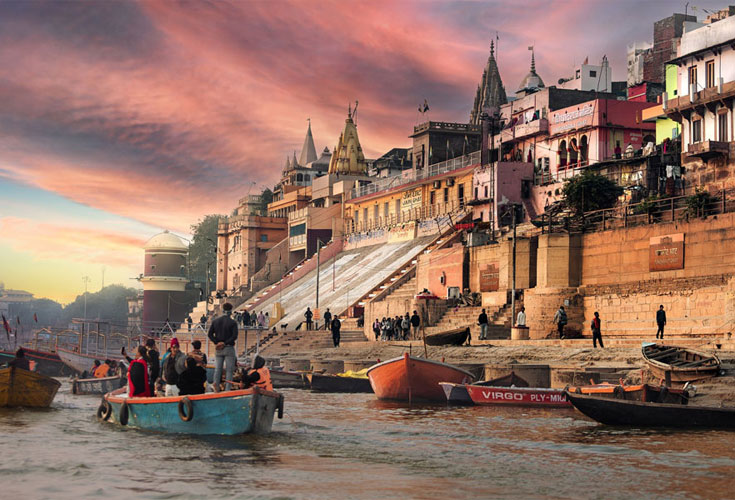
Route Delhi - Varanasi - Agra - Jaipur - Delhi
 13 Nights / 14 Days
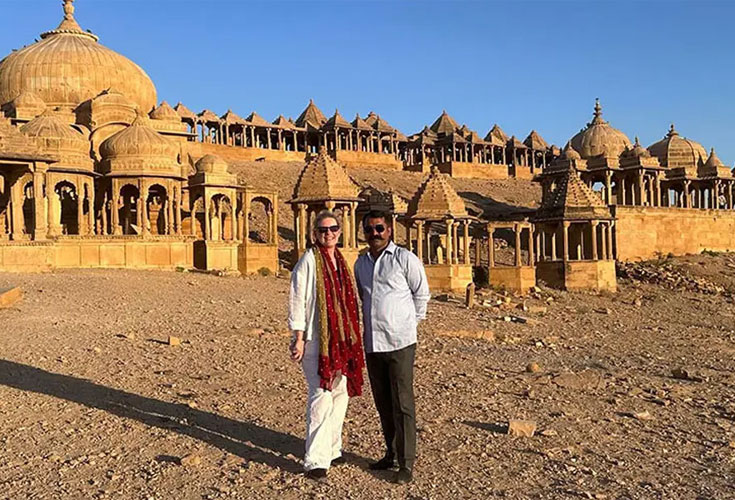
Route Delhi - Agra - Jaipur - Jodhpur - Udaipur - Delhi
Let Us Plan It
Send dates and interests. A written proposal follows within 48 hours.
Start the brief →Ready When You Are
Speak to a curator directly — +91 97990 02277.
WhatsApp A CuratorIndia & Beyond
Chauffeur-driven travel nationwide, by the day or the fortnight.
See the fleet →