

Northern India becomes far more interesting when its great cities are balanced with time in the wilderness. This 10-day journey moves from Delhi’s layered history to Agra’s Mughal architecture, then leaves the urban route behind for Ranthambore’s dry forests before continuing into Jaipur. The contrast gives the itinerary its character: one morning may be spent studying marble inlay at the TajMahal, while another begins before sunrise with the sound of birds and the possibility of a tiger moving through the forest.
On arrival at Delhi International Airport, complete immigration and baggage formalities before meeting the local representative in the arrivals area. Assistance will be provided with luggage and the transfer to your hotel in a private air-conditioned vehicle. The first day is kept intentionally simple because long-haul arrivals can vary considerably in timing and energy levels. After check-in, take time to settle into your room, freshen up and become comfortable with the surroundings. No formal sightseeing is scheduled, allowing the journey to begin without unnecessary pressure.
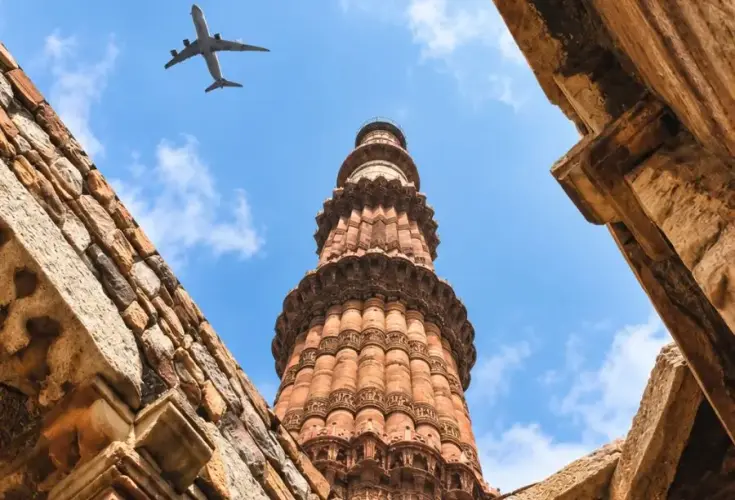
Delhi is not one city in the conventional sense, but a collection of historical settlements, imperial capitals and modern neighborhoods spread across a vast metropolitan area. Over the following two days, your guide will help distinguish the city’s Mughal, Sultanate, colonial and contemporary layers. This context becomes useful later in Agra, where the story of the Mughal court develops further, and in Jaipur, where a very different royal tradition comes into view. Beginning here therefore gives the route historical continuity rather than making each destination feel separate.
The remainder of the day is at leisure, and how you spend it can depend entirely on your arrival time. Early arrivals may prefer lunch at the hotel, a gentle walk in the grounds or a few quiet hours by the pool. Guests landing later in the day can simply enjoy dinner and retire early. The objective is to arrive properly, rest well and begin the first full day of this Golden Triangle and Ranthambore private tour with enough energy to enjoy the capital.
Overnight: Delhi
After breakfast, meet your private guide and head toward Old Delhi, where the morning begins near Jama Masjid. Built during the reign of Shah Jahan, the mosque stands above the streets of the former Mughal capital of Shahjahanabad. From this elevated setting, continue into the surrounding lanes, where markets, religious buildings, small businesses and residential spaces exist in close proximity. A cycle-rickshaw ride through the ChandniChowk area adds a street-level perspective that cannot be gained from a vehicle.
The morning continues through the historical center, passing the vicinity of the Red Fort before visiting Raj Ghat, the memorial dedicated to Mahatma Gandhi. The character of the day then shifts as you move toward New Delhi, where broad avenues, roundabouts and monumental government buildings replace the narrow streets of the old city. See India Gate and the principal ceremonial district from suitable viewpoints while your guide explains how the 20th-century capital was planned and how it differs from the earlier imperial centers.
Later, visit Humayun’s Tomb, one of the most important architectural stops on the route to Agra. Its formal garden plan, symmetry and monumental scale make it an especially useful introduction to the development of Mughal funerary architecture. The complex is less crowded than many headline attractions and allows time to appreciate proportion, stonework and landscape design. Return to the hotel in the late afternoon, leaving the evening free for rest or dinner at your own pace.
Overnight: Delhi
Depart Delhi after breakfast and travel by private vehicle to Agra, a journey that provides a gradual transition away from the capital. Modern road connections make the drive comfortable, and there is no need to leave at an unreasonable hour. On arrival, check into your hotel and pause for lunch before beginning the afternoon sightseeing. The schedule is deliberately arranged so that the TajMahal is reserved for the following morning, allowing today to focus on the wider history of Mughal Agra.
Visit Agra Fort, a vast red sandstone complex that served as a major imperial residence and administrative center. Behind the defensive walls are palaces, audience halls, courtyards and later marble additions that reflect the tastes of several Mughal rulers. Your guide will explain how the fort changed over time and how its architecture mirrors the political and personal history of the dynasty. Views across the Yamuna River also provide a visual relationship with the TajMahal in the distance.
Later in the day, there may be time for a quieter stop at an appropriate viewpoint or for a visit connected with Agra’s traditional stone-inlay work, depending on your interests and the pace of the afternoon. These smaller experiences help provide context for the decorative techniques seen in the monuments without extending the day unnecessarily. Return to the hotel before evening and enjoy dinner at leisure. A relatively early night is recommended because the next morning begins with one of the journey’s most important visits.
Overnight: Agra
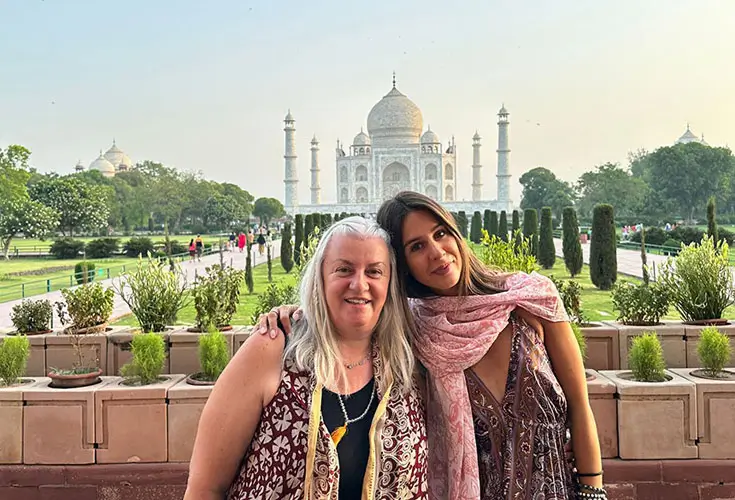
Begin the morning early with a visit to the TajMahal, when the lower light gives the marble surfaces greater definition and the grounds are generally more comfortable for walking. Enter through the monumental gateway and take time to appreciate the full composition rather than moving directly toward the mausoleum. The gardens, reflecting pools, mosque, river setting and symmetrical planning are essential parts of the design. Your guide will explain the building’s historical context while also pointing out calligraphy, stone inlay and subtle variations in the marble work.
Return to the hotel for breakfast and check out before beginning the journey toward Ranthambore. The route gradually moves away from the urban environment of Agra and into the landscapes of eastern Rajasthan. Depending on road conditions and the final operational plan, lunch can be arranged at a suitable stop en route. The drive is longer than the previous day’s transfer, so no major sightseeing is added simply to fill the schedule. The objective is to reach the safari lodge or resort with enough time to settle in comfortably.
On arrival near Ranthambore National Park, check into your accommodation and take the remainder of the day at leisure. The atmosphere is noticeably different from Delhi and Agra, with quieter surroundings and a stronger connection to the surrounding forest landscape. Meet the lodge team, review the practical arrangements for the next day’s safari and prepare for an early start. Dinner can be taken at the property before retiring for the night, with the following morning devoted entirely to wildlife.
Overnight:Ranthambore
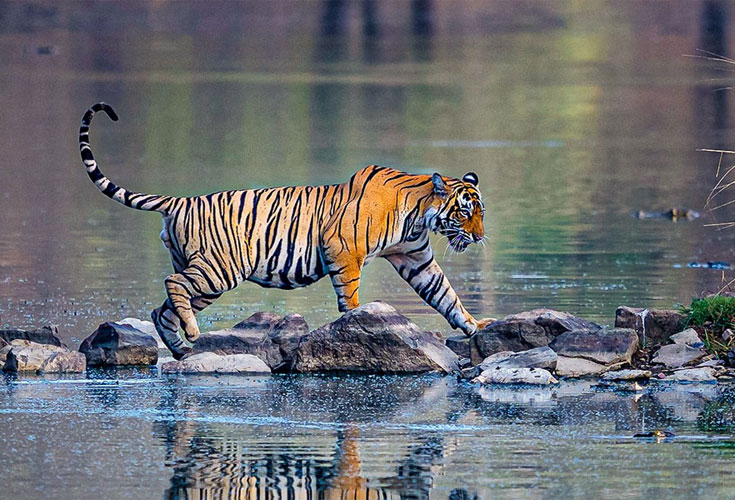
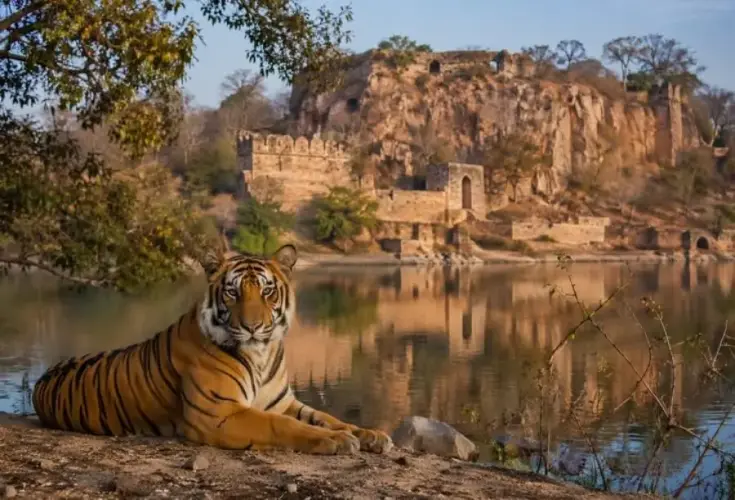
Wake before sunrise for your first scheduled safari in Ranthambore National Park. After tea or coffee, proceed to the assigned safari vehicle according to the park’s permit system. The reserve includes dry deciduous forest, open grassland, rocky ridges, lakes and old structures that create a landscape unlike the urban settings of the previous days. While tigers are the principal reason many visitors come here, the morning can also bring sightings of sambar deer, spotted deer, nilgai, langurs, crocodiles, wild boar and numerous bird species.
A good safari depends on patience rather than constant movement. Naturalists and drivers pay attention to tracks, alarm calls and recent animal activity while deciding how best to use the allotted park time. A tiger may appear suddenly or not at all, and the absence of a sighting does not make the drive unsuccessful. Watching the forest gradually come to life, observing smaller species and understanding how animals use the terrain are important parts of the experience. Return to the lodge after the morning drive for breakfast and a few quiet hours.
After lunch and rest, depart again for an afternoon safari, entering the reserve under a different light and with changing animal activity. The route and zone may vary according to the permit allocation, providing another perspective on the park. As temperatures begin to fall later in the day, wildlife can become more active around water sources and open areas. Return to the lodge after sunset, enjoy dinner and spend the evening at leisure, allowing the pace of the forest to define the day rather than adding unrelated activities.
Overnight:Ranthambore
The morning begins more gently after the previous day’s safari schedule. Enjoy breakfast at the lodge and, if time permits, spend a little while in the property’s grounds before checking out. Travelers who particularly value wildlife may choose to request an additional safari in advance, subject to permit availability and the timing of the onward drive. Otherwise, the day proceeds at a comfortable pace, allowing you to leave Ranthambore without another pre-dawn start.
Travel by private vehicle toward Jaipur, crossing rural areas and smaller towns on the way to Rajasthan’s state capital. The transition is interesting because the landscape shifts from forest and farmland toward a more urban environment framed by the Aravalli Hills. Stop for refreshments or lunch when appropriate, rather than following a rigid schedule. The drive is part of the day’s rhythm, and keeping it uncluttered helps avoid arriving in Jaipur fatigued.
Reach Jaipur in the afternoon and check into your hotel for a two-night stay. No major monument visit is scheduled immediately after arrival, leaving time to enjoy the property or take a gentle walk if desired. Those staying in a palace-style hotel may prefer to spend the evening within the grounds, while others may wish to dine at a local restaurant. Tomorrow will be devoted to the city’s principal royal and architectural landmarks, so tonight is best kept unhurried.
Overnight: Jaipur
After breakfast, travel with your private guide to Amber Fort, located in the hills outside central Jaipur. The approach provides a strong sense of the fort’s defensive position before you enter the complex itself. Pass through a sequence of courtyards and gateways while your guide explains how the site developed under successive rulers. Public audience areas gradually give way to more private royal spaces, where mirror work, carved stone, decorative plaster and carefully planned views reveal the refined side of a fortress built for power.
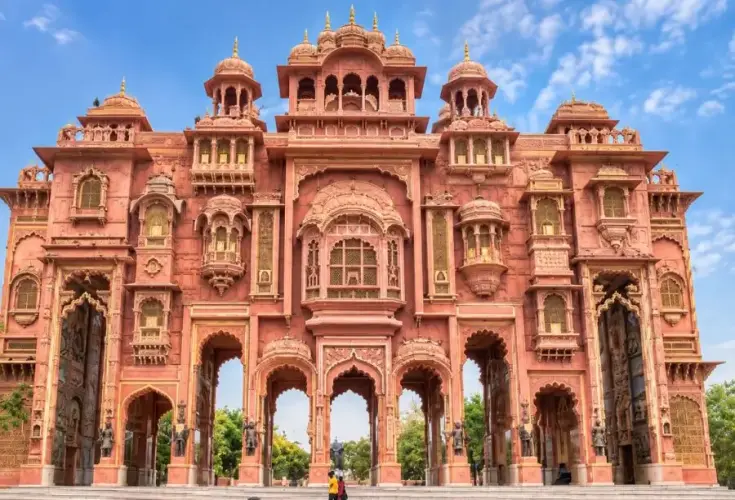
On the return toward the city, pause at an appropriate viewpoint for JalMahal, the palace set within Man Sagar Lake. Continue into central Jaipur and visit the City Palace, where ceremonial courtyards, collections, gateways and royal residences sit within the planned historic city. The palace remains an important expression of Jaipur’s ruling tradition and offers a useful contrast to the hilltop scale of Amber. Time is allowed for a proper visit rather than moving quickly between photography stops.
Walk nearby to JantarMantar, the astronomical observatory established by Sawai Jai Singh II. Its monumental instruments were designed for observation and calculation, and their scale makes the site both visually striking and intellectually unusual. Finish the formal sightseeing with a view of the HawaMahal, whose façade was closely connected with the life of the royal household. Return to the hotel in the late afternoon, with the evening free for dinner or rest.
Overnight: Jaipur
Today begins at a slower pace, allowing breakfast to be taken without an early departure. Jaipur’s identity is not limited to forts and palaces; the city has long been associated with textiles, gemstones, jewelry, ceramics and decorative arts. With your guide, spend part of the morning in selected areas of the old city or with reputable craftspeople, depending on your interests. The emphasis is on understanding skills and materials rather than turning the day into a series of commercial stops.
A walk through parts of the historic market district can reveal another side of Jaipur. Shopfronts, temples, food stalls and craft businesses sit within the planned street pattern established when the city was founded. Your guide can point out architectural details and local practices that are easy to miss when moving only by car. Travelers interested in photography may prefer to linger in quieter streets, while those more interested in food can include carefully selected tastings or culinary stops.
The afternoon is deliberately left open. Return to the hotel for lunch, use the pool or spa independently, or simply enjoy a few hours without a formal plan. If there is a particular museum, workshop or neighborhood you would like to see, that can be considered within the private arrangement. This lighter day provides balance after several early starts and prepares you for the return journey to Delhi the following morning.
Overnight: Jaipur
After breakfast, check out from the hotel and begin the private drive back to Delhi. The departure time can be adjusted around the practical requirements of the road journey and your onward arrangements. The route returns you from Rajasthan to the national capital, completing the geographical loop that began several days earlier. Stop for refreshments when needed, keeping the day comfortable rather than treating the drive as a race.
On arrival in Delhi, check into your hotel for the final night. This additional night is useful because it avoids placing an international departure immediately after a long road transfer. It also gives the journey a more composed ending, particularly after a route that has included city touring, safari drives and multiple changes of setting. Depending on arrival time, the remainder of the afternoon can be entirely at leisure.
Your final evening in India can be spent quietly at the hotel or with dinner at a suitable restaurant according to preference. No formal sightseeing is required, although guests with specific interests may choose an optional activity if timing permits. This final night also creates a buffer against unexpected road delays and allows the airport transfer the next day to be planned much more comfortably.
Overnight: Delhi
Enjoy breakfast at the hotel and spend the morning at leisure according to your flight schedule. There is no need to vacate the city unusually early unless your departure time requires it. Your private transfer will be arranged to Delhi International Airport with an appropriate allowance for traffic and airline check-in formalities. The exact pick-up time will be confirmed based on the flight details.
The journey has covered several very different expressions of northern India within a single route. Delhi introduced the long historical arc of the region, Agra brought the Mughal court and the TajMahal into focus, Ranthambore replaced architecture with forest and wildlife, and Jaipur closed the cultural portion of the trip with Rajasthan’s forts, palaces and planned royal city. The contrast is deliberate and gives the itinerary greater depth than a conventional three-city circuit.
On arrival at the airport, assistance will conclude at the agreed point and you will proceed with your onward travel. Guests continuing elsewhere in India can instead connect with domestic flights or additional arrangements. The 10-day Golden Triangle with Ranthambore tour ends here, combining some of northern India’s most important cultural landmarks with time in one of its best-known wildlife landscapes.
Meals: Breakfast
Tour Ends: Delhi
What the price includes
What it does not
Starting from
On request
per person · twin share
Get In Touch
No planning fee, no obligation. A curator replies within two hours - or call +91 97990 02277.
 6 Nights / 7 Days
Route Delhi - Agra - Jaipur - Delhi
 8 Nights / 9 Days
Route Delhi - Agra - Jaipur - Delhi
 10 Nights / 11 Days
Route Delhi - Agra - Jaipur - Udaipur - Delhi
 10 Nights / 11 Days
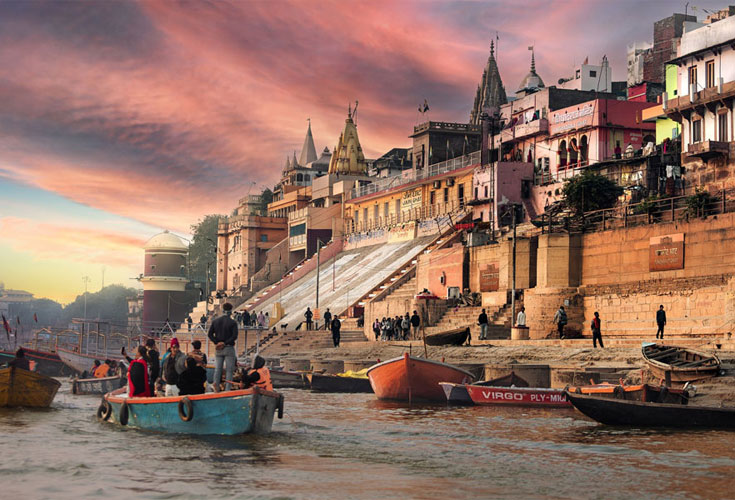
Route Delhi - Varanasi - Agra - Jaipur - Delhi
 13 Nights / 14 Days
Route Delhi - Agra - Jaipur - Jodhpur - Udaipur - Delhi
Let Us Plan It
Send dates and interests. A written proposal follows within 48 hours.
Start the brief →Ready When You Are
Speak to a curator directly — +91 97990 02277.
WhatsApp A CuratorIndia & Beyond
Chauffeur-driven travel nationwide, by the day or the fortnight.
See the fleet →