
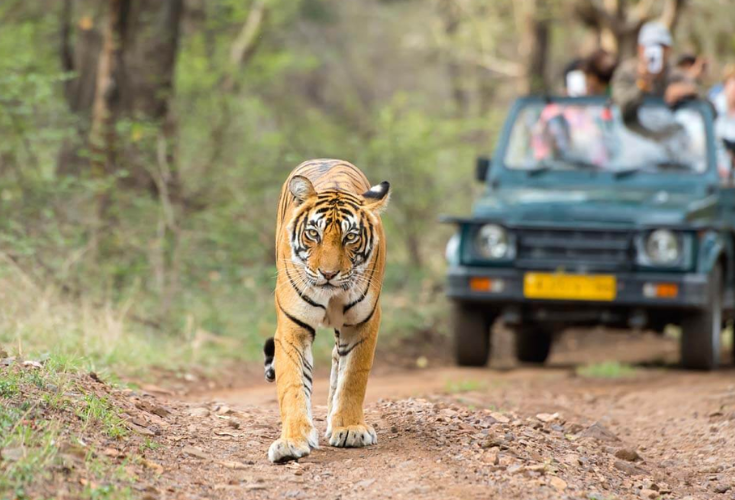
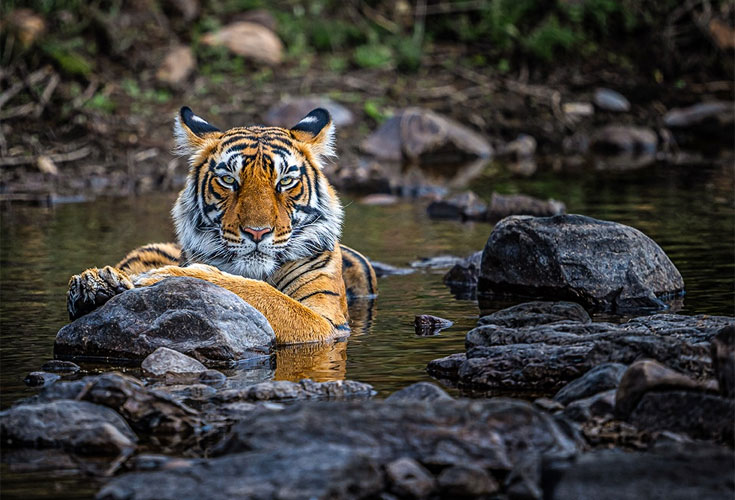

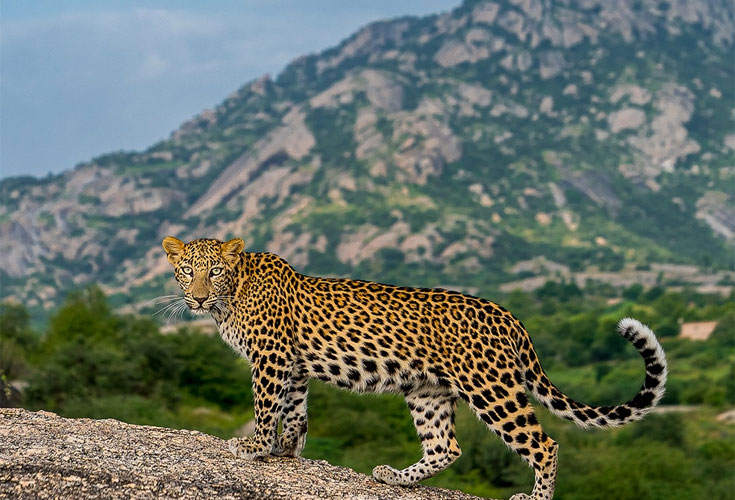
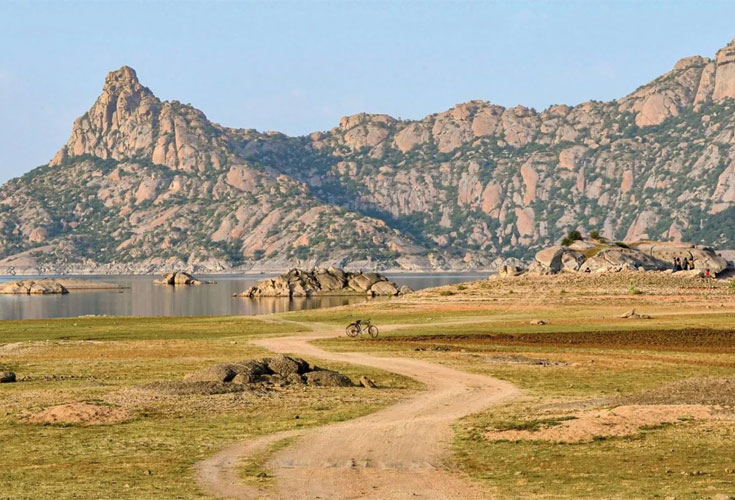
Tiger forests in the east and leopard country in the west frame a route that crosses Rajasthan through royal capitals, smaller heritage towns, lake country and the Thar Desert. Rajasthan Grand Wildlife & Heritage Journey has been designed for travellers who want the state’s celebrated architecture without separating it from the dramatically different natural environments surrounding its historic cities.
Arrive at Delhi International Airport, complete the required arrival formalities and meet your representative for a private transfer to the hotel. Delhi acts as the gateway to this extensive Rajasthan itinerary, providing convenient international access before the journey moves towards Jaipur and the wildlife landscapes beyond it.
No demanding sightseeing is planned for the first day. International arrival times vary considerably, and keeping the schedule flexible allows proper rest before the overland programme begins. Travellers reaching Delhi earlier in the day may take a gentle orientation drive or enjoy the hotel, while evening arrivals can proceed directly to check-in.
Your representative will confirm the following morning’s departure arrangements and assist with any immediate travel requirements. The route ahead crosses several distinct geographical regions, so this comfortable opening day is intentionally kept separate from the main sightseeing programme.
Overnight: Delhi
Leave Delhi after breakfast and travel privately towards Jaipur, the first major Rajasthan destination on the route. As the journey moves away from the capital region, increasingly open landscapes begin replacing dense urban development. Your chauffeur can make appropriate comfort stops along the way, keeping the transfer flexible.
Arrive in Jaipur and check into your hotel. The city was developed as a planned royal capital and remains known for its broad historic avenues, monumental gateways and distinctive old-city façades. After time to rest, take an orientation drive through selected areas to understand the layout before beginning the detailed heritage programme.
If daylight permits, stop near Hawa Mahal for an exterior view and continue through part of the historic market district. Jewellery, textiles and traditional crafts remain strongly associated with Jaipur’s commercial identity. Return to the hotel afterwards, leaving Amber Fort and the principal royal sites for the next morning.
Overnight: Jaipur
Begin at Amber Fort, travelling into the Aravalli hills beyond central Jaipur. The former royal seat rises above Maota Lake, protected by high walls and a strategic hill position. Pass through monumental gateways and courtyards before entering palace areas where military architecture gives way to more refined residential and ceremonial spaces.
Carved stone, screened windows, painted details and mirror decoration appear throughout the accessible sections. Your guide will explain the development of the Kachwaha kingdom and the historical relationships that influenced Amber’s architecture. From elevated terraces, look across the lake, surrounding ridges and defensive walls extending through the hills.
Return to Jaipur and continue to City Palace and Jantar Mantar. The palace provides insight into the later royal court, while the neighbouring observatory contains monumental astronomical instruments associated with Maharaja Sawai Jai Singh II. Finish with a closer exterior look at Hawa Mahal and optional time in the old bazaars.
Overnight: Jaipur
After breakfast, leave Jaipur and drive towards the Ranthambore National Park region. The journey gradually moves away from a major urban centre into smaller towns, agricultural land and the drier countryside of eastern Rajasthan. This geographical change prepares the itinerary for its first wildlife chapter.
Arrive at your selected wildlife lodge or resort and complete check-in. Ranthambore combines dry deciduous woodland, lakes, rocky ridges and historic ruins within a landscape known particularly for Bengal tigers. The reserve also supports numerous herbivores, smaller predators, reptiles and bird species, making the ecosystem much broader than its famous big cats.
Spend the remainder of the afternoon at leisure and attend any available safari briefing. Reporting times, vehicle type and safari zone depend on the applicable official permit allocation. Prepare for an early start the following morning and enjoy dinner at the lodge. Tiger sightings are entirely natural and cannot be guaranteed.
Overnight: Ranthambore
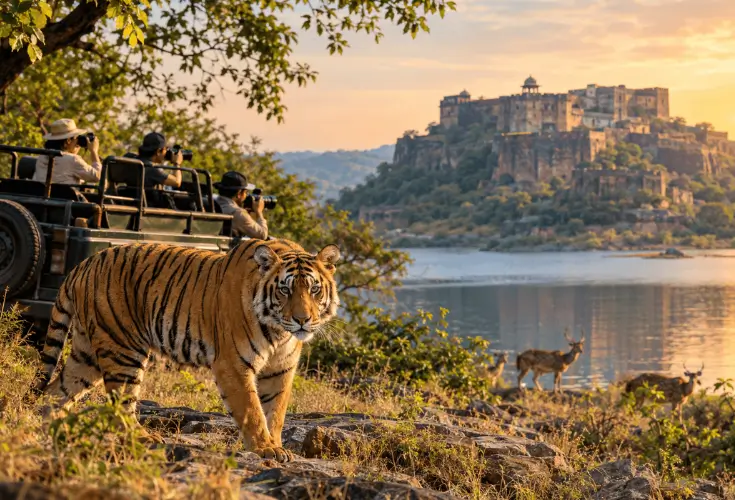
Leave the lodge early for your first scheduled Ranthambore tiger safari in an authorised vehicle. Accompanied by the assigned guide or naturalist, enter the allocated zone and begin observing the forest as it becomes active in the cooler morning hours. Tracks, alarm calls and recent wildlife movement can influence the direction and pace of the drive.
Although Bengal tigers receive the greatest attention, look for sambar, spotted deer, nilgai, wild boar, langurs, crocodiles and varied birdlife depending on the zone and season. The forest landscape itself is a major part of Ranthambore’s character, particularly where lakes, rocky slopes and old structures appear among the vegetation. Wildlife remains unpredictable on every drive.
Return to the lodge for breakfast and rest during the middle of the day. Later, depart for the scheduled afternoon safari, when changing temperatures and light create different observation conditions. Return after the drive for dinner and a quiet evening. Safari permits, zones and vehicle assignments remain subject to the official booking and allocation system.
Overnight: Ranthambore
After breakfast, leave Ranthambore and travel towards Bundi, moving through the Hadoti region of Rajasthan. The route provides a relatively gentle transition after the early safari schedule, passing smaller towns, agricultural areas and sections of countryside that receive far fewer international visitors than Jaipur or Udaipur.
Arrive in Bundi and check into your selected hotel or heritage property. The old town sits beneath a steep hillside crowned by Taragarh Fort, while historic gateways, temples and houses occupy the lanes below. Bundi’s architectural scale is more intimate than Jaipur, giving it a distinct atmosphere despite its strong royal heritage.
Later, take a guided orientation walk through selected old-town streets and visit an accessible historic stepwell if time permits. Stepwells are particularly relevant to Rajasthan’s architectural history because they combined practical water management with elaborate construction. Return to the hotel afterwards, leaving Bundi Palace and the principal heritage sites for the following morning.
Overnight: Bundi
Begin at Bundi Palace, positioned dramatically against the hillside above the town. Move through accessible courtyards and chambers while your guide explains the history of Bundi’s rulers and its distinctive artistic traditions. Surviving wall paintings and architectural details give the complex a character quite different from the more heavily restored palaces found in Rajasthan’s larger cities.
Depending on local access and timing, continue towards Taragarh Fort or another significant stepwell before leaving Bundi. The elevated fortifications help explain the strategic geography of the settlement, while the town’s historic water structures demonstrate how architecture responded to environmental conditions. Complete the visit at an unhurried pace before beginning the drive south.
Continue towards Udaipur, with the landscape gradually changing as the route approaches the Aravalli region. Arrive later in the day and check into your hotel. The presence of lakes, hills and pale palace architecture provides an immediate contrast with Ranthambore’s forest and Bundi’s compact historic streets. Keep the evening at leisure after the road journey.
Overnight: Udaipur
Begin with a guided visit to Udaipur City Palace, the extensive royal complex overlooking Lake Pichola. Built and expanded by successive rulers of Mewar, it consists of interconnected courtyards, chambers, balconies and terraces. The palace’s elevated position provides changing views towards the lake, historic city and surrounding Aravalli hills.
Inside, examine paintings, decorative glass, coloured tiles, carved details and former royal spaces while learning about the history of the Sisodia rulers. The architecture developed over several generations, creating layers rather than a single uniform design. Afterwards, descend into the old quarter and visit Jagdish Temple where access and religious conditions permit.
Later, take a Lake Pichola boat ride when water levels, weather and operating conditions allow. From the water, the City Palace, ghats and island architecture can be understood as parts of a broader lakeside setting. Spend the evening at leisure, with time for the waterfront, selected shops or a relaxed dinner before the journey continues towards Jawai.
Overnight: Udaipur
Leave Udaipur after breakfast and travel towards Jawai, moving away from the lake city into the rural landscapes of the Aravalli region. The road passes through smaller settlements, agricultural areas and increasingly rugged terrain. After the architectural focus of Udaipur, the change to open countryside creates a clear transition into the second wildlife section of the itinerary.
Arrive at your selected wilderness lodge or camp and settle into the property. Jawai is characterised by dramatic granite outcrops surrounded by scrub, farmland and pastoral settlements. Leopards use caves and rocky formations across this landscape, while antelope, smaller mammals and numerous bird species can also be found in the broader region. The environment bears little resemblance to the forested safari routes experienced earlier at Ranthambore.
Later, depart with an experienced local tracker or naturalist for your first Jawai leopard safari. The drive follows suitable tracks through the countryside while guides use recent signs and local knowledge to identify areas of possible leopard activity. Wildlife remains completely unpredictable and leopard sightings cannot be guaranteed. Return to the lodge after the drive for dinner and an evening in the countryside.
Overnight: Jawai
Rise early for another scheduled leopard-tracking drive through the Jawai landscape. Cooler temperatures can provide favourable conditions for wildlife activity, while the softer morning light reveals the contours of the granite formations particularly well. Your tracker will interpret signs and movement across the terrain while maintaining appropriate distance from any wildlife encountered.
Return to the lodge for breakfast before leaving for Jodhpur. Where responsibly arranged, the morning or departure route may also provide insight into the pastoral communities that share this landscape with wildlife. Such interaction should remain respectful and locally guided, without intrusive photography or staged activities that interfere with everyday community life.
Continue north towards Jodhpur and arrive later in the day. Check into your hotel and enjoy a relaxed introduction to the former capital of Marwar. If time permits, walk near the clock tower and Sardar Market or simply admire the first views of Mehrangarh Fort rising above the city. The complete fort visit is reserved for the following morning.
Overnight: Jodhpur
Begin at Mehrangarh Fort, whose massive walls rise from a rocky ridge high above Jodhpur. Enter through a succession of fortified gateways before reaching courtyards and former palace apartments within the complex. The contrast between the fortress exterior and intricately decorated royal spaces illustrates the military strength and court culture of the Rathore rulers.
Explore museum galleries and accessible chambers containing paintings, textiles, arms and ceremonial objects. Delicate stone screens and decorated windows demonstrate the craftsmanship employed within the palace sections. From elevated viewpoints, look across the densely built city below, including neighbourhoods where blue-painted houses create Jodhpur’s characteristic urban landscape.
Continue to the marble Jaswant Thada memorial before descending into selected lanes of the old city. Spend time around local markets and smaller streets rather than adding another large monument to the day. The remainder of the afternoon can be used for the hotel, independent shopping or a craft-related visit according to individual interests.
Overnight: Jodhpur
Leave Jodhpur after breakfast and travel west towards Jaisalmer. The road crosses increasingly arid terrain, where vegetation becomes sparse and settlements are separated by broad stretches of open land. This gradual environmental change is one of the most important aspects of travelling overland through western Rajasthan and gives geographical context to Jaisalmer’s history.
The city developed in a demanding desert environment while benefiting historically from its position on regional trading routes. Merchant communities played an important role in its prosperity, leaving behind elaborate residences alongside the fortified royal centre. As the drive continues, the increasingly dry landscape makes the eventual appearance of Jaisalmer’s sandstone fort particularly striking.
Arrive in the Golden City and check into your hotel. Depending on the season and arrival time, stop at a suitable viewpoint for the late-afternoon light on Jaisalmer Fort or take a brief orientation drive through the lower city. Keep the evening unstructured, leaving the fort, Jain temples and merchant havelis for a detailed guided visit the next day.
Overnight: Jaisalmer
Enter Jaisalmer Fort in the morning and walk through the narrow lanes of this still-inhabited citadel. Houses, temples, shops and other businesses remain within its walls, distinguishing Jaisalmer from forts that now operate primarily as protected monuments. Your guide will explain how the fortified settlement developed and how desert trade influenced its prosperity.
Visit selected Jain temples within the fort according to opening hours and current religious access requirements. Their interiors contain highly detailed stone carving, pillars and sculptural decoration. Continue through accessible sections of the citadel, pausing at viewpoints where the lower city and surrounding desert landscape can be seen beyond the fort walls.
Descend afterwards to visit prominent merchant residences such as Patwon Ki Haveli, where included in the programme. Elaborately carved sandstone façades, projecting balconies and lattice screens reflect the wealth of Jaisalmer’s historic trading families. Finish around Gadisar Lake or within the old market before returning to the hotel for a relaxed evening.
Overnight: Jaisalmer
Keep the morning comparatively relaxed, allowing time to revisit a preferred part of Jaisalmer or enjoy the hotel. Depending on interest, an additional haveli, local market or selected museum can be visited. This unhurried start ensures that the later Thar Desert excursion receives adequate time rather than being compressed into an already crowded sightseeing programme.
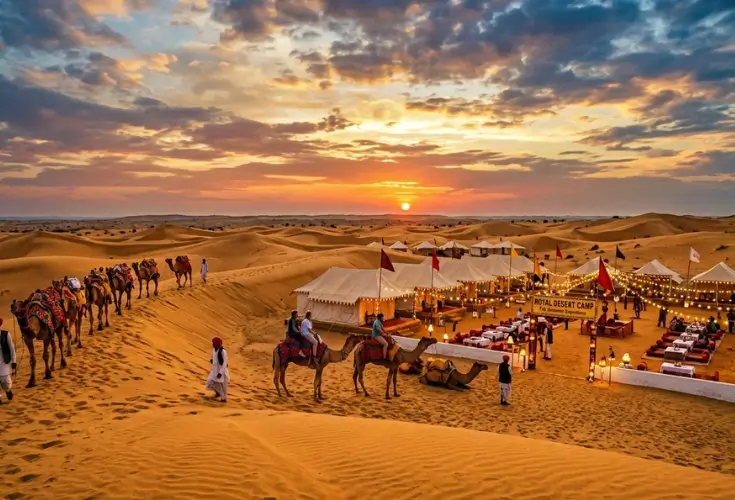
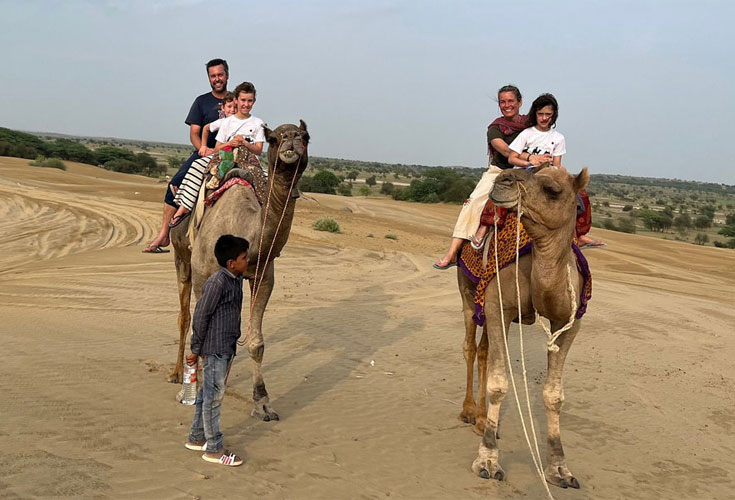
Travel outside the city into the wider desert region, where dry plains, scrubland, villages and dune systems form a more varied environment than continuous sand. Continue towards the selected desert area for a camel or jeep activity when specifically included in the final package. Remain through the late afternoon to see the landscape under the changing desert light.
After the desert programme, proceed according to the confirmed return arrangements for Delhi. Because Jaisalmer-to-Delhi transport schedules and services can vary by travel date, the most practical available flight, rail or combination of private road transfer and onward transport should be selected at booking stage rather than promising a fixed connection. Overnight travel may be used where appropriate.
Overnight: Jaisalmer / Overnight Journey / Delhi, according to confirmed transport schedule
Arrive in Delhi according to the confirmed transportation arrangement and transfer privately to the airport or an appropriate hotel when required by the onward schedule. Sufficient connection time should always be built into the final programme, particularly when arriving from Jaisalmer before an international flight. The exact structure of this day will therefore be matched to the traveller’s confirmed departure time.
Guests with a longer interval before their onward flight may arrange a hotel day room or additional Delhi services separately. No major sightseeing is fixed for the final day because transport from western Rajasthan and international departure requirements should take priority. Your representative can coordinate the final transfer according to the booked itinerary.
The 15 Days Rajasthan Grand Wildlife & Heritage Journey concludes after crossing an unusually broad range of Rajasthan landscapes. Ranthambore introduced tiger habitat and dry forest, Bundi brought the heritage of Hadoti, Udaipur represented Mewar’s lake country, Jawai added granite leopard territory, Jodhpur revealed the royal legacy of Marwar, and Jaisalmer completed the route amid sandstone architecture and the Thar Desert.
What the price includes
What it does not
Starting from
On request
per person · twin share
Get In Touch
No planning fee, no obligation. A curator replies within two hours - or call +91 97990 02277.
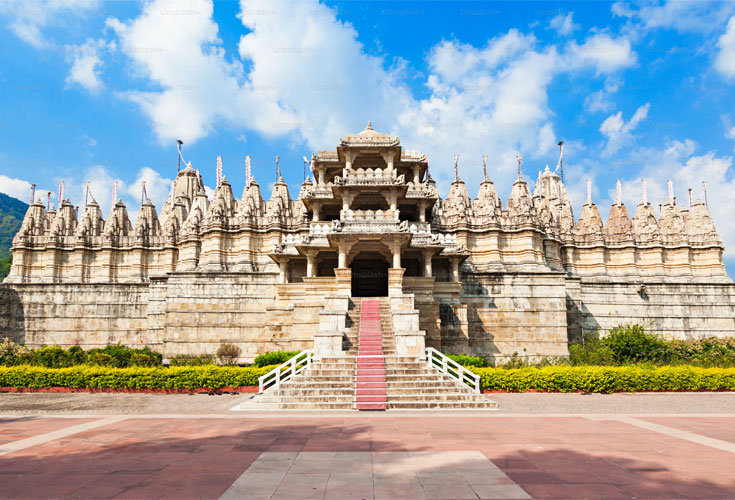 11 Nights / 12 Days
Route Jaipur - Pushkar - Jodhpur - Ranakpur - Kumbhalgarh - Udaipur
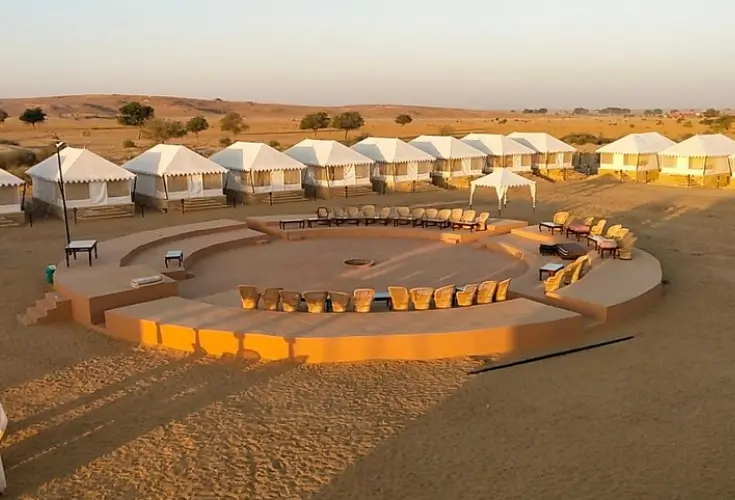 12 Nights / 13 Days
Route Jaipur - Bikaner - Jaisalmer - Jodhpur - Jawai - Udaipur
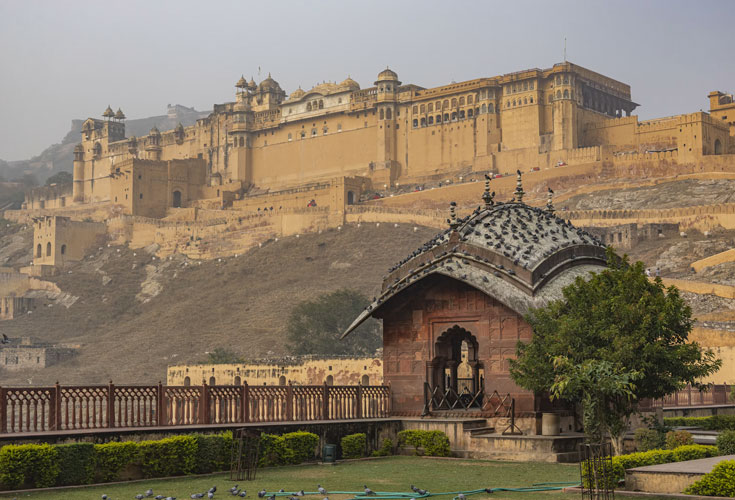 12 Nights / 13 Days
Route Delhi - Mandawa - Jaipur - Pushkar - Rohet - Jodhpur - Narlai - Udaipur
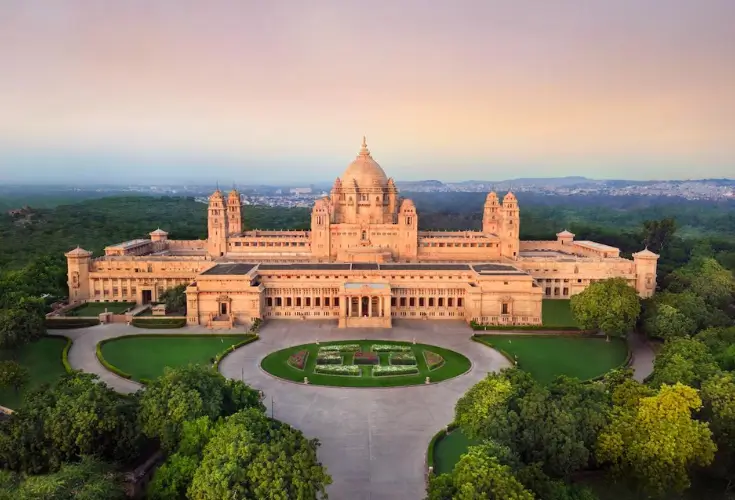 11 Nights / 12 Days
Route Jaipur - Samode - Jodhpur - Rohet - Udaipur - Shahpura
 11 Nights / 12 Days
Route Jaipur - Ranthambore - Bundi - Udaipur - Jawai - Jodhpur
 10 Nights / 11 Days
Route Jaipur - Pushkar - Jodhpur - Jaisalmer - Jaipur
 11 Nights / 12 Days
Route Jaipur - Pushkar - Jodhpur - Jaisalmer - Udaipur
 12 Nights / 13 Days
Route Delhi - Jaipur - Ranthambore - Pushkar - Jodhpur - Udaipur - Delhi
 10 Nights / 11 Days
Route Delhi - Jaipur - Ranthambore - Bundi - Udaipur - Delhi
 13 Nights / 14 Days
Route Delhi - Agra - Jaipur - Jodhpur - Udaipur - Delhi
 15 Nights / 16 Days
Route Delhi - Jaipur - Bundi - Chittorgarh - Udaipur - Narlai - Jodhpur - Jaisalmer - Delhi
 11 Nights / 12 Days
Route Jaipur - Shahpura - Jodhpur - Narlai - Udaipur
 10 Nights / 11 Days
Route Jaipur - Bikaner - Jaisalmer - Jodhpur - Jaipur
 14 Nights / 15 Days
Route Delhi - Mandawa - Bikaner - Jaisalmer - Jodhpur - Udaipur - Jaipur - Delhi
 09 Nights/10 Days
Route Delhi - Jaipur - Jodhpur - Udaipur - Delhi
Let Us Plan It
Send dates and interests. A written proposal follows within 48 hours.
Start the brief →Ready When You Are
Speak to a curator directly — +91 97990 02277.
WhatsApp A CuratorIndia & Beyond
Chauffeur-driven travel nationwide, by the day or the fortnight.
See the fleet →