
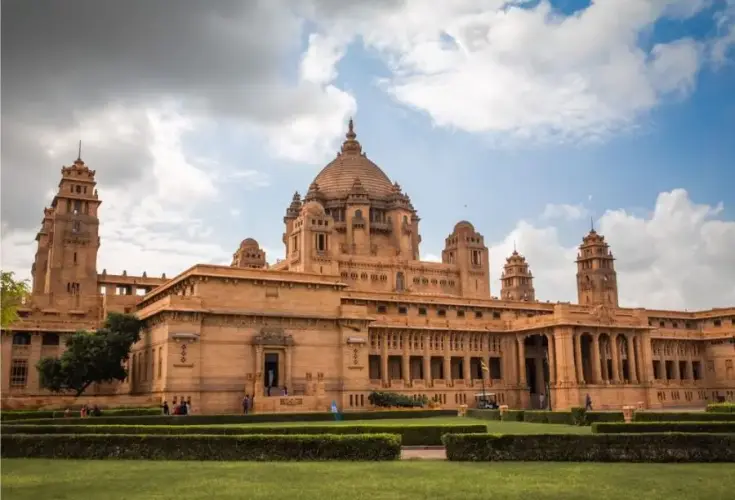
Western Rajasthan has a character that becomes stronger the farther the road moves toward the Thar Desert. Fortified capitals rise from dry plains, merchant mansions reveal the wealth once generated by long-distance trade, and sandstone changes from one region to the next. This itinerary follows that progression through Jaipur, Bikaner, Jaisalmer and Jodhpur, linking four cities that developed under different rulers and very different geographical conditions.
Travel throughout the core route by private air-conditioned vehicle with professional chauffeur.
Arrive in Jaipur and meet the local representative for your private transfer to the hotel. Depending on your wider India itinerary, arrival may be by scheduled flight, private road transfer or another prearranged connection. No demanding sightseeing is planned immediately after arrival, allowing you to settle into the property and become comfortable before the journey begins properly. Check-in procedures will be handled efficiently, after which the remaining time is yours. The first afternoon is deliberately light because the following two days provide a much fuller introduction to Jaipur.
Jaipur makes a particularly useful starting point for a western Rajasthan journey because its formal urban plan contrasts strongly with the desert cities that come later. Founded as a new royal capital rather than growing gradually around an older fort, the city was organized around broad streets, market districts and carefully defined urban blocks. The surrounding hills, fortified gateways and palace quarter give Jaipur a structure that is easy to read once its historical plan is explained. This makes it a useful architectural reference point for comparing Bikaner, Jaisalmer and Jodhpur later in the trip.
Use the evening according to your own pace. You may wish to remain at the hotel, take a short introductory drive through the city or enjoy dinner at a suitable restaurant. Guests staying in a palace-style or resort property may prefer not to leave the grounds at all. Nothing essential is missed by keeping the first evening free, and beginning without pressure allows the journey to establish a more relaxed rhythm. Formal sightseeing starts after breakfast tomorrow.
Overnight: Jaipur
After breakfast, travel with your private guide toward Amber Fort, located in the hills outside central Jaipur. The fort’s elevated setting and approach roads help explain its strategic importance long before you enter the palace areas. Pass through monumental gateways into large courtyards and continue toward increasingly private sections of the royal complex. Your guide will explain how the fort developed under successive rulers and how its military function existed alongside courtly life. Decorative mirror work, carved stone and painted surfaces provide a striking contrast to the massive defensive walls.
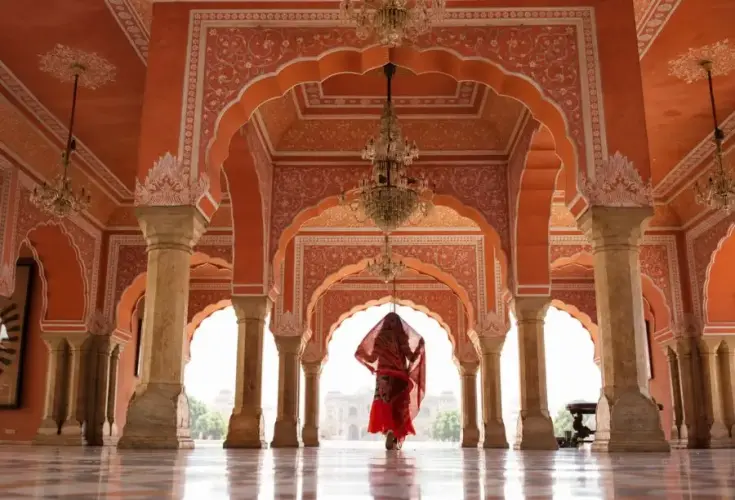
On the return toward Jaipur, pause at a suitable viewpoint for Jal Mahal, positioned within Man Sagar Lake. Continue into the historic city for a visit to the City Palace, where royal courtyards, gateways and collections reveal a more urban expression of court life. The palace’s relationship with the planned city is important because Jaipur was designed around royal, commercial and residential zones rather than simply growing outside a defensive fortress. Allow enough time to move through the principal areas without turning the visit into a hurried sequence of rooms.
Walk nearby to Jantar Mantar, whose enormous astronomical instruments demonstrate the scientific ambitions of Jaipur’s founder. Finish with an appropriate view of Hawa Mahal, the distinctive façade overlooking one of the old city’s main streets. Rather than adding more monuments, return to the hotel in the late afternoon and keep the evening free. The day is intentionally concentrated on Jaipur’s strongest architectural sites so tomorrow can focus on the city from a different perspective.
Overnight: Jaipur
Begin the morning more slowly and return with your guide to selected sections of Jaipur’s historic center. The focus today is not palace architecture but the commercial and craft traditions that developed alongside it. Jaipur remains closely associated with jewelry, gemstones, textiles, block printing, ceramics and other decorative arts. Carefully chosen visits can be arranged according to your interests, allowing you to see techniques and materials rather than being moved automatically through a series of retail stops.
Walking through traditional market streets reveals another side of Jaipur’s original urban plan. Shops, workshops, shrines, residential façades and food businesses continue to occupy districts that were historically associated with different trades. Your guide can adapt the morning around photography, design, local food or architecture depending on what most interests you. These smaller details are especially useful before traveling into western Rajasthan, where commercial history and craft production also played important roles in shaping the cities.
Return to the hotel for lunch or take a meal at an appropriate local restaurant before leaving the afternoon largely open. Use the time to rest, enjoy the pool or schedule a spa treatment independently. If there is a particular Jaipur neighborhood or gallery that interests you, it can be added without creating an overfilled day. The slower afternoon is intentional because tomorrow begins the longer overland journey toward Bikaner and the desert regions beyond.
Overnight: Jaipur
Leave Jaipur after breakfast and begin the private drive toward Bikaner. As the city falls behind, the landscape becomes progressively drier and the spaces between larger settlements increase. This overland sector is valuable because it reveals the physical transition into Rajasthan’s desert regions rather than making Bikaner appear as an isolated city reached by air. Your chauffeur will allow suitable stops for refreshments, stretching and lunch along the way. The schedule remains practical rather than rigid.
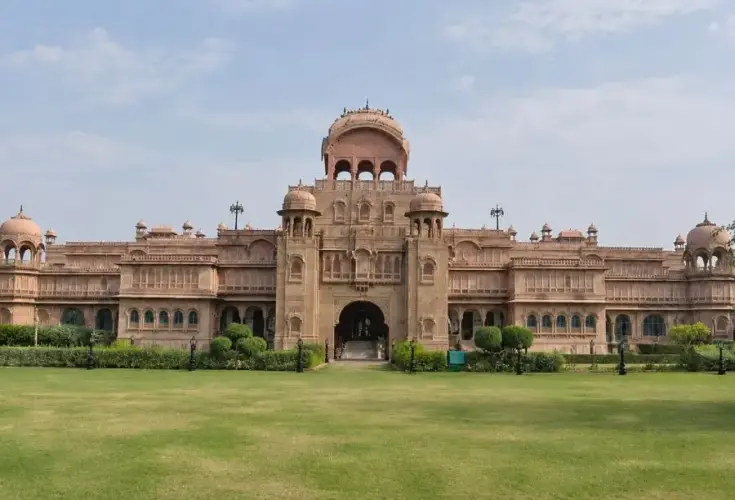
Bikaner developed as an important fortified center on the edge of the Thar Desert and possesses a character noticeably different from Jaipur. Its royal history is closely linked with Junagarh Fort, while the old city contains merchant houses, temples, markets and dense residential streets. The city receives fewer first-time visitors than Jaipur or Jaisalmer, which often gives its historic quarters a more regional atmosphere. This makes it a useful intermediate stop before going farther west.
Arrive at the hotel in the afternoon and take time to check in and rest. No major sightseeing is required immediately after the road journey. If timing and energy permit, a short orientation drive or gentle walk can be arranged, but Junagarh Fort is intentionally saved for tomorrow morning. Spend the evening at leisure and enjoy the hotel before beginning a fuller exploration of Bikaner.
Overnight: Bikaner
After breakfast, visit Junagarh Fort, one of Rajasthan’s most distinctive fortified palace complexes. Unlike many major forts in the state, it was not built on a commanding hilltop, which makes the strength of its defensive architecture particularly striking. Enter through massive gateways and continue through a succession of courtyards, audience halls and former royal apartments. Your guide will explain how different rulers added to the complex and how changes in taste can be seen across its interiors. The contrast between the exterior defenses and richly decorated rooms is one of the site’s defining features.
Spend enough time inside to notice the variation in materials and decoration. Painted ceilings, mirror work, carved details and ceremonial spaces reflect different periods of Bikaner’s royal history. Rather than attempting to cover every chamber at the same pace, concentrate on selected areas that best reveal how the palace functioned. The fort offers a useful comparison with Amber because the two complexes responded very differently to geography, defense and royal life. By the end of the morning, Bikaner’s individual architectural identity is much clearer.
Later, move into selected streets of the old city. Traditional havelis, temples, market areas and food businesses occupy compact lanes that reward exploration on foot. Depending on your interests, the afternoon can include architecture, photography or a closer look at regional crafts and snacks. Return to the hotel before evening and leave the rest of the day unscheduled. Tomorrow’s drive to Jaisalmer is substantial, so a quiet night is preferable to adding another formal excursion.
Overnight: Bikaner
After breakfast, leave Bikaner and begin the long private drive toward Jaisalmer. The road carries you steadily deeper into the Thar Desert, and the sense of scale becomes more pronounced as settlements grow farther apart. Dry scrub, open horizons and scattered villages dominate much of the route. Traveling overland makes the remoteness of Jaisalmer much easier to appreciate and gives valuable context to the trading and defensive importance the city once held.
Pause during the journey for refreshments and lunch according to the day’s natural timing. As you continue westward, the landscape becomes increasingly spare and the local use of stone more noticeable in settlements along the route. The final approach toward Jaisalmer is particularly distinctive because the city’s honey-colored sandstone architecture emerges from surroundings that share many of the same tones. Your chauffeur will keep the journey comfortable without turning the transfer into a series of unnecessary stops.
Arrive in Jaisalmer later in the day and check into your hotel for a three-night stay. The extended time here is deliberate because the city is far more rewarding when there is space for the fort, lower town and surrounding desert to be treated separately. If the schedule allows, enjoy an early glimpse of the fort from a suitable viewpoint rather than immediately entering it. Keep the evening quiet and save the detailed exploration for tomorrow.
Overnight: Jaisalmer
After breakfast, begin with Jaisalmer Fort, whose sandstone walls rise dramatically above the surrounding city. Unlike many of Rajasthan’s historic forts, this remains a living quarter containing residences, temples, small businesses and narrow streets within its defensive walls. Enter through the sequence of gateways and follow the ascending lanes with your guide. The compact arrangement gives the fort a very different feeling from the large palace complexes visited earlier. Its continued residential use also makes the experience more closely connected with present-day life.
Visit selected areas within the fort according to current access arrangements. Intricately carved Jain temples, residential façades and elevated viewpoints demonstrate how local sandstone could be worked with remarkable precision. Your guide will explain Jaisalmer’s historical role in caravan trade and how commercial wealth contributed to the city’s architectural development. This trading dimension is essential to understanding why such elaborate buildings emerged in what appears today to be a remote desert location.
Later, descend into the lower city for a closer look at notable merchant havelis. Their projecting balconies, carved screens and detailed stone façades are among Jaisalmer’s most distinctive architectural features. Walk through adjoining streets rather than viewing the havelis only as isolated monuments, allowing you to see how they fit into the urban fabric. Return to the hotel in the late afternoon and enjoy the evening at leisure.
Overnight: Jaisalmer
The morning is intentionally unhurried after yesterday’s concentrated exploration. Following breakfast, you may return to a selected part of the city for photography, visit a quieter architectural site or spend time with a local craft tradition that interests you. Jaisalmer’s sandstone changes noticeably with the position of the sun, so seeing familiar streets at another hour can reveal an entirely different atmosphere. This flexibility also prevents the city from being reduced to the fort alone.
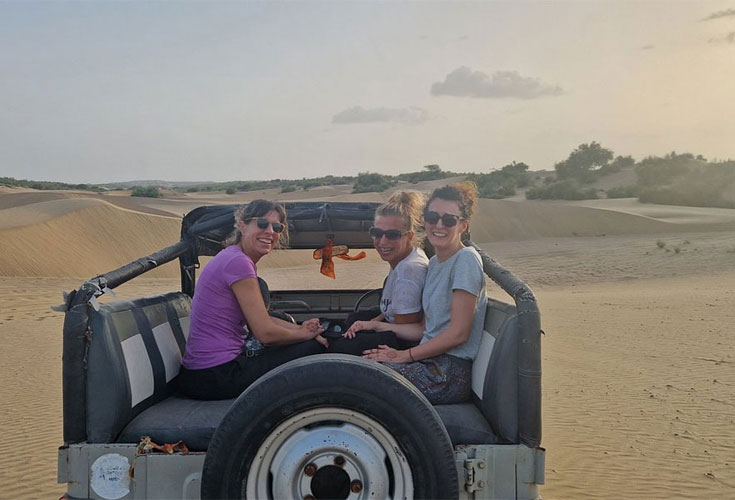
Take lunch and a period of rest before traveling beyond Jaisalmer into the surrounding desert during the afternoon. The exact dune area can be chosen according to local conditions and the standard of experience desired. Rather than building the excursion around staged entertainment, the emphasis is placed on open landscape, late-afternoon light and the sense of space beyond the city. The desert is an essential part of understanding Jaisalmer because its geography shaped trade, settlement and the city’s historical isolation.
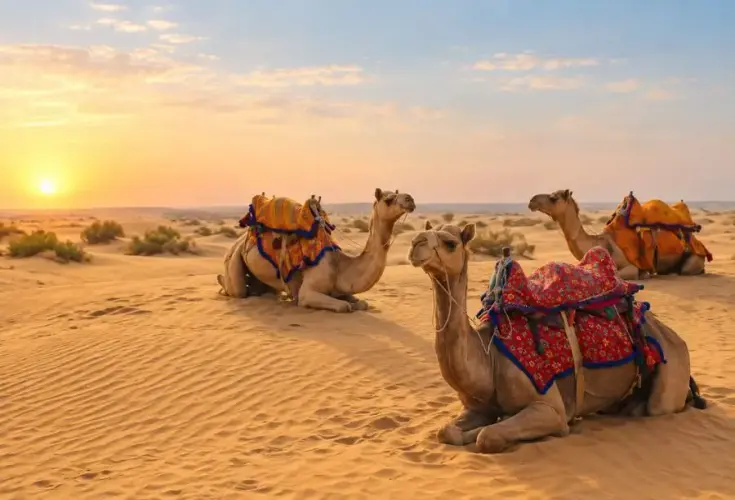
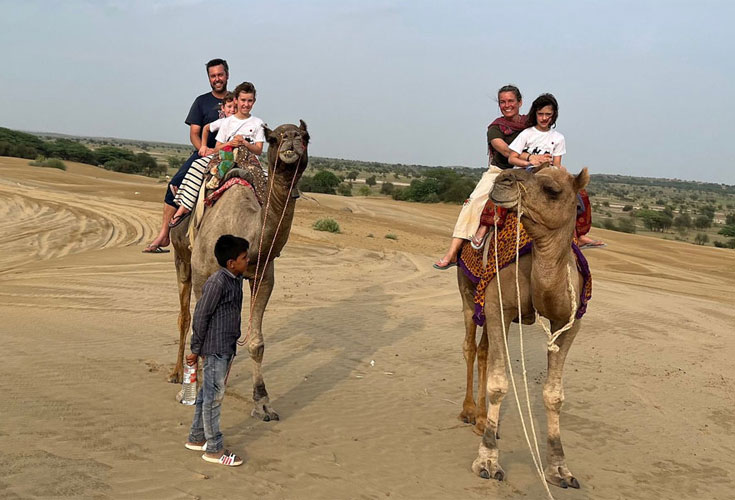
Remain outside the city through the later afternoon if conditions are suitable. A camel ride or other desert activity may be added if specifically requested and properly arranged, but it need not form a compulsory element of the trip. Return to the hotel after sunset or at the agreed time. The second full day provides enough contrast that the final Jaisalmer morning tomorrow can remain relaxed before departure for Jodhpur.
Overnight: Jaisalmer
After breakfast, check out and begin the private journey east toward Jodhpur. The route gradually moves away from the deeper desert environment surrounding Jaisalmer and toward the broader landscapes of Marwar. Because you have already spent several days in western Rajasthan, the changing vegetation and settlement patterns become easier to notice. Stops for refreshments and lunch can be made when appropriate, allowing the transfer to remain comfortable despite the distance.
Jodhpur presents a different expression of western Rajasthan from the moment it comes into view. Mehrangarh Fort rises from a steep rocky height above a much larger urban area, dominating the skyline in a way that immediately distinguishes it from Jaisalmer’s compact fortified settlement. The city historically served as the capital of Marwar, and its architecture reflects both defensive strength and substantial royal patronage. This makes it an appropriate final major city before returning to Jaipur.
Arrive at your hotel during the afternoon and spend the rest of the day at leisure. If your property offers a fort view or an attractive heritage setting, there is good reason to remain there and enjoy the atmosphere. A short walk may be arranged depending on location, but the principal sightseeing is left for tomorrow. Dinner is at your own pace, with the evening intended as a pause after the road journey.
Overnight: Jodhpur
Begin after breakfast at Mehrangarh Fort, approached by road through its defensive gateways and rising passages. The fortress commands extraordinary views across Jodhpur and the surrounding plains, making its strategic position immediately understandable. Inside, move through courtyards and former palace areas while your guide explains the history of the Rathore rulers and the development of the complex. Its immense exterior walls create expectations of austerity, yet many interior spaces are richly ornamented.
Spend time in selected palace rooms and museum areas where carved screens, painted surfaces, royal objects and decorative details reveal the sophistication of the Marwar court. From balconies and terraces, look down across the old city’s tightly packed houses, including the blue-painted buildings associated with Jodhpur’s historic identity. The elevated views are particularly useful for understanding how the fortress and lower city developed in relation to one another. There is no need to hurry through a site of this scale.
Continue to Jaswant Thada, whose pale marble and quieter setting provide an elegant contrast to Mehrangarh. Later, descend into the old city for a guided walk around selected lanes and the traditional market district near the clock tower. Spice shops, textile businesses, food vendors and neighborhood activity give the final afternoon a more everyday character. Return to the hotel and keep your last evening in western Rajasthan free.
Overnight: Jodhpur
Enjoy breakfast before checking out and beginning the drive back toward Jaipur. The road journey completes a broad circuit through northern and western Rajasthan and gives you one final opportunity to observe the changing countryside from the private vehicle. As you move east, the landscape gradually becomes more settled and urban development increases. Comfort stops can be made as required, with the day arranged around your onward travel plans.
The journey has linked four cities that represent distinctly different sides of Rajasthan. Jaipur introduced a formally planned royal capital; Bikaner showed a desert court centered on Junagarh Fort; Jaisalmer revealed the influence of long-distance trade within a remote fortified city; and Jodhpur provided the commanding architecture of Marwar. The surrounding desert and semi-arid landscapes have been as important to the route as the monuments themselves. Seeing the cities in this sequence allows those differences to become progressively clearer.
On arrival in Jaipur, transfer to the airport, hotel or other agreed point according to your confirmed onward arrangements. An additional Jaipur night can be added if flight timings make an immediate departure inconvenient. Guests continuing elsewhere in India can connect with Delhi, Agra, Udaipur or another destination according to the wider itinerary. The 11-day Rajasthan’s Desert Kingdoms private tour concludes after a concentrated journey through the fortified cities and desert landscapes of western Rajasthan.
Meals: Breakfast
Tour Ends: Jaipur
What the price includes
Applicable hotel and transportation taxes associated with the services stated in the confirmed quotation.
What it does not
Starting from
On request
per person · twin share
Get In Touch
No planning fee, no obligation. A curator replies within two hours - or call +91 97990 02277.
 13 Nights / 14 Days
Route Delhi - Agra - Jaipur - Jodhpur - Udaipur - Delhi
 15 Nights / 16 Days
Route Delhi - Jaipur - Bundi - Chittorgarh - Udaipur - Narlai - Jodhpur - Jaisalmer - Delhi
 11 Nights / 12 Days
Route Jaipur - Shahpura - Jodhpur - Narlai - Udaipur
 14 Nights / 15 Days
Route Delhi - Mandawa - Bikaner - Jaisalmer - Jodhpur - Udaipur - Jaipur - Delhi
 09 Nights/10 Days
Route Delhi - Jaipur - Jodhpur - Udaipur - Delhi
Let Us Plan It
Send dates and interests. A written proposal follows within 48 hours.
Start the brief →Ready When You Are
Speak to a curator directly — +91 97990 02277.
WhatsApp A CuratorIndia & Beyond
Chauffeur-driven travel nationwide, by the day or the fortnight.
See the fleet →