
Seeing northern and southern India within one trip works best when the itinerary does not pretend that the two regions can be summarized in a handful of hurried stops. North & South India in Style takes twenty days to move from the monumental architecture of Delhi, Agra and Rajasthan to Mumbai and then into Kerala, where maritime history, waterways and the Malabar Coast create an entirely different rhythm.
Arrive at Delhi International Airport and complete immigration, baggage collection and customs before meeting the local representative. Continue by private vehicle to your selected hotel, where assistance will be provided with check-in. No formal sightseeing is scheduled for today because international flights reach Delhi at widely different hours. Settle into your room and allow your body time to adjust after the journey. The itinerary begins properly tomorrow.
Delhi is not presented simply as the gateway to the Taj Mahal. The capital contains traces of several cities established across different periods, from Sultanate monuments and Mughal neighborhoods to twentieth-century civic planning and contemporary districts. Spending two full days here makes it possible to understand those contrasts without forcing everything into one exhausting circuit. That historical range will also provide useful context for Agra and Rajasthan.
Use the remaining hours entirely according to your energy level. An early arrival may allow a quiet lunch or a brief neighborhood walk, while a late arrival is better followed by dinner and rest. There is deliberately no compulsory welcome activity or evening excursion. A comfortable beginning is more valuable than adding another item to the itinerary.
Overnight: Delhi
Meet your private guide after breakfast and travel into Old Delhi, historically associated with the Mughal city of Shahjahanabad. Begin with selected landmarks before entering some of the district’s narrower streets, where religious buildings, residences and specialist markets remain tightly interwoven. Moving partly on foot allows you to understand the old city as an urban environment rather than a series of isolated attractions. Your guide will explain how the area functioned during the Mughal period and how it has continued to evolve. The morning should remain selective enough to avoid rushing.
Depending on current opening arrangements, include an appropriate visit such as Jama Masjid and continue through selected commercial lanes. Look beyond the most obvious street scenes to details of architecture, traditional trades and the way older buildings have been adapted for contemporary use. Delhi’s historic quarters are active neighborhoods, not preserved museum districts. That distinction is central to understanding them. Pause for lunch before moving to a much quieter setting.
Visit Humayun’s Tomb in the afternoon, where formal gardens and carefully ordered architecture contrast sharply with the morning. Walk through the landscape before approaching the principal mausoleum and consider how the building sits within its geometric plan. Your guide can introduce the development of Mughal garden-tomb architecture without anticipating every detail of tomorrow’s or Agra’s monuments. Return to the hotel afterward and keep the evening free.
Overnight: Delhi
Begin at Qutub Minar and the surrounding archaeological complex, examining one of the most important surviving groups of early Sultanate architecture in Delhi. The minaret dominates the site, but the surrounding structures, carved stone, mosque remains and architectural fragments deserve equal attention. Your guide will explain how the complex changed over time and why different construction phases remain visible. Looking closely at the stonework makes the visit more rewarding than treating the tower simply as a photographic landmark. Allow a substantial part of the morning here.
Continue through selected areas of New Delhi, where broad avenues and monumental civic architecture reveal a completely different concept of city planning. Rather than repeatedly leaving the vehicle for short exterior stops, follow a coherent route that explains how the administrative capital was conceived. Your guide can discuss the relationship between its original plan and the way these spaces function today. Contemporary Delhi has expanded far beyond these formal districts, but they remain an important chapter in the city’s development. The contrast with yesterday’s old city could hardly be stronger.
Keep the later afternoon available for personal interests. Contemporary Indian art, design, textiles, food or another subject can be incorporated through a suitable visit, or you may simply return to the hotel. This free period is intentional before tomorrow’s overland departure. Enjoy your final Delhi evening without another formal program.
Overnight: Delhi
Leave Delhi after breakfast and travel privately to Agra, arriving around midday depending on road conditions. Check into your hotel, have lunch and meet your local guide after a short break. Agra’s reputation is dominated by the Taj Mahal, but the city played a much broader role within the Mughal Empire. The afternoon begins by looking at architecture associated with imperial authority rather than funerary commemoration. This creates a stronger context for tomorrow morning.
Enter Agra Fort and move through its accessible courtyards, gates, former audience spaces and residential sections. Massive sandstone defenses gradually give way to increasingly refined palace architecture as you progress through the complex. Different rulers altered the fort, and those changes can be seen in materials, decoration and spatial organization. Your guide will focus on how the complex functioned as an imperial residence and administrative center. Views toward the Yamuna connect it visually with the Taj Mahal.
After leaving the fort, keep the remainder of the afternoon uncomplicated. Depending on season, timing and local conditions, an appropriate riverside perspective may be considered, or you can return directly to the hotel. Avoid turning the day into a long list of Agra monuments. Tomorrow’s early Taj Mahal visit is the central experience and deserves to begin without fatigue.
Overnight: Agra
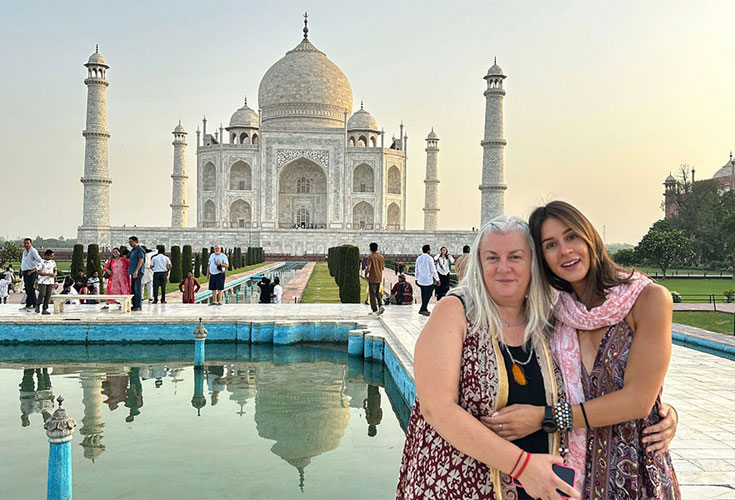
Begin early at the Taj Mahal, following current opening hours and security regulations. Enter with your private guide and take time to understand the monument from the outer gateway and formal garden before approaching the marble mausoleum. Its symmetry depends on more than the central building; water channels, subsidiary structures, gardens and the riverfront position are integral to the composition. Historical explanation will be balanced with periods when you can simply observe the architecture. The visit should feel measured rather than procedural.
As you move closer, examine the inlaid stone, calligraphy, carved marble and changes in proportion that become apparent only at shorter distances. Walk through the areas currently open to visitors and view the building from more than one position within the complex. Light and weather vary daily, so no particular photographic condition should be promised. Return to the hotel after the visit for breakfast and prepare for the journey onward. The Taj Mahal is closed on Fridays, so the sequence will be adjusted when required.
Travel west toward Jaipur, with the possibility of visiting Fatehpur Sikri if included in the finalized program and compatible with operating conditions. Continue into Rajasthan and arrive at your Jaipur hotel later in the day. Check in and leave the evening entirely free after the transfer. The royal architecture of Rajasthan becomes the focus from tomorrow.
Overnight: Jaipur
Travel to Amber Fort in the morning, leaving central Jaipur for the hills surrounding the former royal seat. Approach the fortified palace with your private guide and move through its sequence of gateways, courtyards and ceremonial spaces. The complex demonstrates how defensive architecture and courtly life could coexist within the same hilltop setting. Interior areas introduce more decorative surfaces and increasingly private spaces as you move farther inside. Views across the surrounding terrain help explain the strategic choice of location.
Return to Jaipur and visit City Palace, where the move from Amber to a newly planned capital produced a different kind of royal environment. Walk through selected courtyards and museum sections before continuing to nearby Jantar Mantar. Its large astronomical instruments add a scientific dimension to a day otherwise dominated by palace architecture. Your guide will explain the principles behind the most significant instruments without turning the visit into a technical lecture. Together, the sites reveal several sides of Jaipur’s royal history.
Pause for an exterior view of Hawa Mahal and continue into selected streets of the historic city. Repeated facades, gateways, shops and market activity demonstrate the ordered character of Jaipur’s original urban plan. Spend enough time at street level to see how the historic center functions beyond its major monuments. Return to the hotel in the late afternoon and keep the evening open.
Overnight: Jaipur
Today shifts attention from royal architecture to the skills for which Jaipur has long been known. Depending on your interests, visit an appropriate workshop connected with block printing, textiles, jewelry, stone work or miniature painting. Spend time learning how materials are selected and how individual processes are carried out rather than simply looking at finished products. A good workshop visit can provide insight into both historical patronage and contemporary production. Purchases are entirely optional.
Continue with a guided walk through a selected market or neighborhood. Look at shopfronts, residential architecture, religious structures and the organization of individual commercial streets. Travelers interested in photography may want more time for architectural details and street scenes, while those interested in food can adapt part of the route accordingly. The private format allows the morning to respond to genuine interests instead of following a standard shopping schedule. Pause whenever something deserves closer attention.
Return to the hotel around lunchtime and keep the afternoon largely unscheduled. Use the hotel facilities, arrange a spa treatment independently or spend time on your own. This lighter day is particularly useful within a twenty-day itinerary because it prevents the first week from becoming a continuous sequence of guided visits. Tomorrow the route turns south toward Udaipur.
Overnight: Jaipur
After breakfast, check out and begin the journey to Udaipur using the most suitable confirmed transport arrangement for the final itinerary. If traveling privately by road, the drive crosses a substantial section of Rajasthan and reveals the gradual change in terrain toward the Aravalli region. Comfortable stops can be made along the way according to your preference. The day is intentionally treated as a transition rather than filled with additional monuments. This keeps the pace reasonable after several days of concentrated sightseeing.
Udaipur represents a noticeably different chapter of Rajasthan. Jaipur’s historic identity is closely tied to formal planning and the relationship between Amber and the later capital, whereas Udaipur grew among hills and interconnected bodies of water. Its royal architecture therefore responds to landscape in a very different way. The change becomes increasingly apparent as you approach the city. This contrast is one of the reasons both destinations belong in the itinerary.
Arrive at your hotel and settle in for a three-night stay. Leave the remainder of the day free rather than attempting a late City Palace visit. Depending on the property, enjoy views toward the lake, hills or surrounding city and allow the setting to introduce Udaipur naturally. Tomorrow begins the full exploration of Mewar’s former capital.
Overnight: Udaipur
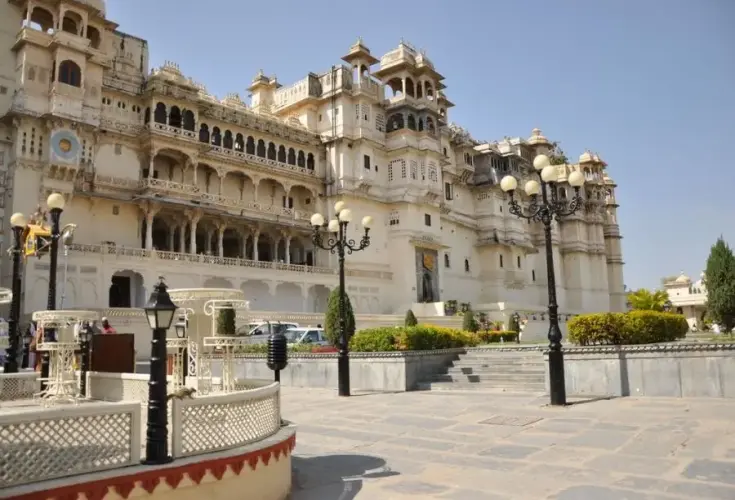
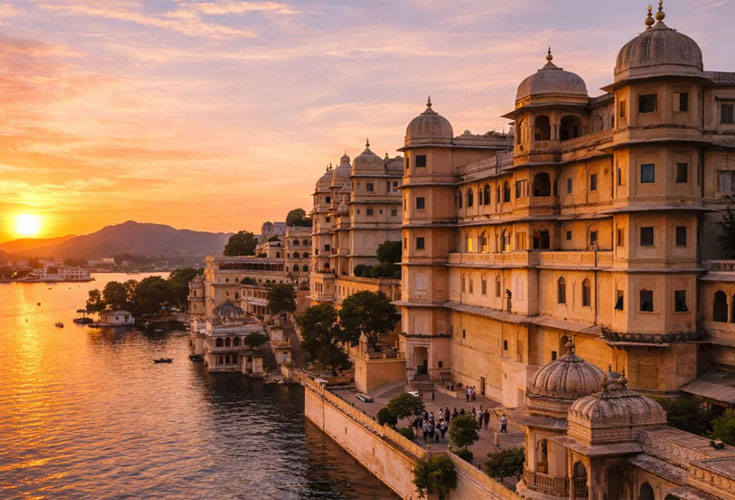
Begin the morning at Udaipur City Palace, an extensive complex constructed and expanded by successive rulers of Mewar. Its location above Lake Pichola is fundamental to the experience, with terraces, windows and balconies repeatedly opening toward water and the surrounding Aravalli Hills. Walk through the accessible sections with your private guide, moving between gateways, courtyards and former residential areas. The palace developed over generations rather than from a single architectural plan, which accounts for its layered character. Your guide will help connect these different sections without turning the visit into an exhausting chronology.
Continue through selected interiors where painted surfaces, decorative stonework, smaller courtyards and carefully framed views reveal a more intimate side of the complex. Pay attention to how architecture responds to the hillside and how relatively compact spaces sit within the enormous palace structure. After leaving the principal palace areas, continue on foot through part of the surrounding old city. Small temples, residences, workshops and shops create a useful contrast with the royal spaces above. This is also an opportunity to observe Udaipur as a living city rather than only a palace destination.
Later, take a boat ride on Lake Pichola, subject to weather, water levels and local operating conditions. The perspective from the water makes the relationship between the palace, ghats, historic buildings and hills considerably clearer. Rather than functioning simply as a scenic excursion, the boat ride completes the architectural understanding of the city begun in the morning. Return to the hotel afterward and leave the evening at leisure.
Overnight: Udaipur
Start later this morning and visit Saheliyon Ki Bari, where fountains, shaded areas and garden architecture create a smaller, quieter environment than yesterday’s City Palace. Spend time walking through the garden while your guide provides concise context about its association with the Mewar court. The site also reinforces the importance of water within Udaipur’s cultural landscape. There is no need to combine it with a long sequence of secondary monuments. Today is deliberately less intensive.
Continue with an experience connected to Udaipur’s artistic traditions. A carefully selected studio can introduce Mewar miniature painting, including the fine brushes, pigments and detailed techniques associated with the form. If painting is not of particular interest, the visit can instead focus on textiles, architecture or another suitable regional subject. The emphasis should remain on understanding how something is made rather than being taken through a compulsory retail presentation. This makes the experience relevant even for travelers who have no intention of purchasing anything.
Return to the hotel and keep the afternoon open. Spend time beside the lake, enjoy the hotel facilities, arrange an independent spa treatment or revisit part of the old city at your own pace. A free afternoon at this stage is useful because the journey changes substantially tomorrow. Rajasthan’s royal landscapes will give way to one of India’s largest contemporary cities.
Overnight: Udaipur
After breakfast, transfer privately to Udaipur airport for your confirmed flight to Mumbai. On arrival, meet the local representative and continue to your selected hotel. The shift between the two destinations is immediate: Udaipur is organized visually around lakes, hills and its historic palace complex, while Mumbai operates on the scale of a vast commercial metropolis. Take time to check in and have lunch before meeting your guide. Domestic flight schedules will determine the exact afternoon arrangements.
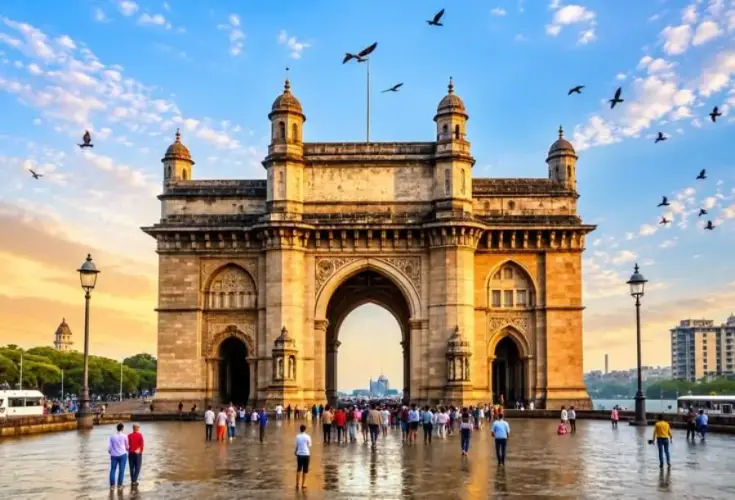
Begin with a selective introduction to South Mumbai, focusing on the relationship between the harbor and the city’s historic commercial districts. See appropriate waterfront landmarks before continuing through streets containing important civic, institutional and commercial architecture. Your guide will discuss how maritime trade, railways, migration and commerce influenced Mumbai’s development. The objective is not to stop at every famous building but to understand how the city acquired its distinctive urban form. Walking through a carefully chosen district can be more informative than a long driving tour.
Finish the afternoon in an appropriate neighborhood such as Colaba or the Kala Ghoda area depending on timing and interests. Galleries, shops, cafés and historic buildings reveal a side of India very different from the palace cities of Rajasthan. Return to your hotel and keep the evening flexible. Mumbai’s restaurant scene also provides an opportunity to look beyond northern Indian cuisine before continuing south.
Overnight: Mumbai
Begin with your private guide and look more closely at Mumbai’s architectural heritage. The morning can incorporate selected districts associated with the city’s nineteenth- and early twentieth-century expansion, including views of significant civic and railway architecture where appropriate. Rather than discussing buildings purely through architectural style, consider the institutions they housed and the commercial city developing around them. Markets, offices and transportation remain integral to Mumbai’s identity. This approach keeps the day connected to present-day life.
Continue with a subject tailored more closely to your interests. Travelers interested in art and design might visit an appropriate gallery or creative district, while those interested in food can focus on markets and the city’s varied culinary traditions. Mumbai has been shaped by communities from across India and beyond, and this diversity is especially visible through food, commerce and neighborhood life. Your guide can adapt the program without attempting to represent every community within a few hours. A focused experience is preferable to a superficial citywide survey.
Leave part of the afternoon unscheduled. Spend time independently in an area you enjoyed during the morning, return to the hotel or explore shops and galleries at your own pace. Tomorrow’s flight marks the transition from western India’s largest metropolis to Kerala’s historic port city. Enjoy the evening without another formal activity.
Overnight: Mumbai
Transfer to Mumbai airport after breakfast for your scheduled flight to Kochi. On arrival in Kerala, meet the local representative and travel privately to your hotel, ideally positioned to make the historic parts of the city easily accessible. The environment changes significantly from Mumbai: tropical vegetation, waterways and lower-rise historic neighborhoods begin to replace the scale of the previous city. Check in and allow time for lunch and a short rest. The first afternoon is kept deliberately gentle.
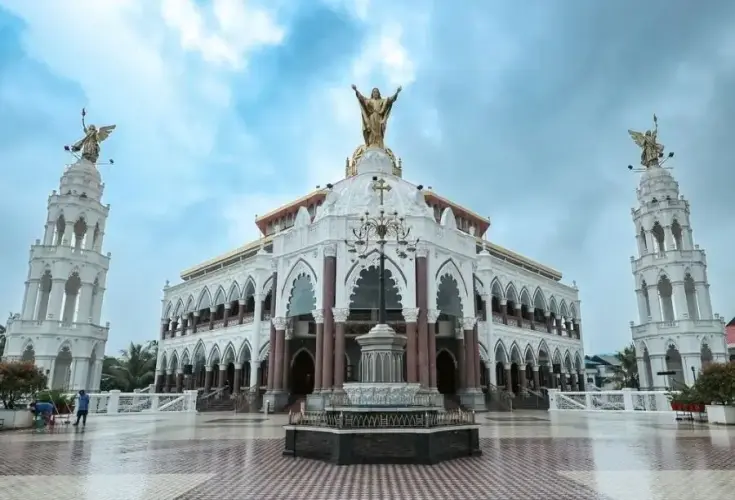
Later, take an orientation walk through Fort Kochi, where the architecture reflects centuries of contact with traders and colonial powers from different parts of the world. Churches, old residences, warehouses and waterfront spaces form a district whose history is closely connected with the Arabian Sea. Your guide will introduce the broad chronology without attempting to cover every historical layer immediately. Kochi is best understood gradually because its significance lies in the interaction of multiple communities rather than one dominant monument.
Continue toward the waterfront and selected streets before returning to the hotel. Depending on timing, pause at an appropriate café or simply spend some time observing activity around the harbor. Kerala begins here through maritime history rather than immediately through backwaters and palm-lined landscapes. Keep the evening free for dinner and rest after the flight.
Overnight: Kochi
Begin the morning in Mattancherry, where trading history and diverse religious traditions are particularly visible. Visit selected historic sites according to current access and opening arrangements, then walk through streets once closely associated with the movement and storage of goods arriving through the port. Warehouses, shops and older buildings reveal the commercial foundations of the area. Your private guide will discuss the communities that contributed to Kochi’s development. The morning should feel like an exploration of a port district rather than a conventional monument circuit.
Continue through the historic Jewish quarter and other appropriate parts of Mattancherry, subject to access at individual religious sites. The district’s architecture and street plan reflect changing commercial fortunes as well as long-established cultural connections. Spice trading is an important part of the story, but it should be understood within the broader maritime economy rather than reduced to a sensory attraction. Pause for lunch independently at an appropriate restaurant. Kerala’s regional cuisine can become another way of understanding the landscape and its trading history.
Use the afternoon for a subject that interests you personally. This could involve contemporary art, architecture, design, antiques or a more detailed look at Fort Kochi. If a traditional performance is of interest, an appropriate cultural presentation may be arranged separately for the evening. Otherwise, return to the hotel and enjoy a quiet night. Tomorrow the journey leaves the city for Kerala’s backwater region.
Overnight: Kochi
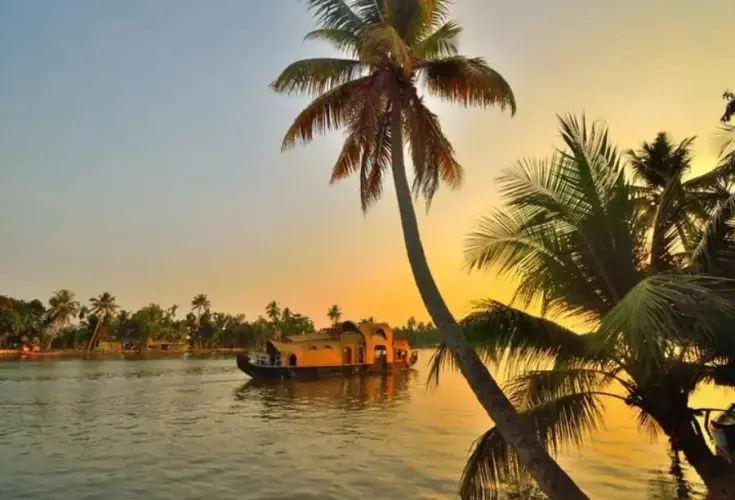
Leave Kochi after breakfast and travel privately toward Kumarakom, passing through increasingly green landscapes as the journey approaches Vembanad Lake. The distance is relatively manageable, so there is no need for an early departure. Small towns, waterways, agricultural areas and villages gradually replace Kochi’s urban environment. The journey also marks another shift in the itinerary—from places shaped by monuments and trade to a landscape shaped primarily by water. Arrive around midday and check into your selected backwater property.
Kumarakom is not included as a base for intensive sightseeing. Its value lies in its position beside Vembanad Lake and access to a network of smaller canals and waterways. Boats remain part of everyday transportation and local economic life, while fishing and agriculture are closely tied to the aquatic landscape. Spend the first afternoon becoming familiar with the setting rather than immediately leaving on an excursion. A well-positioned hotel or resort allows the landscape itself to become part of the stay.
Later, take a gentle walk around the property or enjoy an appropriate short activity if available. Birdlife around the water can be interesting, although species and sightings naturally vary by season and conditions. Watch the changing light over the lake and enjoy an evening with no urban sightseeing. The next day provides a closer encounter with the backwaters.
Overnight: Kumarakom
Begin at a relaxed hour with a small-scale backwater experience, using an appropriate local boat or canoe depending on the confirmed program and water conditions. Moving through narrower channels provides a different perspective from the broad expanse of Vembanad Lake. Houses, small jetties, vegetation and working boats line sections of the waterways, showing how closely daily routines are connected with water. The pace is naturally slow. There is little reason to rush through this landscape.
Your local guide or boatman can explain aspects of agriculture, fishing and settlement patterns as relevant along the route. The experience should remain observational rather than turning everyday village life into a staged attraction. Weather, water levels and local navigation conditions will determine the precise route. Photography should also be approached respectfully around homes and people. Return to the hotel after the excursion for lunch and a break.
Keep the afternoon entirely free. Read beside the lake, use the hotel facilities, arrange a wellness treatment independently or simply spend time watching boats move across the water. The absence of major sightseeing is part of the design rather than an empty section of the itinerary. After the density of Delhi, Rajasthan and Mumbai, Kumarakom provides a different relationship with time.
Overnight: Kumarakom
Enjoy breakfast before leaving Kumarakom for the relatively short private journey to Marari on Kerala’s coast. The transfer links two landscapes separated by a modest distance but with very different atmospheres. Inland waterways and lake-edge communities gradually give way to coastal villages and the Arabian Sea. Arrive at your selected beach property and check in. No guided sightseeing is planned today.
Marari is included specifically to provide several nights without a heavy program. It is not intended as another base from which to collect attractions across Kerala. After more than two weeks of flights, road transfers and guided sightseeing, the coast gives the journey a natural period of decompression. Walk along the beach where conditions permit, spend time at the pool or simply enjoy the property. The day belongs to you.
As evening approaches, settle into the slower coastal rhythm. Depending on the hotel, you may choose a wellness treatment, a quiet drink or an early dinner. No cultural performance or excursion needs to be added simply to fill the schedule. The following day remains equally flexible, giving you the freedom to decide how active the end of the trip should be.
Overnight: Marari
There is no fixed sightseeing today. Enjoy breakfast without an early meeting time and spend the morning beside the Malabar Coast. Walk, swim when sea conditions are suitable, read or use the hotel facilities. Travelers who have been moving regularly since Delhi often find that a completely unstructured day becomes one of the most valuable parts of a longer itinerary. Nothing needs to be accomplished.
If you would prefer some local context, a modest optional activity can be arranged separately. Depending on the property and current possibilities, this could focus on village surroundings, local food, cycling or another low-key interest. It should not turn into a full-day excursion that defeats the purpose of staying at Marari. You may equally choose to remain at the hotel for the entire day. Both approaches fit the itinerary.
Keep the evening equally relaxed. Enjoy dinner according to your preference and allow the coastal setting to provide the atmosphere rather than adding organized entertainment. The journey has now moved from some of India’s largest cities to a place where the daily schedule can become almost irrelevant. That contrast is intentional.
Overnight: Marari
Your last complete day is left open from morning onward. Take a leisurely breakfast and decide how much—or how little—you want to do. You might return to the beach, spend time around the property, book an independent spa treatment or simply enjoy several uninterrupted hours. After nineteen days, personal time matters more than inserting one final sightseeing circuit. The itinerary protects that space deliberately.
Travelers who want a more active day can arrange an optional experience according to their interests and the location of the hotel. Food, local landscapes or another regional subject can be considered, but there is no requirement to leave the coast. Any additional activity should be selected because it genuinely interests you rather than because it appears on a standard Kerala checklist. This keeps the final stage consistent with the personal nature of the wider journey.
Spend your final evening in Kerala without a fixed program. Pack at your own pace, enjoy dinner and take in the last hours beside the Arabian Sea. Tomorrow involves only the transfer to Kochi for your onward flight. Ending quietly provides a better counterpoint to the architectural and cultural density of the first half of the journey.
Overnight: Marari
Enjoy breakfast and the final morning at your hotel according to your flight schedule. Check out at the appropriate time and meet your private chauffeur for the drive to Kochi International Airport. The departure time will be planned around your confirmed flight and suitable check-in requirements. No sightseeing is scheduled en route. This keeps the final day practical and comfortable.
Over twenty days, the itinerary has moved through several sharply different versions of India. Delhi and Agra provided the architectural foundation, Jaipur and Udaipur introduced two distinct Rajasthan traditions, and Mumbai shifted the focus toward contemporary metropolitan life. Kerala then replaced monumental sightseeing with maritime history, waterways and a much more intimate landscape. Kumarakom and Marari allowed the pace to gradually decrease rather than ending immediately after another city.
Arrive at Kochi International Airport and continue with your onward flight. Travelers extending their stay elsewhere in India can connect according to their individual arrangements. North & South India in Style concludes here after linking major historic centers with contemporary cities, Kerala’s backwaters and the Malabar Coast without attempting to compress the country into a hurried itinerary.
Meals: Breakfast
Tour Ends: Kochi
What the price includes
What it does not
Starting from
On request
per person · twin share
Get In Touch
No planning fee, no obligation. A curator replies within two hours - or call +91 97990 02277.
 21 Days / 20 Nights
Route Delhi - Agra - Jaipur - Ranthambore - Udaipur - Mumbai - Goa
 18 Days / 17 Nights
Route Delhi - Agra - Jaipur - Jodhpur - Udaipur - Mumbai - Goa
 14 Days / 13 Nights
Route Delhi - Agra - Ranthambore - Jaipur - Jodhpur - Udaipur
 14 Days / 13 Nights
Route Delhi - Agra - Jaipur - Jodhpur - Udaipur - Delhi
 12 Days / 11 Nights
Route Delhi - Agra - Jaipur - Udaipur - Mumbai
Let Us Plan It
Send dates and interests. A written proposal follows within 48 hours.
Start the brief →Ready When You Are
Speak to a curator directly — +91 97990 02277.
WhatsApp A CuratorIndia & Beyond
Chauffeur-driven travel nationwide, by the day or the fortnight.
See the fleet →