


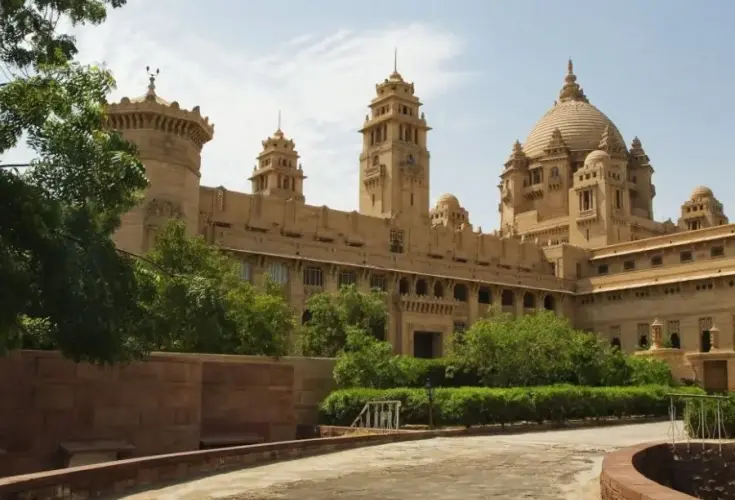
India’s architectural heritage and its wild landscapes are often treated as separate journeys. India: Palaces, Tigers & the Taj deliberately places them within the same route. Mughal monuments in Delhi and Agra lead into the forests of Ranthambore before Rajasthan’s forts, historic neighborhoods and lake palaces take over the second half of the itinerary.
Arrive at Delhi International Airport and meet the local representative after completing immigration, baggage collection and customs. Transfer privately to your selected hotel and receive assistance with check-in. The first day carries no formal sightseeing commitments, which allows the itinerary to accommodate different international arrival times. Take time to settle into the hotel and adjust after your flight. The cultural program begins tomorrow morning.
Delhi is an appropriate opening because the city contains several historical capitals within and around the modern metropolis. Monuments from different periods sit among active neighborhoods, government districts and contemporary commercial areas. This complexity provides a useful foundation for understanding the Mughal architecture encountered later in Agra. It also introduces northern India through a functioning modern capital rather than through monuments alone.
Keep the remainder of the day entirely personal. Depending on arrival time, enjoy the hotel, take a short walk nearby or have an early dinner. Avoid adding a major attraction simply because a few hours remain available. The next two days contain substantial sightseeing, and beginning rested will improve the experience.
Overnight: Delhi
Begin with your private guide in Old Delhi, entering the dense historic district associated with the Mughal city of Shahjahanabad. Visit selected landmarks and continue through commercial streets where specialist markets, religious buildings and residential areas remain closely intertwined. Moving through part of the district on foot provides a better sense of its scale than viewing it entirely from a vehicle. Your guide will explain how the old city developed around imperial, religious and commercial functions. The morning is designed around context rather than simply collecting photographs.
Continue later to Humayun’s Tomb, where the atmosphere changes completely. Formal gardens, geometric planning and monumental architecture replace the compressed streets of the old city. The complex is particularly relevant before Agra because it demonstrates architectural ideas that developed further under later Mughal rulers. Walk through the garden slowly and consider the building from several approaches. Decorative details become more meaningful once the overall composition is understood.
Complete the afternoon with a selective drive through New Delhi and, depending on the confirmed schedule, another significant landmark suited to your interests. Broad avenues and monumental civic architecture create a striking contrast with the morning. Return to the hotel before evening rather than extending the day unnecessarily. Dinner remains at your discretion.
Overnight: Delhi
Leave Delhi after breakfast in your private vehicle and travel to Agra. The road journey allows a comfortable arrival around midday depending on traffic and hotel check-in arrangements. Settle into your hotel and take time for lunch before meeting the local guide. Today focuses on Agra as an imperial center rather than immediately beginning with the Taj Mahal.
Visit Agra Fort, entering through its monumental defensive architecture before reaching the more refined palace areas within. Red sandstone walls contain courtyards, audience spaces, former royal apartments and later marble additions. Your guide will explain how different Mughal rulers shaped the complex and how its purpose extended far beyond defense. Views toward the Yamuna and the distant Taj Mahal connect the fort physically with tomorrow’s visit.
Keep the late afternoon uncomplicated. An appropriate riverside viewpoint can be considered if timing and local conditions are suitable, or you may return directly to the hotel. The Taj Mahal is intentionally reserved for the following morning when there is no pressure from the road journey. Enjoy a relaxed dinner and evening at the property.
Overnight: Agra
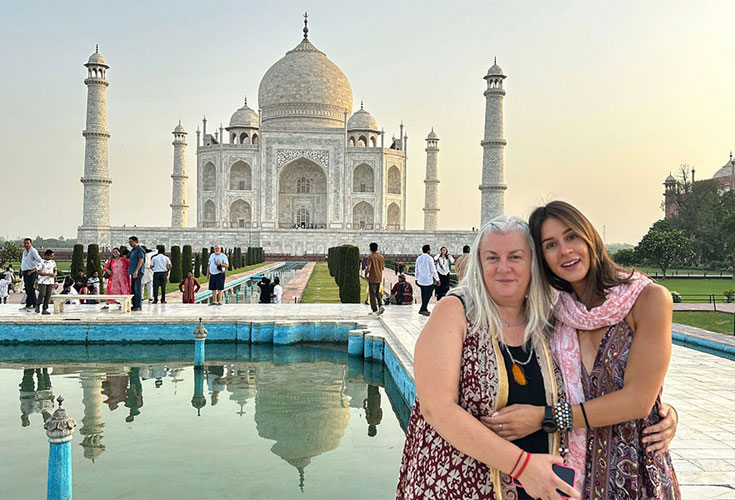
Begin early at the Taj Mahal, following current opening hours and site regulations. Walk through the entrance sequence with your private guide and first consider the entire garden composition before approaching the marble mausoleum. Water channels, symmetry, subsidiary buildings and the Yamuna River all contribute to the monument’s architectural logic. Your guide will provide enough historical background to deepen the visit without overwhelming the experience. Allow time simply to observe the building from different positions.
Move closer to examine marble inlay, carved surfaces, calligraphy and the precision of the architectural details. The monument rewards a slower visit because its character changes significantly between distant and close perspectives. Walk through the areas accessible to visitors and observe all current security and photography regulations. After completing the visit, return to the hotel for breakfast and prepare for departure. This closes the Mughal section before the itinerary moves toward a completely different environment.
Continue toward Ranthambore, using the most practical confirmed ground arrangements for the travel date. The journey gradually leaves the urban landscapes of Delhi and Agra behind and moves toward eastern Rajasthan. Arrive at your wildlife lodge, check in and spend the evening learning about the safari arrangements for tomorrow. Park entry zones, vehicles and timings are governed by official procedures and will depend on confirmed permits.
Overnight: Ranthambore
Rise early for your first scheduled Ranthambore safari, subject to confirmed permits, park opening dates and official operating conditions. Enter the assigned tourism zone with the authorized vehicle and guide or naturalist. The landscape may include dry forest, open grassland, rocky ridges, lakes and historic structures reclaimed by vegetation. Instead of treating the drive only as a tiger search, pay attention to how these different habitats support the park’s wildlife. Early hours can also be particularly rewarding for bird activity.
Ranthambore supports a range of species that may include deer, antelope, monkeys, crocodiles and numerous birds in addition to its best-known predator. Animal movement is unpredictable, and no ethical safari can promise a particular sighting. Tracks, alarm calls and the observations of experienced guides often become an important part of understanding what is happening in the forest. Tiger sightings are never guaranteed, regardless of safari zone or number of drives. The uncertainty is part of visiting a genuinely wild environment.
Return to the lodge after the morning drive for breakfast and a substantial break. A second safari may be scheduled later in the day if included in the confirmed program and permits have been secured. Afternoon conditions can produce an entirely different atmosphere as light, temperature and animal activity change. Return to the lodge after the drive and spend the evening at leisure.
Overnight: Ranthambore
Depending on confirmed safari permits and departure logistics, begin with another scheduled drive inside Ranthambore National Park. A second or third entry is valuable because no two safaris follow exactly the same pattern. The assigned zone may reveal a different combination of terrain, vegetation and water sources from the previous drives. Your naturalist will interpret signs of animal activity and explain aspects of the park’s ecology as opportunities arise. Wildlife remains unpredictable on every visit.
Return to the lodge for breakfast, freshen up and check out before beginning the private journey to Jaipur. The transfer moves from a protected forest environment back into the cultural landscapes of Rajasthan. This contrast is deliberate: the itinerary does not place another wildlife destination immediately after Ranthambore. Instead, the second half changes direction toward architecture, cities and former royal capitals.
Arrive in Jaipur and check into your selected hotel. Keep the evening free rather than beginning sightseeing after the road journey. Enjoy the property, have dinner at your own pace or take a gentle orientation drive if desired. Tomorrow provides a full day for the city’s principal architectural landmarks.
Overnight: Jaipur
Begin outside the city at Amber Fort, where the fortified palace complex rises above the surrounding landscape. Walk through its gateways and courtyards with your private guide, moving from public audience areas toward more intimate royal spaces. The building combines defensive strength with highly decorative interiors, illustrating how court life operated within a hilltop stronghold. Views across the surrounding terrain also help explain why this location was strategically important.
Return to Jaipur and continue with City Palace and Jantar Mantar. The palace provides insight into the royal city that replaced Amber as the center of political life, while the nearby astronomical observatory reveals another aspect of Sawai Jai Singh II’s interests. Spend enough time with the instruments to understand their function rather than treating them simply as unusual sculptures. Together, the two sites demonstrate how Jaipur combined courtly authority, science and urban planning.
Finish with an exterior view of Hawa Mahal and time in selected streets of the old city. Markets and traditional commercial areas give the afternoon a more everyday scale after the formal architecture of Amber and City Palace. Return to the hotel before evening. The following day is deliberately less monument-focused.
Overnight: Jaipur
Begin later this morning with an experience connected to one of Jaipur’s established craft traditions. Depending on your interests, this may focus on block printing, textiles, jewelry, stone work or miniature painting. Visit an appropriate workshop where the process and materials can be explained properly rather than moving through a series of retail showrooms. The objective is to understand the skill behind the finished work. Any purchase remains entirely optional.
Continue through a selected market or neighborhood with your guide. Jaipur’s historic plan becomes more apparent when experienced on foot, where repeated facades, gateways, specialist shops and side streets reveal the organization of the old city. Travelers interested in photography can spend longer observing street architecture, while food or design interests can shape the route differently. This flexibility gives the second Jaipur day its own identity.
Return to the hotel around midday or early afternoon and keep the remainder of the day free. Use the time for the hotel facilities, an independently arranged spa appointment, shopping on your own or simply rest. A two-week journey benefits from periods when nothing is compulsory. Tomorrow you continue west across Rajasthan to Jodhpur.
Overnight: Jaipur
After breakfast, leave Jaipur in your private vehicle and travel west toward Jodhpur. The drive crosses a broad stretch of Rajasthan where the landscape gradually becomes drier and more open. Towns, agricultural areas and long stretches of countryside create a very different setting from the forest environment experienced earlier at Ranthambore. Your chauffeur will make appropriate comfort stops during the journey. Lunch can be taken independently at a suitable location along the route.
As you approach Jodhpur, the history of Marwar becomes the next focus of the itinerary. The city developed under the Rathore rulers beneath the massive Mehrangarh Fort, whose position on a rocky ridge shaped both its defense and its visual identity. This relationship between geography and royal architecture distinguishes Jodhpur from Jaipur, where the later capital was laid out according to a much more formal urban plan. The differences become clearer during tomorrow’s guided exploration.
Arrive at your hotel and settle in for a two-night stay. Avoid adding major sightseeing after the road journey, leaving the afternoon or evening available for rest. If arrival is early enough, take a short orientation drive or enjoy an appropriate viewpoint toward the fort. Dinner remains at your discretion, with the full historical program beginning tomorrow morning.
Overnight: Jodhpur
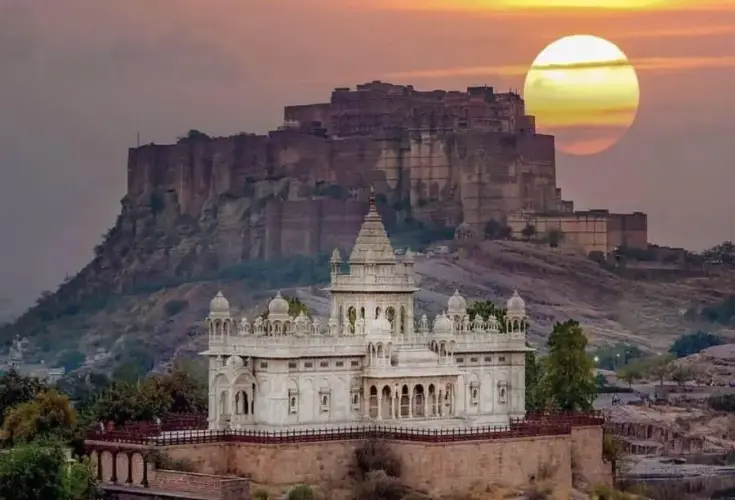
Begin at Mehrangarh Fort, approaching the monumental complex with your private guide. Built high above the surrounding city, the fort immediately communicates the strategic strength of the Rathore capital. Pass through successive gateways before entering a sequence of courtyards and former palace spaces. Your guide will explain how the complex developed across different periods rather than presenting it as a single construction. Defensive architecture gradually gives way to increasingly elaborate interiors.
Spend time inside the palace sections and museum areas, where carved stone screens, painted surfaces, ceremonial objects and former royal rooms provide a more intimate perspective on court life. From the ramparts, look across the densely built neighborhoods of Jodhpur and the plains beyond. These views make the scale of the fortress particularly clear. Allow enough time for the architecture and collections instead of moving rapidly through the complex. Mehrangarh is one of the principal experiences of this itinerary and deserves a substantial morning.
Continue to nearby Jaswant Thada before descending into selected parts of the historic city. Walk through market streets and older residential areas where houses, shops and religious structures create a much smaller architectural scale. The experience provides a useful counterpoint to the fort above. Return to the hotel later in the afternoon and keep the evening open for personal time.
Overnight: Jodhpur
Leave Jodhpur after breakfast and begin the journey toward Udaipur. The route gradually moves away from Marwar’s drier terrain and toward the more varied landscapes of southern Rajasthan. As the road approaches the Aravalli region, hills and greener agricultural areas become increasingly prominent. This changing geography prepares the transition from Jodhpur’s formidable fortress architecture to Udaipur’s lakeside palaces. Comfortable breaks will be made as required.
En route, visit Ranakpur and its remarkable Jain temple complex, subject to current visitor hours and religious regulations. Inside the principal marble temple, an intricate arrangement of pillars, domes and carved surfaces creates an architectural environment entirely different from the royal structures encountered in Jaipur and Jodhpur. Your guide will provide enough context to understand the religious and artistic significance of the complex. Visitor rules concerning dress, photography and access should be respected carefully. The visit also introduces another important strand of Rajasthan’s architectural heritage.
Continue toward Udaipur through the hills and arrive later in the day. Check into your hotel and allow the evening to remain unstructured. If your property overlooks a lake or surrounding landscape, spend time enjoying the setting rather than immediately returning to the vehicle. Udaipur receives two full days, so there is no reason to begin the principal palace sightseeing tonight. Dinner is at leisure.
Overnight: Udaipur
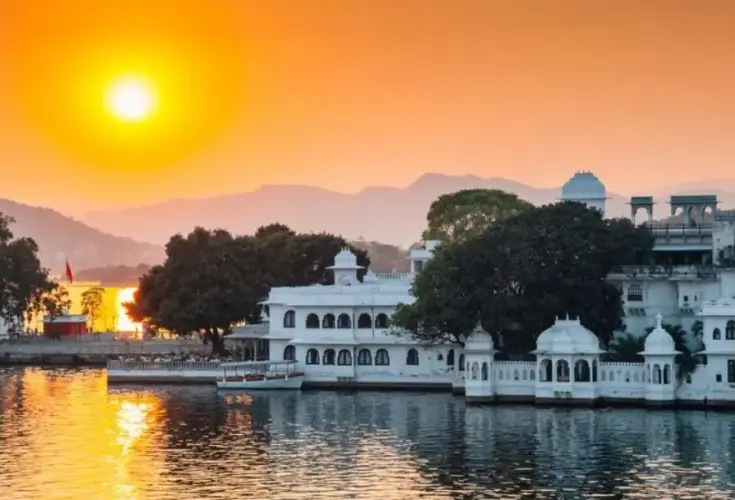
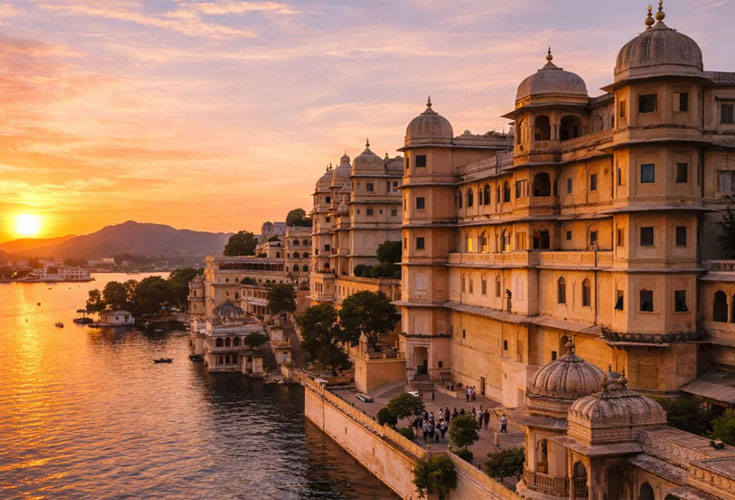
Begin at the City Palace, positioned prominently above Lake Pichola. The complex was expanded over generations by the rulers of Mewar, resulting in a layered arrangement of gateways, courtyards, terraces, balconies and residential chambers. Walk through the accessible sections with your private guide while considering how the palace responds to its hillside position. Unlike the immense defensive presence of Mehrangarh, Udaipur’s royal architecture is closely integrated with water and surrounding hills. That relationship defines much of the city’s character.
Continue through selected interiors where painted decoration, stonework, windows and smaller courtyards provide a more intimate impression of palace life. Your guide can concentrate on the most significant rooms and architectural transitions rather than overwhelming the visit with dates and names. From terraces and windows, look across the lake toward the surrounding buildings and hills. After leaving the palace, walk through part of Udaipur’s old city. Workshops, temples, residences and narrow streets reveal how the urban fabric developed around the royal complex.
Later, take a boat ride on Lake Pichola, subject to weather, water levels and current operating arrangements. The water provides a completely different perspective on the City Palace, ghats and historic buildings along the shoreline. As the boat moves across the lake, the scale of the palace and its relationship with the surrounding landscape become much easier to appreciate. Return to the hotel afterward and leave the evening free.
Overnight: Udaipur
Start the morning at a relaxed hour with a visit to Saheliyon Ki Bari, where fountains, garden spaces, pavilions and shaded areas offer a gentle contrast to the large forts and palaces seen during the previous days. The site provides a smaller and more personal architectural scale. Walk through the garden with your guide while learning about its connection with Udaipur’s royal history. There is no need to rush the visit or combine it with a long sequence of minor monuments. The morning is intentionally designed to feel lighter.
Continue with an experience connected with Udaipur’s artistic heritage. Mewar miniature painting is one possible focus, with an appropriate studio visit providing insight into pigments, brushes, composition and the painstaking scale of the work. Alternatively, travelers more interested in textiles, design or another regional craft can shape this portion of the day accordingly. The purpose is to spend time with a specific tradition rather than move through multiple commercial outlets. Any purchasing remains entirely optional.
Return to your hotel and keep the afternoon completely free. Enjoy the lake, use the hotel facilities, walk independently through familiar parts of the city or arrange a spa treatment if desired. After the safaris, overland journeys and architectural sightseeing of the previous two weeks, this open afternoon provides a more comfortable ending. Spend your final evening in Rajasthan at your own pace.
Overnight: Udaipur
Enjoy breakfast at the hotel before checking out according to your onward flight schedule. Transfer privately to Udaipur Airport for your departure, whether you are connecting through Delhi, Mumbai or another Indian gateway according to your confirmed international arrangements. Adequate connection time should be incorporated when booking onward flights. If your schedule requires an additional night elsewhere in India, this can be added separately. No formal sightseeing is planned today.
The itinerary has deliberately alternated between architecture and landscape rather than remaining within a single theme. Delhi and Agra introduced Mughal urban and architectural traditions before Ranthambore replaced monuments with forest, lakes and wildlife observation. Jaipur then opened the Rajasthan section through Amber and its planned royal capital, followed by Jodhpur’s relationship between Mehrangarh and the historic city below. Udaipur has provided the final contrast through the lake-centered architecture and artistic traditions of Mewar.
At the appropriate time, continue to the airport with private transfer assistance. The 14-day India: Palaces, Tigers & the Taj tour concludes after combining some of northern India’s most significant historic architecture with time inside one of Rajasthan’s major wildlife landscapes. The route is designed so neither the safari experience nor the cultural portion feels like a brief addition to the other. Your onward journey proceeds according to the final confirmed travel arrangements.
Meals: Breakfast
Tour Ends: Udaipur
What the price includes
What it does not
Starting from
On request
per person · twin share
Get In Touch
No planning fee, no obligation. A curator replies within two hours - or call +91 97990 02277.
 21 Days / 20 Nights
Route Delhi - Agra - Jaipur - Ranthambore - Udaipur - Mumbai - Goa
 20 Days / 19 Nights
Route Delhi - Agra - Jaipur - Udaipur - Mumbai - Kochi - Kumarakom - Marari
 18 Days / 17 Nights
Route Delhi - Agra - Jaipur - Jodhpur - Udaipur - Mumbai - Goa
 14 Days / 13 Nights
Route Delhi - Agra - Jaipur - Jodhpur - Udaipur - Delhi
 12 Days / 11 Nights
Route Delhi - Agra - Jaipur - Udaipur - Mumbai
Let Us Plan It
Send dates and interests. A written proposal follows within 48 hours.
Start the brief →Ready When You Are
Speak to a curator directly — +91 97990 02277.
WhatsApp A CuratorIndia & Beyond
Chauffeur-driven travel nationwide, by the day or the fortnight.
See the fleet →