
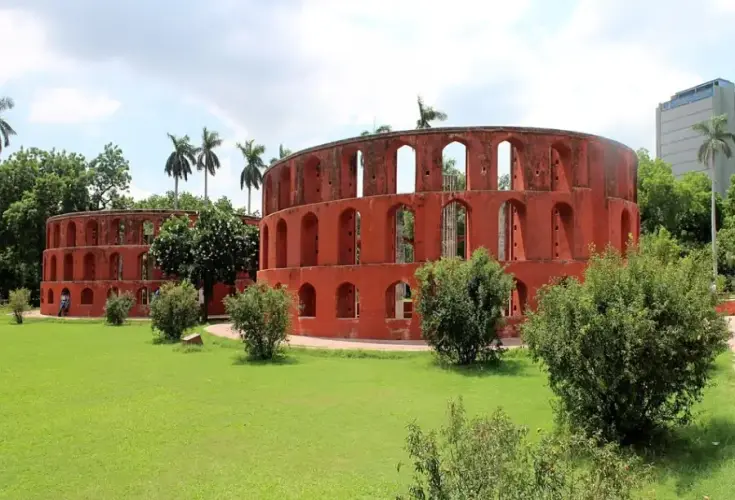
India Through Its Architecture is designed for travelers who want to understand the country through buildings, cities and the ideas that shaped them. Rather than treating architecture as a background to sightseeing, this journey makes design, materials, spatial planning and urban history the central subject.
Arrive at Delhi International Airport and meet the local representative after immigration and baggage collection. Transfer privately to your selected hotel and receive assistance with check-in. No formal sightseeing is planned for the arrival day because the itinerary benefits from beginning with a clear head rather than immediately entering a complex city. Spend the remaining hours resting after the journey. Dinner is at leisure.
Delhi is especially suited to an architecture-focused itinerary because it contains the remains and continuities of several capitals. Fortified settlements, Mughal ceremonial spaces, garden tombs, colonial avenues and post-independence buildings coexist within one metropolitan area. The coming days will use selected examples to understand those shifts rather than attempt an exhaustive survey.
Keep the evening open and prepare for an early but measured start tomorrow. Travelers with particular architectural interests—Islamic geometry, colonial urbanism, conservation, modernism or vernacular buildings—can share them with the guide so emphasis can be adjusted where practical. The route is structured, but interpretation should remain responsive to the traveler.
Overnight: Delhi
Begin at Humayun’s Tomb, one of Delhi’s most important examples of Mughal garden architecture. Rather than viewing only the central mausoleum, examine the relationship between the building, raised platform, axial paths, water channels and enclosing walls. Your guide will explain how symmetry and charbagh planning create a controlled visual experience. The use of red sandstone with white marble also establishes a material language that later Mughal monuments would develop further.
Continue to Old Delhi and approach the historic city through its street structure and public buildings. Depending on access, visit Jama Masjid and walk through selected lanes where commercial buildings, religious structures and houses reflect much denser urban conditions than the formal garden complex visited earlier. Notice how architecture changes when responding to trade, climate and limited street width. Shaded lanes, projecting elements and internal courtyards become as significant as monumentality.
Conclude the day with a selective look at the relationship between the old city and later Delhi rather than adding another major monument. Your guide can use a short drive or walk to discuss how roads, rail infrastructure and later urban expansion altered the historic fabric. Return to the hotel with time to rest. The intention is to leave space for understanding, not exhaust the city in one day.
Overnight: Delhi
Begin with Qutub Minar and its surrounding complex, where buildings from different periods reveal construction, reuse, inscription and changing architectural language. Examine the minaret’s proportion and surface treatment, but also spend time on the mosque, arcades and surrounding remains. The site is particularly useful for discussing how architectural traditions were adapted rather than appearing fully formed in a single moment. Material evidence here is often more instructive than a simple chronology.
Continue into New Delhi to study the dramatic shift toward broad avenues, axial planning and monumental government architecture. View selected civic buildings and discuss the logic behind the planned capital—processional routes, visual symmetry, separation of functions and controlled vistas. The scale is intentionally different from the compressed urbanism of Old Delhi. This contrast is one of the most important architectural lessons of the city.
Use the afternoon for a more flexible architecture-focused component depending on interest and access. This might involve a selected modern institutional building, a design district or another relevant urban area rather than routine sightseeing. Keep the schedule realistic, as some buildings have restricted access or changing visitor policies. Return to the hotel in the late afternoon and prepare for tomorrow’s journey to Agra.
Overnight: Delhi
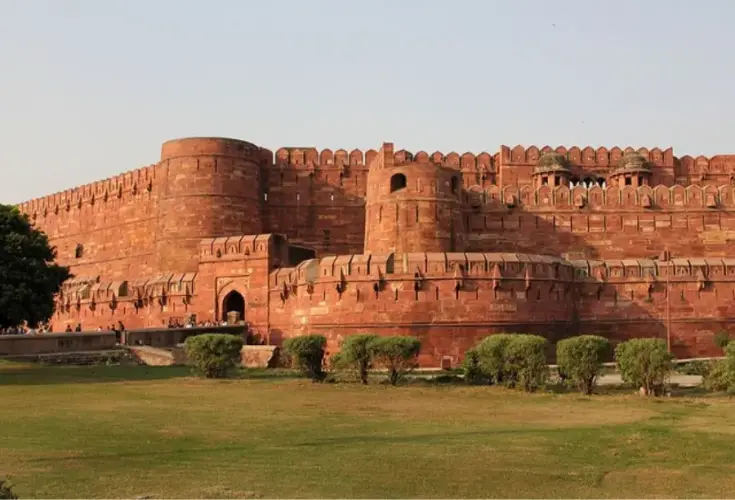
Leave Delhi after breakfast and travel privately to Agra. On arrival, check into your hotel and take time for lunch before beginning the afternoon visit to Agra Fort. The complex is particularly valuable architecturally because it combines defensive structures with ceremonial courts, private palaces and later modifications. Its large-scale planning is best understood by moving gradually through the sequence of spaces rather than treating individual rooms as isolated attractions.
Observe how red sandstone and marble are used differently across the complex, reflecting both aesthetic preference and changing phases of construction. Gateways establish controlled movement, while courtyards organize royal functions and private areas. Openings toward the Yamuna also show how views were incorporated into palace planning. Your guide will emphasize spatial relationships rather than simply recounting dynastic history.
Conclude the visit by considering Agra Fort in relation to the Taj Mahal visible across the river when conditions permit. This visual connection is useful for understanding the Mughal landscape at a larger scale. Return to the hotel before evening. Tomorrow begins early to study the Taj Mahal with greater attention to proportion, material and site planning.
Overnight: Agra
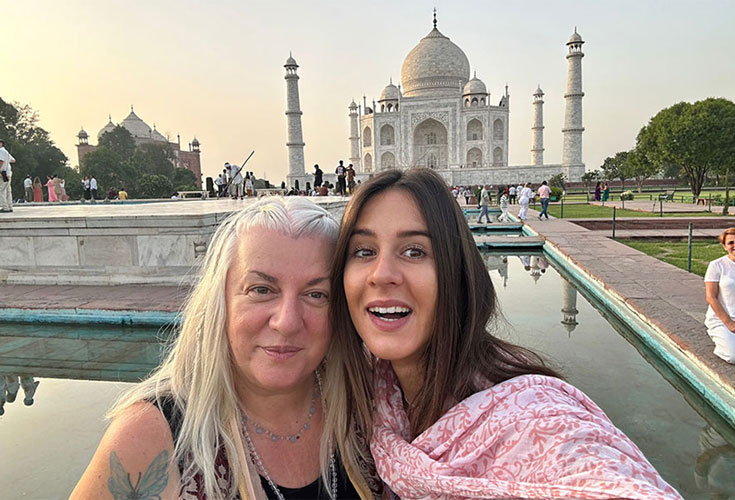
Visit the Taj Mahal early in the day, entering through the monumental gateway and pausing before moving directly toward the mausoleum. The first view is carefully controlled by architecture, framing and axial alignment. Examine how the garden, reflecting pool, subsidiary buildings and river edge work together as one planned composition. The building’s power depends as much on this controlled approach as on marble craftsmanship.
Move closer to study surface decoration, inlay, carved marble and calligraphic scale. The changing size of inscription and careful use of symmetry reveal how visual perception was managed deliberately. Discuss how the building responds to light throughout the day without making unsupported claims about exact photographic conditions. If your travel date falls on a Friday, the sequence will be modified because the Taj Mahal is closed to general visitors.
After returning to the hotel for breakfast, continue by private road toward Jaipur. If Fatehpur Sikri is specifically confirmed in the final program, it may be incorporated en route as an architectural stop, but it should not be added automatically at the cost of comfort. Arrive in Jaipur and check into the hotel. Keep the evening free so tomorrow’s study of the planned city begins at a measured pace.
Overnight: Jaipur
Begin at Amber Fort, where architecture responds directly to topography. The complex rises across a fortified hill environment, combining defensive walls with ceremonial courtyards and increasingly private palace spaces. Move through the site in sequence so that changes in scale and function become clear. The relationship between building and terrain is just as important as ornament.
Pay attention to gateways, courtyard proportions, screened openings and the use of stone and reflective decoration. Rather than presenting Amber only as a royal residence, consider how circulation was controlled and how public and private zones were organized. Views over the surrounding landscape help explain the strategic value of the site. Your guide will also draw comparisons with the much flatter and more regular urban planning of Jaipur below.
Return to the city in the afternoon and keep the remainder of the day relatively light. A short orientation through the historic center may be included, focusing on street rhythm and facades rather than entering multiple monuments. This prepares the context for tomorrow’s more detailed study of Jaipur’s planned urban structure.
Overnight: Jaipur
Begin in the historic center with City Palace, where courtyards, gateways and administrative spaces sit within the larger logic of Jaipur’s planned capital. Examine how the palace precinct connects to the street grid rather than functioning as an isolated royal compound. Decorative gateways and painted surfaces provide visual richness, but the more important subject is how the complex participates in the city plan. The palace becomes part of an urban system rather than merely a residence.
Continue to Jantar Mantar, one of the most intellectually distinctive stops on the itinerary. Here, architecture and scientific observation are inseparable. Monumental instruments use geometry, orientation and precise surfaces to measure celestial movement. Your guide will explain a selection of key instruments without overwhelming the visit with technical detail.
Walk through sections of the old city afterward and observe the regular street pattern, arcades, shopfronts and repeated facade treatment. Pause outside Hawa Mahal, considering it as part of the street wall rather than only as a standalone monument. The afternoon remains flexible for an architecture-related studio or design visit if appropriate. Return to the hotel with the evening free.
Overnight: Jaipur
Transfer to Jaipur Airport after breakfast for the most suitable confirmed flight to Ahmedabad. On arrival, meet the local representative and continue privately to your hotel. Allow time for lunch and rest before beginning a gentle introduction to the city. Ahmedabad adds a new architectural vocabulary to the journey and deserves to be approached without rushing immediately into a long list of sites.
In the late afternoon, take a guided orientation focused on the historic core or an appropriate architectural district depending on arrival time. Your guide will introduce the city’s mix of Islamic, Hindu, Jain and later modern influences. Particular attention will be given to the way facades, courtyards and narrow streets respond to climate and urban density. This initial overview sets the foundation for tomorrow’s deeper exploration.
Return to the hotel in the evening and discuss the next day’s route with the guide if needed. Ahmedabad has unusually rich architectural variety, and the final selection of sites should account for opening hours, access rules and traveler interest. Keep dinner at leisure.
Overnight: Ahmedabad
Begin early in the historic city with a guided walk through selected pol neighborhoods. These tightly organized residential clusters reveal a form of domestic architecture shaped by climate, community and limited urban space. Projecting wooden facades, internal courtyards, shaded passages and closely spaced houses create a very different environment from Jaipur’s wider planned streets. The experience is most useful when approached slowly and respectfully.
Continue to selected historic religious architecture, such as appropriate mosque complexes, to examine the fusion of structural and decorative traditions in Gujarat. Stone screens, carved columns and carefully proportioned prayer spaces demonstrate how local craftsmanship influenced broader architectural forms. Your guide will compare these buildings with Mughal sites seen earlier without forcing simplistic stylistic categories.
Spend the afternoon at a slower pace, perhaps returning to another section of the old city or visiting a relevant museum or architectural collection where access is suitable. The emphasis remains on understanding the city’s built fabric rather than merely photographing facades. Return to the hotel with time for independent exploration or rest.
Overnight: Ahmedabad
Begin with a major stepwell, selected according to the final routing and access conditions. These structures combine water management with architecture, creating deep, shaded spaces organized through descending platforms, columns and changing levels of light. Move through the structure slowly to understand how engineering, climate and ornament work together. Stepwells are among the clearest examples on the journey of architecture responding directly to environmental conditions.
Return to Ahmedabad for a carefully chosen modern architecture component. Depending on current visitor access, the day may include important twentieth-century buildings or institutions associated with Ahmedabad’s architectural development. Some sites have restrictions, so the itinerary should remain flexible rather than promise entry where none can be assured. Even exterior observation can provide meaningful comparisons with the historic city.
Use the later afternoon to discuss the dramatic range covered in just two days: dense pol housing, mosque architecture, water structures and modernist design. Ahmedabad demonstrates that architectural importance is not limited to palace or monument scale. Return to the hotel and enjoy the final evening in Gujarat before continuing to Udaipur.
Overnight: Ahmedabad
Leave Ahmedabad after breakfast and travel privately toward Udaipur. The road journey provides a transition from Gujarat’s urban and stepwell architecture to the hill-and-lake setting of southern Rajasthan. Rather than filling the transfer with unrelated sightseeing, the day is kept focused on arriving comfortably. Appropriate stops will be made along the way. Reach Udaipur and check into your selected hotel.
Later, begin with a gentle orientation around the old city or lakefront rather than immediately entering the main palace complex. The first architectural impression of Udaipur comes from the relationship between buildings, water and the surrounding hills. Unlike Jaipur’s regular plan, Udaipur developed in response to terrain. This distinction is worth noticing before tomorrow’s formal visit.
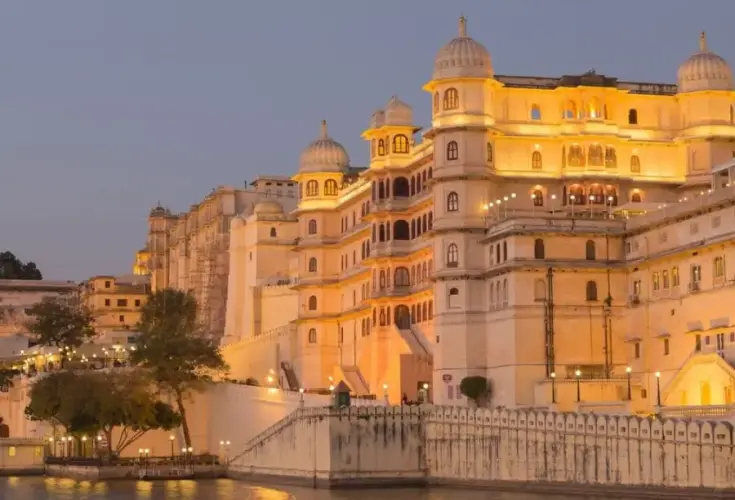
End the day with a Lake Pichola boat ride, subject to weather, water level and local operating conditions. From the water, the City Palace can be seen as part of a wider composition involving ghats, lake structures and the Aravalli backdrop. Return to the hotel after the ride and keep the evening free.
Overnight: Udaipur
Begin at Udaipur City Palace, where successive additions created a dense architectural complex overlooking Lake Pichola. Move through gateways, courtyards, terraces and selected interiors while your guide explains how the palace expanded over time. Unlike the regular geometry seen elsewhere on the route, the complex responds to slope, defensive needs and existing structures. This layered growth is one of its most interesting architectural qualities.
Continue through the surrounding old city if your departure schedule permits. Narrow lanes, temples, houses and smaller buildings provide a useful final contrast with the monumental palace above. The itinerary closes with architecture at two scales: royal and everyday. This mirrors the larger journey, which has moved repeatedly between grand monuments and lived urban fabric.
Return to the hotel, check out and transfer privately to Udaipur Airport for your onward flight. Over twelve days, the route has moved from Mughal Delhi and Agra to Jaipur’s planned capital, Ahmedabad’s stepwells and pol houses, and Udaipur’s landscape-responsive palace architecture. India Through Its Architecture concludes with a broader understanding of how history, climate, materials and urban form shaped different parts of India.
Meals: Breakfast
Tour Ends: Udaipur
What the price includes
Bottled water, fuel, tolls and parking during confirmed ground travel.
What it does not
Starting from
On request
per person · twin share
Get In Touch
No planning fee, no obligation. A curator replies within two hours - or call +91 97990 02277.
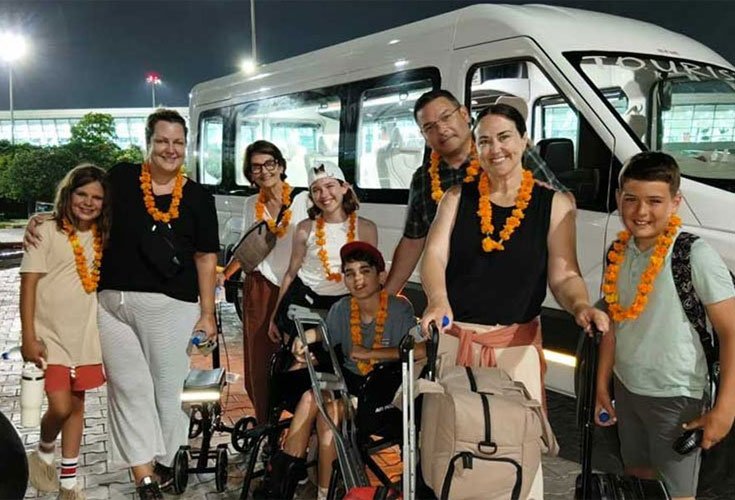 14 Nights / 15 Days
Route Delhi - Lucknow - Khajuraho - Orchha - Bhopal - Maheshwar - Mumbai
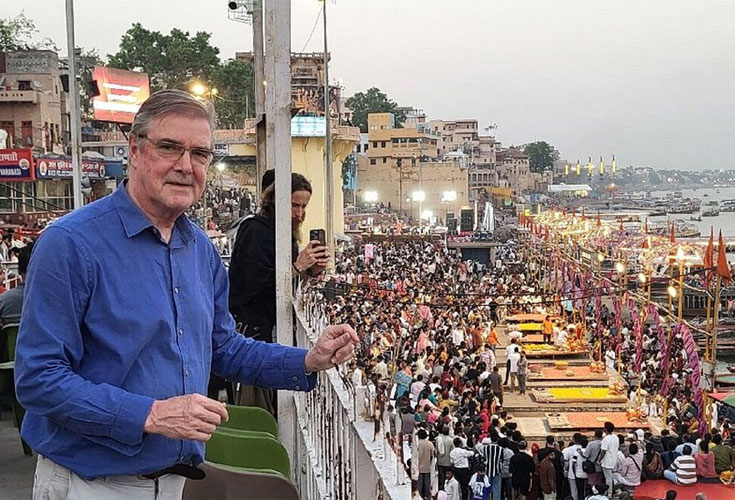 12 Nights / 13 Days
Route Delhi - Amritsar - Varanasi - Khajuraho - Orchha - Delhi
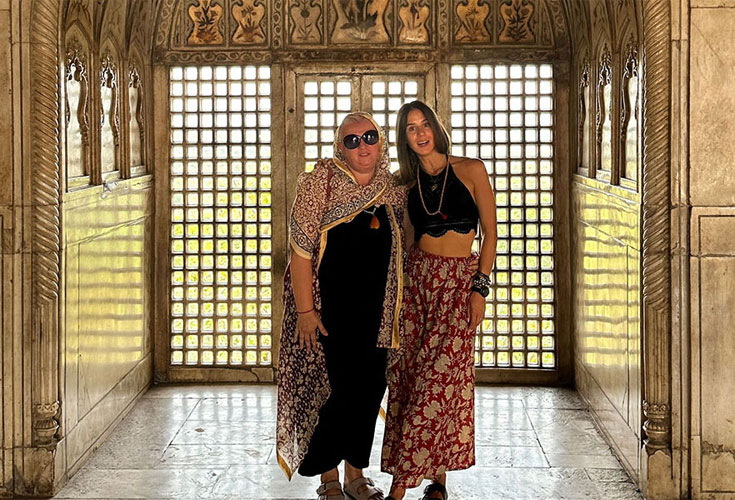 13 Nights / 14 Days
Route Delhi - Varanasi - Agra - Jaipur - Jodhpur - Udaipur
 12 Nights / 13 Days
Route Delhi - Lucknow - Jaipur - Mumbai - Kochi
 11 Nights / 12 Days
Route Delhi - Jaipur - Jodhpur - Bhuj - Ahmedabad
Let Us Plan It
Send dates and interests. A written proposal follows within 48 hours.
Start the brief →Ready When You Are
Speak to a curator directly — +91 97990 02277.
WhatsApp A CuratorIndia & Beyond
Chauffeur-driven travel nationwide, by the day or the fortnight.
See the fleet →