
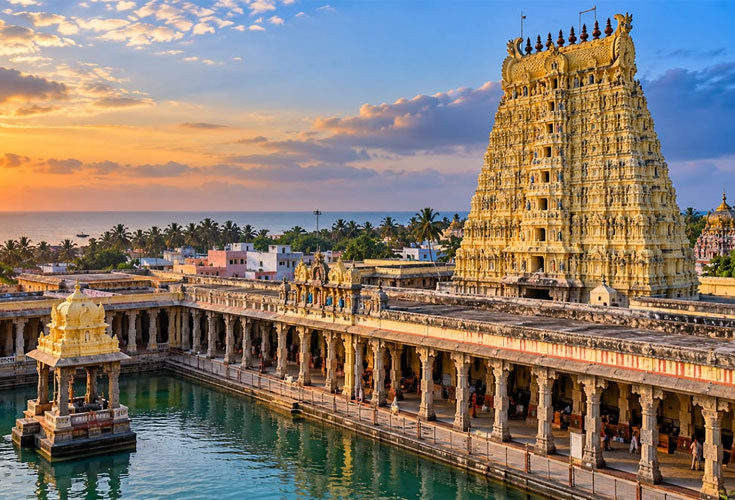
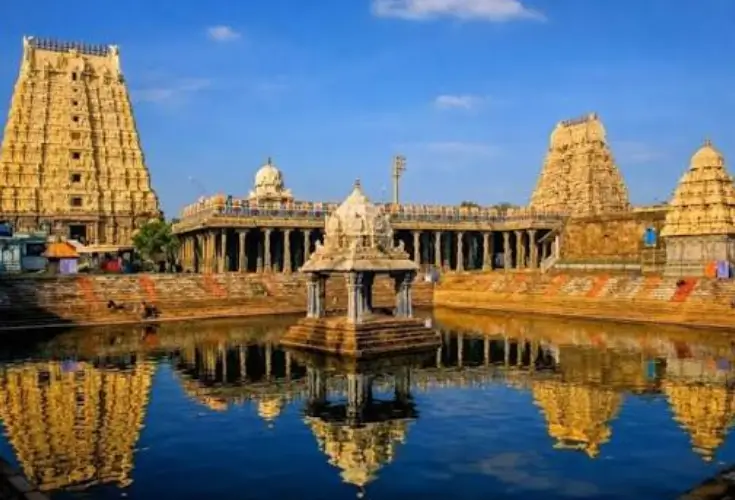
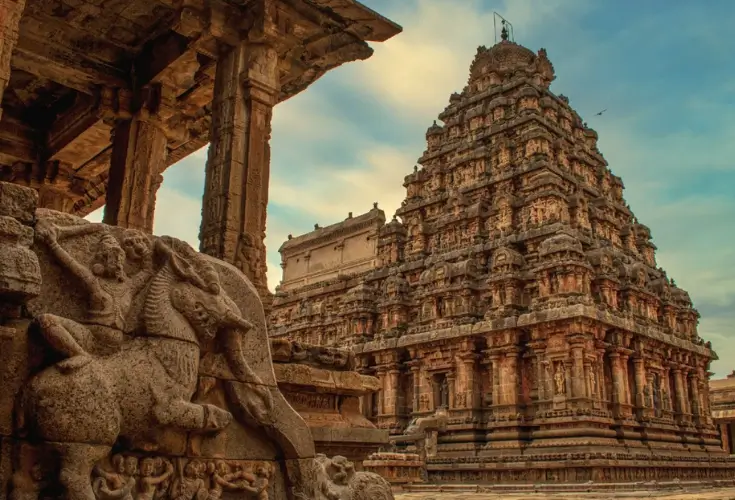
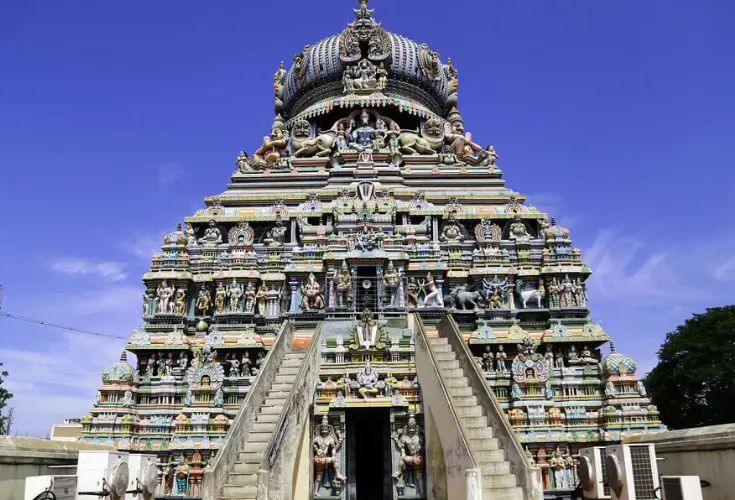
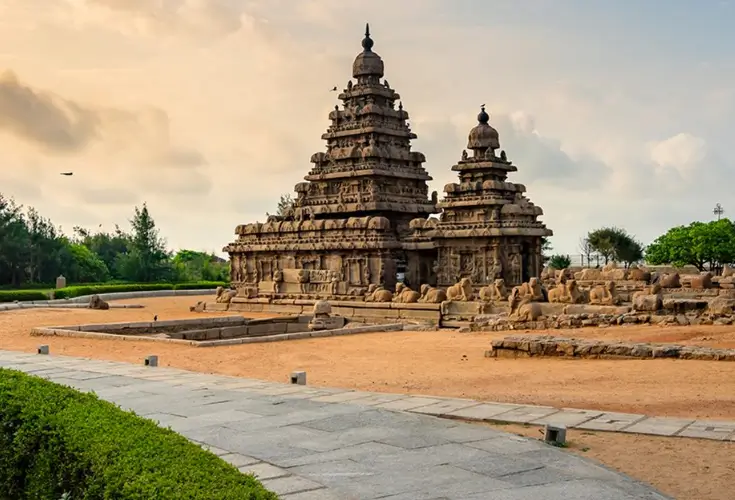
Tamil Nadu’s architectural history can be read across temple walls, rock-cut sanctuaries, bronze traditions, ceremonial streets and monumental towers that remain central to everyday religious life. Tamil Nadu Temple & Heritage Tour follows these cultural layers south from Chennai through some of the state’s most significant historic centres.
Arrive at Chennai International Airport and meet your representative for a private transfer to the hotel. Chennai is both a major modern metropolis and an important cultural gateway to Tamil Nadu, with religious, colonial and commercial districts reflecting different periods in the history of the Coromandel Coast.
After check-in, keep the first part of the day free for rest. If your arrival schedule permits, take an orientation drive through selected central neighbourhoods and along the coastal side of the city. The intention is to become familiar with Chennai without placing a demanding sightseeing programme immediately after arrival.
Spend the evening at leisure and prepare for the following day’s introduction to Tamil cultural heritage. Depending on personal interest and available time, dinner can provide an early introduction to South Indian cuisine, while the main historical programme begins after a comfortable first night.
Overnight: Chennai
Begin the day with selected heritage landmarks that provide context for the journey ahead. Visit an important historic church, temple or museum according to the confirmed programme and applicable opening schedules. Chennai’s identity has developed through a combination of Tamil religious traditions, maritime trade and colonial administration.
Continue through older parts of the city with your guide, learning about the growth of Madras into modern Chennai. Depending on the final itinerary, the programme may include the Fort St. George area, San Thome district or another culturally significant site. Rather than covering distant attractions simply for quantity, the day remains focused on places relevant to the broader history of the region.
Later, spend time around an appropriate local commercial or cultural district before returning to the hotel. Your guide can introduce basic temple etiquette that will be useful throughout the tour, including rules concerning footwear, dress, photography and areas where access may be restricted to practising Hindus.
Overnight: Chennai
Leave Chennai after breakfast and travel to Kanchipuram, one of Tamil Nadu’s historic sacred cities. The destination has been associated with major religious traditions and ruling dynasties for centuries. Temple towers, sacred compounds and long-established neighbourhoods continue to shape the city rather than surviving merely as isolated monuments.
Visit selected major temples according to opening hours and religious access rules. Your guide will explain key elements of Dravidian temple architecture, including gateways, enclosed courtyards, shrines and sculptural programmes. Where appropriate, also learn about Kanchipuram’s renowned silk-weaving tradition, which remains an important part of the city’s cultural identity.
Continue afterwards towards Mahabalipuram, also known as Mamallapuram, on the Coromandel Coast. Arrive and check into your selected hotel. Keep the evening relaxed after the day’s temple visits and road travel, with time for the coastal setting before exploring the Pallava monuments in detail the following morning.
Overnight: Mahabalipuram
Begin among the extraordinary monuments of Mahabalipuram, created under the Pallava rulers. Visit the Shore Temple complex, positioned close to the Bay of Bengal, and examine how structural temple architecture developed alongside the region’s earlier experiments with rock-cut and monolithic forms.
Continue to the Five Rathas and other major accessible monuments, including important reliefs and cave sanctuaries. The concentration of different architectural forms within a relatively small area makes Mahabalipuram particularly valuable for understanding experimentation in early South Indian stone architecture. Your guide will provide context without reducing the visit to a simple sequence of photo stops.
After sightseeing, travel south along the coast towards Puducherry. Arrive and check into your hotel before taking a gentle orientation walk if time permits. The regular street plan, colonial-era façades and tree-lined sections of the historic quarter create an immediate contrast with the temple cities visited earlier.
Overnight: Puducherry
Begin with a guided walk through Puducherry’s historic districts. Streets closer to the seafront contain buildings associated with the city’s French colonial period, while nearby Tamil neighbourhoods follow different architectural traditions. Seeing these areas together provides a better understanding of Puducherry than viewing the former French quarter in isolation.
Walk along selected streets and the seafront while discussing the city’s changing political and cultural history. Visit appropriate churches, heritage buildings or markets according to opening schedules and the final programme. Architecture here is generally smaller in scale than Tamil Nadu’s monumental temples, making street-level details particularly important.
The afternoon can remain relatively open for cafés, galleries, shopping or independent walking. Travellers interested in additional spiritual or cultural institutions may include them when appropriate and confirmed. Return to the hotel for a second night, avoiding the need to rush immediately towards the Kaveri delta after the morning heritage walk.
Overnight: Puducherry
Leave Puducherry after breakfast and travel south towards Kumbakonam, entering a region shaped by the Kaveri river system and centuries of temple patronage. Agricultural landscapes become increasingly prominent, while towns and villages contain numerous shrines representing different periods of Tamil architectural history.
Depending on the final route and opening schedules, stop at one significant temple site en route rather than attempting to visit every monument in the region. The Kaveri delta contains an exceptional concentration of sacred architecture, and carefully selected visits provide more historical value than a rushed checklist of similar-looking temple complexes.
Arrive in Kumbakonam and check into your hotel. Later, take an introductory visit to an important local temple or walk through the central town area with your guide. Kumbakonam remains an active pilgrimage centre, so religious observance, processions and daily rituals may influence access and movement around individual temple compounds.
Overnight: Kumbakonam
Spend the day examining selected Chola temple architecture around the Kumbakonam region. Begin at a major temple chosen according to the final programme, travelling through the fertile delta landscape between sites. Your guide will explain how royal patronage, religious practice and sophisticated stone construction combined during one of South India’s most influential historical periods.
At each temple, concentrate on architectural form, sculpture and the relationship between sacred space and continuing worship. Some sites may contain monumental gateways and enclosed courtyards, while others reveal their importance through more subtle sculptural and structural details. Access to inner areas, photography and opening hours remain governed by individual temple regulations.
Return to Kumbakonam later in the day after completing a carefully paced circuit. The evening is left free rather than adding further temples after a full day of architectural study. This additional night in the region allows the Kaveri delta to function as a major component of the itinerary rather than merely a stop between Puducherry and Thanjavur.
Overnight: Kumbakonam
Leave Kumbakonam after breakfast and make the relatively short journey towards Thanjavur, historically known as Tanjore. The city became one of the most important centres of Chola political and cultural power, and its architectural legacy provides a natural continuation of the previous day’s exploration.
Visit the magnificent Brihadisvara Temple, whose monumental proportions demonstrate the ambition and engineering achievements of the Chola period. Walk through permitted sections of the complex with your guide, examining the relationship between its towering central structure, courtyards, subsidiary elements, inscriptions and sculptural decoration.
Later, visit selected palace or museum collections according to opening schedules, with attention to Thanjavur’s broader artistic heritage. The city is associated with painting, bronze casting, music and courtly traditions extending beyond temple architecture. Check into the hotel and spend the evening at leisure.
Overnight: Thanjavur
Enjoy breakfast before leaving Thanjavur for Madurai. The road journey continues south through Tamil Nadu’s interior, passing agricultural districts, smaller towns and changing rural landscapes. This stage links the Chola heartland with one of southern India’s oldest and most important continuously inhabited sacred cities.
Arrive in Madurai and check into your selected hotel. After time to rest, take an introductory drive or guided walk through an appropriate part of the historic centre. Commercial streets, flower sellers, religious shops and constant pedestrian activity indicate how strongly everyday urban life remains connected with the temple at the heart of the city.
If the schedule and current temple arrangements allow, an evening visit may provide an initial impression of the Meenakshi Amman Temple precinct. Otherwise, keep the evening free and reserve the complete guided visit for the following morning, when more time can be devoted to understanding the complex.
Overnight: Madurai
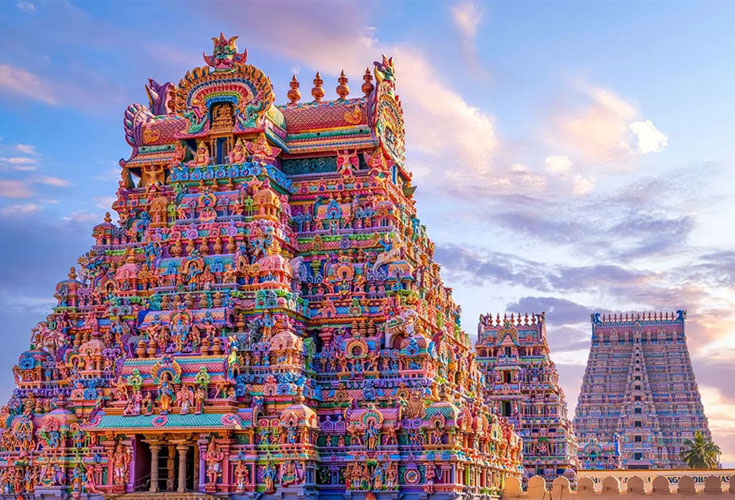
Begin with the Meenakshi Amman Temple, one of Tamil Nadu’s most important active temple complexes. Monumental gateway towers rise above the surrounding streets and are covered with dense sculptural decoration. Enter permitted areas with your guide while respecting all current regulations concerning security, footwear, photography and religious access.
Inside the accessible sections, learn how courtyards, halls, shrines and ceremonial spaces function within a living religious institution. Unlike an archaeological monument, the temple continues to receive large numbers of worshippers and pilgrims. Ritual activity can affect movement through the complex, and certain inner areas may remain restricted according to religious rules.
Continue with selected Madurai heritage sites and historic commercial streets. Depending on the programme, visit a palace or market area that adds context to the city beyond the temple. Spend the final afternoon at leisure before returning to the hotel for the last evening of the tour.
Overnight: Madurai
Enjoy breakfast at the hotel and keep the morning flexible according to your onward flight or rail schedule. Travellers with a later departure may have time for a final market visit or a short independent walk, but no major temple excursion is fixed for the final day.
At the appropriate time, meet your chauffeur for a private transfer to Madurai Airport, railway station or another confirmed onward point. Guests continuing elsewhere in South India can connect from Madurai according to their individually arranged programme.
The Tamil Nadu Temple & Heritage Tour concludes after tracing several distinct cultural periods across the state. Kanchipuram introduced an ancient sacred city, Mahabalipuram revealed Pallava innovation, Puducherry added a contrasting coastal heritage, the Kaveri delta presented Chola architecture, and Madurai completed the route within one of Tamil Nadu’s great living temple cities.
What the price includes
What it does not
Starting from
On request
per person · twin share
Get In Touch
No planning fee, no obligation. A curator replies within two hours - or call +91 97990 02277.
 19 Nights / 20 days
Route Chennai - Mahabalipuram - Puducherry - Thanjavur - Chettinad - Madurai - Thekkady - Munnar - Kochi - Kabini - Mysuru - Bengaluru
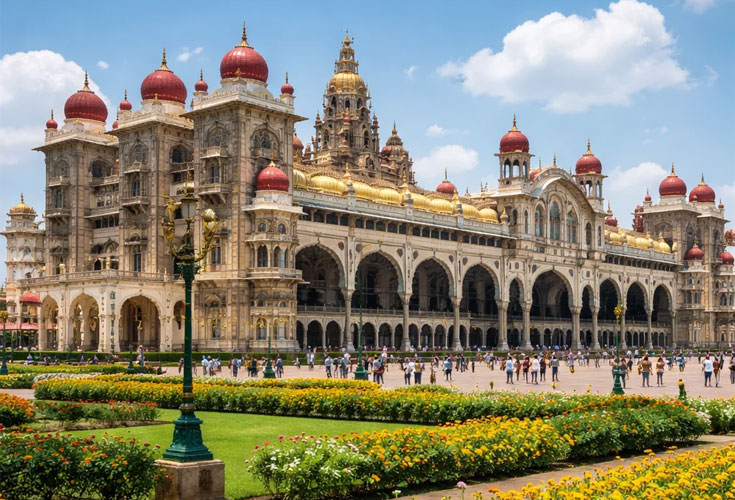 16 Nights / 17 Days
Route Bengaluru - Mysuru - Coorg - Hassan - Hampi - Kochi - Munnar - Thekkady - Kumarakom - Alleppey
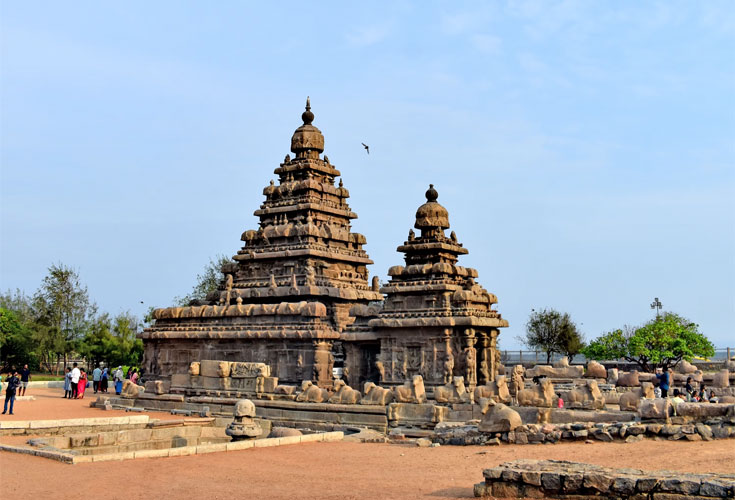 14 Nights / 15 Days
Route Kochi - Munnar - Thekkady - Madurai - Chettinad - Thanjavur - Puducherry - Mahabalipuram - Chennai
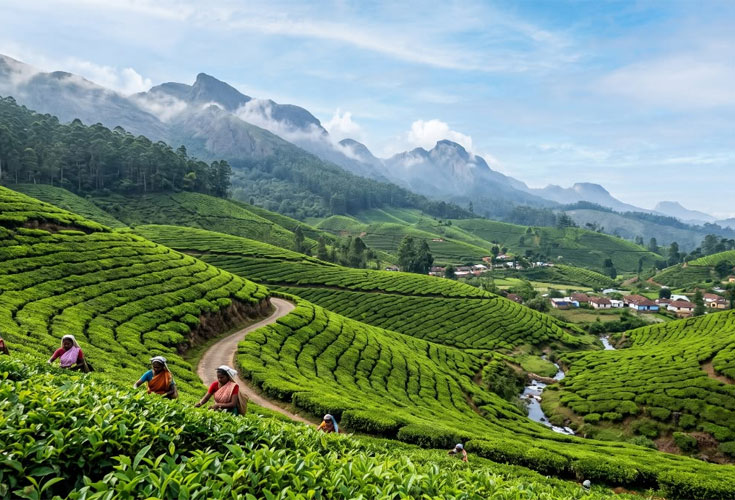 13 Nights / 14 Days
Route Bengaluru - Mysuru - Kabini - Ooty - Coonoor - Munnar - Thekkady - Kochi
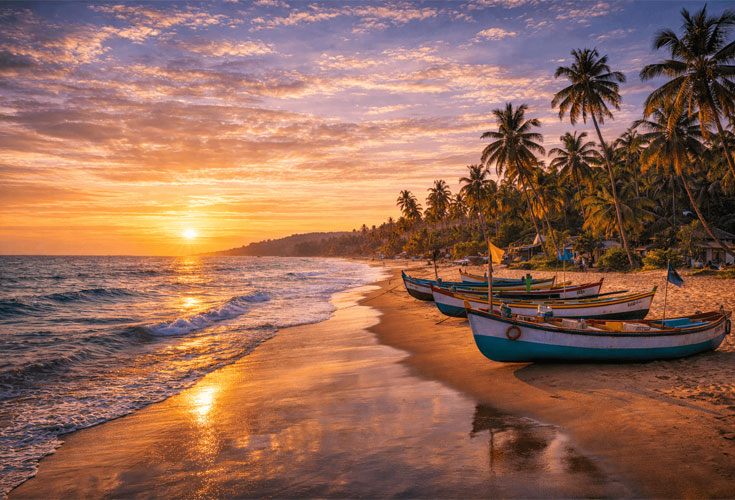 11 Nights / 12 Days
Route Goa - Badami - Hampi - Chikmagalur - Mysuru - Bengaluru
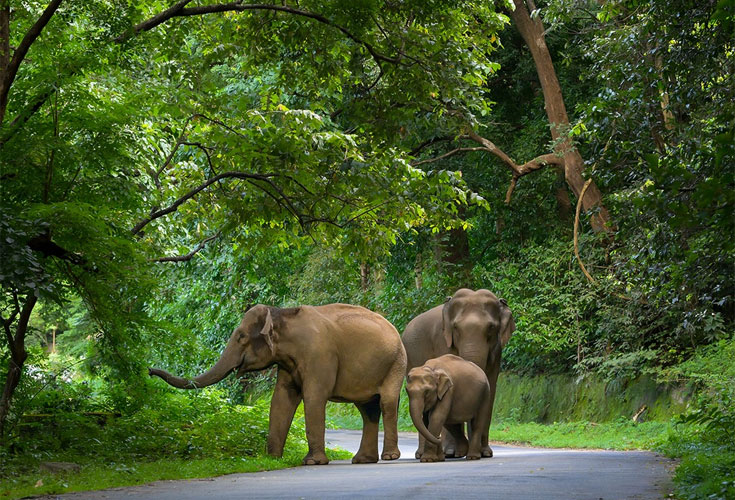 09 Nights / 10 Days
Route Kochi - Munnar - Thekkady - Kumarakom - Alleppey - Kochi
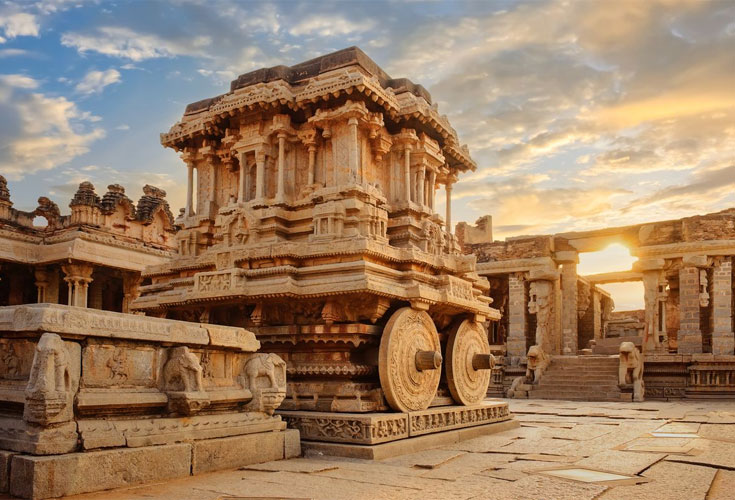 08 Nights / 09 Days
Route Bengaluru - Mysuru - Hassan - Hampi - Bengaluru
 07 Nights / 08 Days
Route Bengaluru - Mysuru - Coorg - Kabini - Bengaluru
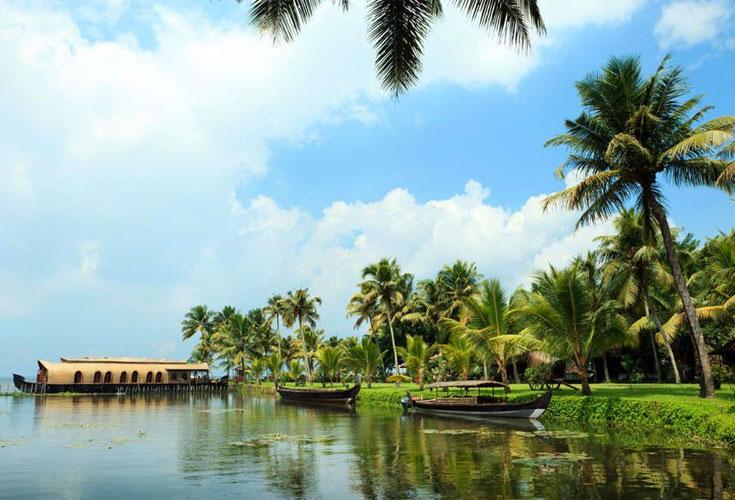 06 Nights / 07 Days
Route Kochi - Kumarakom - Alleppey - Marari
 16 Nights / 17 Days
Route Chennai - Mahabalipuram - Puducherry - Madurai - Thekkady - Kumarakom - Kochi - Marari
 17 Nights / 18 Days
Route Chennai - Mahabalipuram - Puducherry - Thanjavur - Madurai - Thekkady - Kumarakom - Kochi - Munnar
 9 Nights / 10 Days
Route Bengaluru - Mysuru - Chikmagalur - Hampi - Bengaluru
 13 Nights / 14 Days
Route Chennai - Mahabalipuram - Puducherry - Thanjavur - Madurai - Thekkady - Kumarakom - Kochi
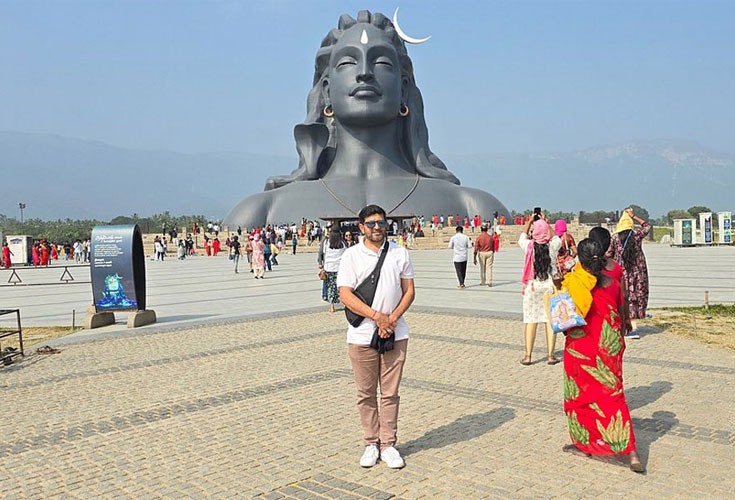 11 Nights / 12 Days
Route Chennai - Mahabalipuram - Puducherry - Thanjavur - Madurai
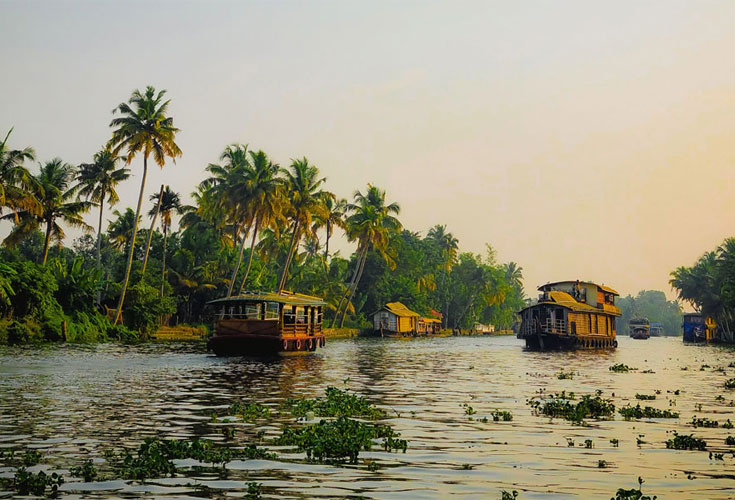 09 Nights / 10 Days
Route Kochi - Munnar - Kumarakom - Alleppey - Marari
Let Us Plan It
Send dates and interests. A written proposal follows within 48 hours.
Start the brief →Ready When You Are
Speak to a curator directly — +91 97990 02277.
WhatsApp A CuratorIndia & Beyond
Chauffeur-driven travel nationwide, by the day or the fortnight.
See the fleet →