
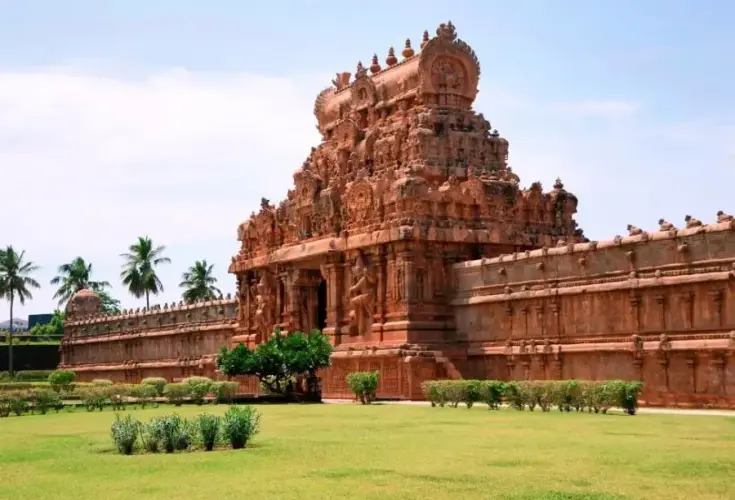
Tamil Nadu is one of India’s strongest destinations for travelers interested in architecture, religious history, craftsmanship and living cultural traditions. Its great temple towns were not created as isolated monuments. They developed as active centers of worship, patronage, trade, scholarship, music and community life, and many continue to function in that role today. That continuity gives the region a character very different from journeys centered primarily on forts, palaces or archaeological sites.
Arrive at Chennai International Airport and complete immigration, baggage collection and customs before meeting the local representative. Assistance will be provided with the private transfer to your hotel, where check-in arrangements will follow the booked room category and arrival time. No formal sightseeing is planned today because international and domestic flight schedules vary considerably. Take time to settle into the property, rest and adjust to the climate. The first day is deliberately quiet so tomorrow can begin with proper energy.
Chennai is a useful starting point because it introduces Tamil Nadu as a contemporary regional capital rather than immediately beginning with ancient temples. The city combines important religious centers, colonial-era architecture, cultural institutions, residential neighborhoods and a long coastline. Its scale also provides context for the smaller historic places that follow. The journey south will gradually move from a major metropolis to archaeological sites, a former colonial coastal town and then deeper temple cities.
Use the remainder of the day according to your arrival time. An early arrival can be followed by lunch, hotel leisure time or a gentle drive along part of the waterfront if desired. Guests arriving later may prefer dinner and an early night. There is no need to force sightseeing into the day simply because time is technically available. A comfortable beginning suits the architectural focus of the itinerary ahead.
Overnight: Chennai
After breakfast, meet your private guide and begin with Mylapore, one of Chennai’s historically important neighborhoods. Visit the area around Kapaleeshwarar Temple, where religious architecture remains closely tied to everyday commercial and residential life. Your guide will explain the basic principles of Dravidian temple planning, including gateways, courtyards and sacred enclosures, so that later visits in Thanjavur and Madurai have stronger context. The objective is not to treat the temple as a preview of something grander, but to understand how a major urban shrine functions within a living neighborhood.
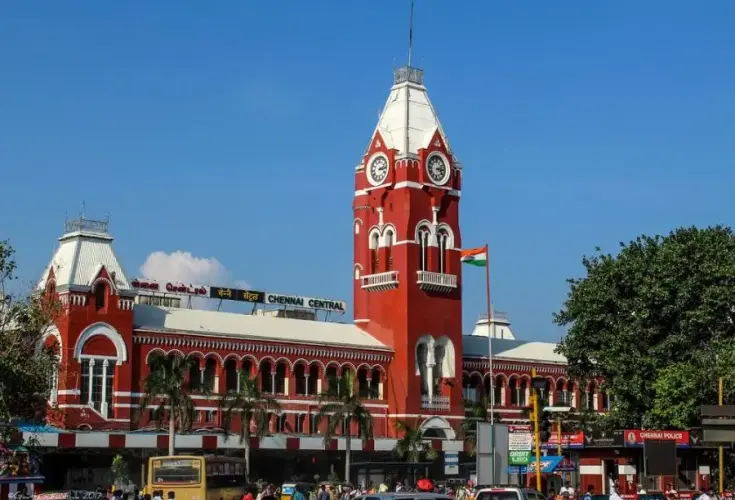
Continue through selected areas of central Chennai to see a different side of the city’s architectural history. Depending on the final program, this may include colonial-era civic buildings, an appropriate museum or a cultural institution connected with South Indian art and history. The city offers useful insight into the layered development of modern Tamil Nadu, where older religious centers and later administrative districts coexist. Your guide can adjust emphasis according to whether your interests are architecture, history, textiles, music or visual art.
Keep the later afternoon relatively flexible. Return to the hotel for a break or use the time for a carefully selected additional visit such as a gallery, craft institution or food-focused activity. Chennai is also a strong introduction to Tamil cuisine, and dinner can be arranged around regional preferences if desired. Avoid trying to cover every landmark in one day. Tomorrow the journey leaves the metropolis and follows the Coromandel Coast toward Mahabalipuram.
Overnight: Chennai
Leave Chennai after breakfast and travel south toward Mahabalipuram, also known as Mamallapuram. The coastal drive is relatively short, allowing the day to be used primarily for sightseeing rather than road travel. On arrival, check into the hotel or proceed directly to the monuments depending on timing. Mahabalipuram is particularly important because its temples and rock-cut works provide a very different architectural language from the later Chola temples seen farther south.
Begin with selected monuments associated with the Pallava period, including the celebrated Descent of the Ganges, also known as Arjuna’s Penance. This enormous open-air relief is best understood slowly, with attention to the many human, divine and animal figures carved into the rock face. Your guide will explain the competing interpretations of the scene and the artistic sophistication of the composition without reducing it to a simple legend. Nearby rock-cut caves provide additional context for the development of Pallava stone architecture.
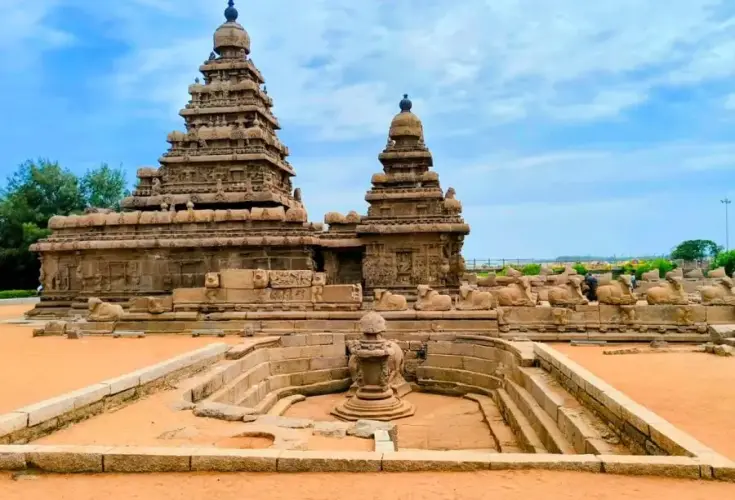
Continue toward the Shore Temple, whose position near the Bay of Bengal gives the complex one of the most distinctive settings on this journey. The temple’s weathered stone surfaces reveal centuries of exposure to the coastal environment, while its form marks an important stage in the evolution from rock-cut to structural temple architecture. Take time to see how sculpture, enclosure and setting work together rather than viewing the temple only as a silhouette against the sea. Return to the hotel later in the day and keep the evening free.
Overnight: Mahabalipuram
Enjoy breakfast before leaving Mahabalipuram and continuing south toward Puducherry. The road journey is manageable and allows a comfortable arrival without an early start. As you travel, the character of the coast changes gradually, with smaller settlements and agricultural areas replacing Chennai’s urban scale. The day is designed as a transition between archaeological architecture and the more domestic urban fabric of Puducherry.
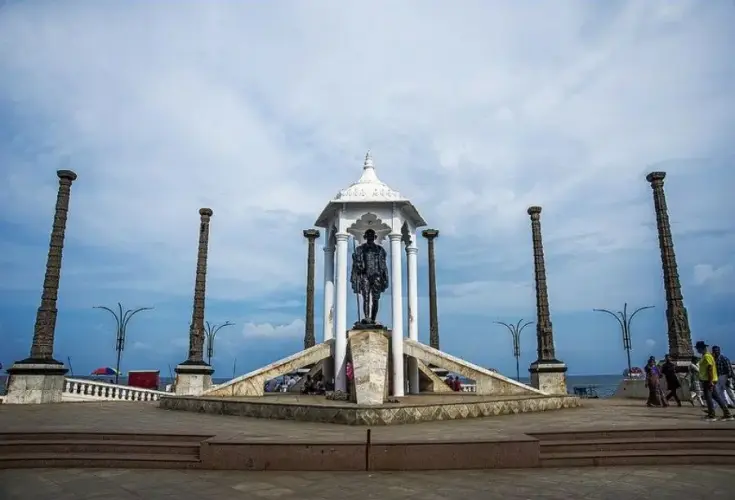
Check into your hotel and begin an introductory walk through selected streets of the historic quarter. Puducherry is known for the visual contrast between broad tree-lined streets, former colonial buildings, Tamil residential areas and the seafront. Your guide can explain how different parts of the town developed and how the urban plan reflects both local and European influences. The focus should remain on architecture and street character rather than presenting the city simply as a preserved colonial enclave.
Continue toward the waterfront and spend time walking at an appropriate pace. The town is particularly suited to unhurried exploration because many of its strongest details are found in façades, courtyards, shutters, religious buildings and streets rather than at one monumental attraction. Return to the hotel after the walk and keep the evening open. Dinner can be selected according to your interests, including Tamil, coastal or Franco-Tamil influences where suitable.
Overnight: Puducherry
After breakfast, continue exploring Puducherry with a focus on the different communities and architectural traditions that shape the town. Walk through selected Tamil quarters where domestic architecture differs from the larger colonial-era buildings closer to the waterfront. Internal courtyards, shaded verandas and street-facing details reveal how houses responded to climate and family life. Your guide can help draw attention to these features without turning the walk into an overly academic exercise.
Depending on your interests, visit one or more important cultural or spiritual institutions associated with Puducherry. The final choice should reflect current opening conditions and your personal preferences rather than follow a rigid universal program. Travelers interested in textiles, design or handicrafts can also include an appropriate workshop or craft-related visit. Any such stop should be selected because it adds cultural value and not simply because it offers shopping.
Leave part of the afternoon unscheduled. Spend time at a café, walk independently near the seafront, return to the hotel or browse local design shops at your own pace. This flexibility is useful before tomorrow’s longer drive inland toward Thanjavur. The evening can remain informal, allowing you to enjoy the quieter coastal atmosphere one last time before the journey turns toward the Kaveri region.
Overnight: Puducherry
After breakfast, leave Puducherry and travel inland toward Thanjavur. The road carries you away from the coast and deeper into Tamil Nadu’s fertile interior, where agriculture and river systems have historically supported dense settlement and temple patronage. The transition is significant because the architecture encountered from this point becomes increasingly connected with the great temple-building traditions of the Chola period. Comfort stops can be made as required.
Depending on the final routing and your interests, the journey may include a carefully selected stop at a significant temple town en route. Any such inclusion should be chosen for architectural relevance and realistic timing rather than simply increasing the number of temples visited in one day. The aim is to arrive in Thanjavur with enough energy to appreciate the city properly. Lunch can be taken independently at an appropriate point during the journey.
Check into your hotel in Thanjavur and keep the evening light. If arrival time allows, take a short orientation drive through the city with your guide, gaining a first sense of the relationship between the historic center, temple precincts and modern urban areas. Avoid beginning the major Brihadisvara Temple visit late in the day unless conditions make it genuinely worthwhile. Tomorrow is reserved for a detailed encounter with one of South India’s most important architectural achievements.
Overnight: Thanjavur
Begin the morning at Brihadisvara Temple, one of the defining monuments of Chola architecture. The temple complex is remarkable for its scale, axial planning and monumental tower, but its impact comes equally from proportion and the disciplined relationship between structures within the enclosure. Your guide will explain how royal patronage, religious practice and political authority intersected in the creation of the temple. Take time to understand the plan before focusing on individual sculptural or architectural details.
Move through the complex at a measured pace, observing stone inscriptions, subsidiary shrines, sculptural elements and the enormous architectural mass of the main sanctuary. The temple remains an active place of worship, so sightseeing should always accommodate religious practice and current access regulations. This living function is important because it prevents the site from being understood only as an archaeological monument. Respectful clothing, footwear procedures and photography rules should follow local requirements.
Later, continue with a selected museum, palace-related site or art institution in Thanjavur according to current opening arrangements. The city is also associated with distinctive painting traditions and other forms of artistic production, which can be introduced through an appropriate specialist or workshop where available. Return to the hotel in the afternoon and leave time for rest. The day is intentionally centered on one major temple rather than diluted by several distant sites.
Overnight: Thanjavur
Enjoy breakfast before beginning a second day that looks beyond monumental temple architecture. Depending on your interests, spend time with an appropriate local practitioner or institution connected with Thanjavur painting, bronze work, textiles or another regional artistic tradition. A well-arranged visit can show how materials, iconography and technique are connected with the same religious and courtly culture represented in the temples. The emphasis should remain educational rather than commercial.
Later, explore selected areas around Thanjavur that help connect the city with the wider Kaveri delta. Agriculture, waterways and settlement patterns are essential to understanding why this region supported major temple centers and royal capitals. If the final itinerary includes a nearby temple or village visit, it should be chosen because it adds another architectural or cultural dimension rather than repeating yesterday’s experience. Your guide can adapt the program according to local conditions and your level of interest.
Return to the hotel during the afternoon and keep the rest of the day relatively open. This break is important before tomorrow’s drive to Madurai and prevents the journey from becoming an uninterrupted sequence of guided temple visits. You may enjoy the hotel, arrange an independently booked spa treatment or spend additional time photographing local architecture. Dinner is at leisure according to the confirmed meal plan.
Overnight: Thanjavur
After breakfast, leave Thanjavur and begin the private journey toward Madurai. The road provides another change in regional character as you move away from the Kaveri delta toward one of Tamil Nadu’s oldest and most culturally important cities. Small towns, agricultural areas and roadside temples form part of the journey, but there is no need to make frequent unscheduled stops unless something is genuinely relevant. The day should remain comfortable rather than overfilled.
Arrive in Madurai and check into your hotel before taking time for lunch and a short rest. The city differs from Thanjavur because its monumental temple stands within a dense, active urban center whose streets continue to organize themselves around religious and commercial life. That relationship between temple and city is one of the main reasons Madurai makes such a strong final destination. The experience here is as much about movement, sound and urban activity as it is about stone architecture.
Later, take an orientation walk or drive through selected areas around the historic center without attempting the full temple visit yet. Markets, flower sellers, small businesses and temple-related commerce provide a first impression of how the city functions. Return to the hotel before evening or continue with a carefully timed visit if the final schedule allows. Tomorrow is reserved for the principal exploration of the Meenakshi temple complex.
Overnight: Madurai
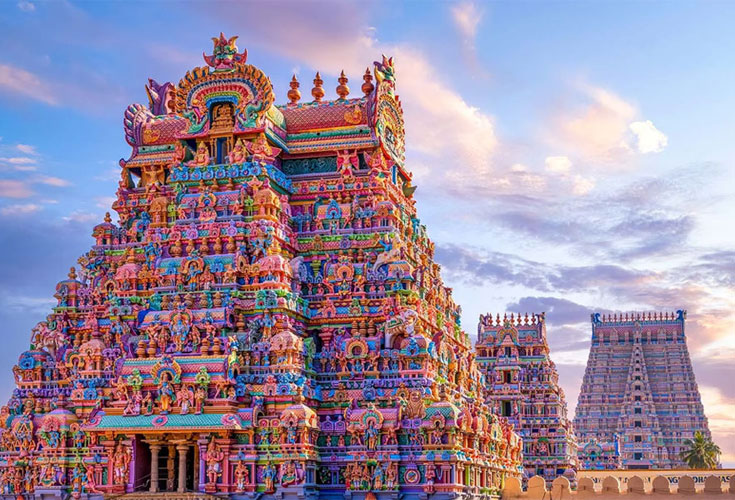
Begin with a privately guided visit to the Meenakshi Amman Temple, the architectural and spiritual center of Madurai. The complex is defined by multiple monumental gateway towers, enclosed courtyards, shrines and ceremonial spaces that have developed over centuries. Your guide will explain the basic organization of the temple and the significance of its principal deities while respecting the areas where access may be restricted to worshippers. The visit should unfold slowly because the scale and visual density can be overwhelming when rushed.
Move through the sections open to visitors and pay attention to sculpture, painted ceilings, columns and the relationship between ritual movement and architectural space. Unlike many heritage monuments, the temple remains deeply active, and daily worship continues alongside the presence of visitors. This living religious function is central to understanding Madurai. Dress requirements, photography rules and access restrictions should always be followed as they apply on the day.
Continue afterward through nearby market streets and selected sections of the historic center. Depending on interest, the afternoon may include a palace-related site, a textile-focused visit or another cultural experience that broadens the day beyond temple architecture. Return to the hotel for rest before the final evening. If an evening temple visit or ceremony is of interest, it can be included only where appropriate and subject to current operating arrangements.
Overnight: Madurai
Enjoy breakfast at the hotel and keep the morning aligned with your flight or onward travel schedule. If departure is later in the day, use the available time for a final walk, a short market visit or an additional cultural stop selected according to your interests. There is no requirement to add another major attraction simply to fill the hours. The closing day should remain comfortable and practical.
Over eleven days, the route has moved through several distinct expressions of Tamil Nadu. Chennai introduced an urban cultural context, Mahabalipuram revealed Pallava experimentation in stone, Puducherry added a coastal architectural layer, and Thanjavur brought the monumental scale of Chola temple building into focus. Madurai then completed the journey with a temple complex that remains deeply embedded in contemporary religious and commercial life. The route is therefore connected by architecture, but never limited to architecture alone.
At the appropriate time, transfer privately to Madurai airport or the agreed departure point for your onward journey. Travelers continuing through South India can connect with Kerala, Karnataka or another Tamil Nadu destination depending on the wider itinerary. The 11-day Temples & Traditions of Tamil Nadu private tour concludes here after a journey shaped by temples, streets, artistic traditions and regional history.
Meals: Breakfast
Tour Ends: Madurai
What the price includes
What it does not
Starting from
On request
per person · twin share
Get In Touch
No planning fee, no obligation. A curator replies within two hours - or call +91 97990 02277.
 16 Nights / 17 Days
Route Chennai - Mahabalipuram - Puducherry - Madurai - Thekkady - Kumarakom - Kochi - Marari
 17 Nights / 18 Days
Route Chennai - Mahabalipuram - Puducherry - Thanjavur - Madurai - Thekkady - Kumarakom - Kochi - Munnar
 9 Nights / 10 Days
Route Bengaluru - Mysuru - Chikmagalur - Hampi - Bengaluru
 13 Nights / 14 Days
Route Chennai - Mahabalipuram - Puducherry - Thanjavur - Madurai - Thekkady - Kumarakom - Kochi
 09 Nights / 10 Days
Route Kochi - Munnar - Kumarakom - Alleppey - Marari
Let Us Plan It
Send dates and interests. A written proposal follows within 48 hours.
Start the brief →Ready When You Are
Speak to a curator directly — +91 97990 02277.
WhatsApp A CuratorIndia & Beyond
Chauffeur-driven travel nationwide, by the day or the fortnight.
See the fleet →