
How Much Does a Luxury Trip to India Cost?
Not the usual “October to March” answer. What each month actually looks like in Rajasthan, Kerala, the Himalayan foothills and the tiger parks - including the two months we quietly steer people away from.
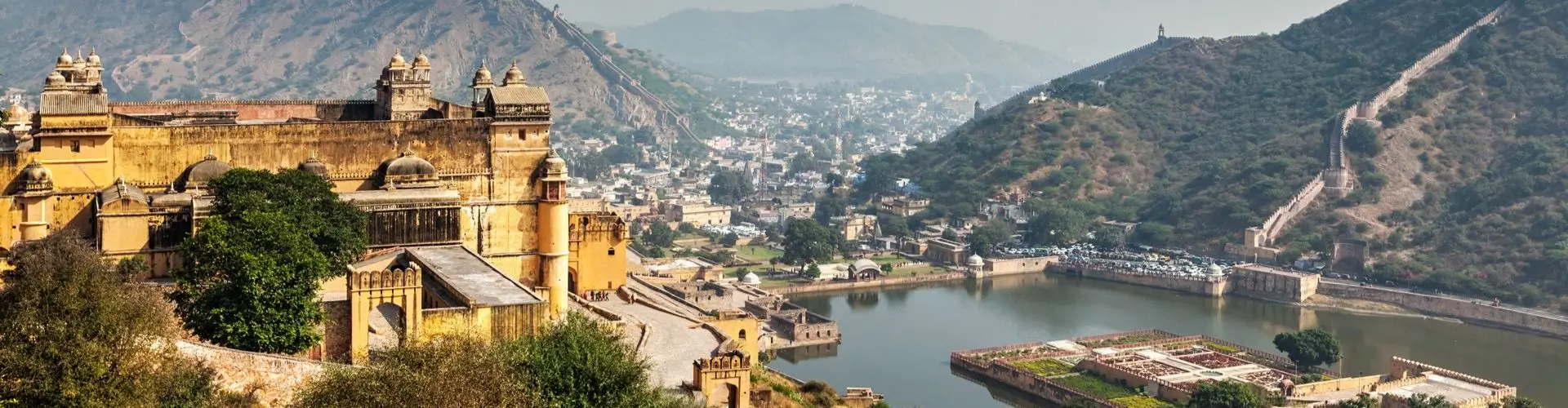
The price of a high-end holiday in India can vary dramatically even when two travellers follow almost the same route. A couple staying in respected five-star hotels and travelling with a private chauffeur will spend very differently from guests booking grand palace suites, premium vehicles, private dining and top wildlife lodges. For an international traveller looking for a genuinely comfortable private holiday rather than a standard package with a luxury label, a sensible starting expectation is approximately USD 500 to USD 1,500+ per person per day, excluding international flights. At the highest end, exceptional suites, private villas and particularly expensive hotel categories can take the daily figure well beyond this range.
That higher estimate is intentional. India can certainly be travelled for considerably less, and many operators advertise luxury trips from around USD 250–400 per person per day. Current market guides also place broader luxury travel around USD 250–500+ per person daily. Luxury Trip To India, however, is aimed at international guests considering superior hotels, private arrangements and a higher level of comfort. For that traveller, building the budget around the lowest possible definition of luxury can create unrealistic expectations.
The biggest component of a luxury India trip cost is usually accommodation. A single hotel decision can alter the price of a two-week holiday by thousands of dollars. Add a private car and chauffeur in India, expert local guides, domestic flights, monument admission, fine dining, wildlife safaris and special arrangements, and the difference between a polished five-star trip and an exceptional palace-led holiday becomes substantial.
The figures below should therefore be treated as realistic budget guidance rather than fixed quotations. Hotel rates, airfares and other travel services fluctuate according to dates, availability, room category and season.
What Should You Budget for a Luxury India Tour?
A useful way to think about the cost of a luxury India tour is to separate genuine high-end travel into different levels rather than treating every five-star itinerary as equivalent.
For approximately USD 500–700 per person per day, based on two guests travelling together, it can be possible to create a very comfortable private holiday using quality five-star and heritage accommodation, a private air-conditioned vehicle where appropriate, experienced local guides and well-organised sightseeing. At this level, the traveller is paying for comfort and personal service, but not necessarily occupying the finest rooms in India's most prestigious palace hotels every night.
Move towards approximately USD 700–1,000 per person per day, and hotel selection can become substantially stronger. There is greater scope for distinguished heritage properties, premium five-star resorts, better room categories, private touring and carefully selected dining or cultural arrangements. The additional budget also makes it easier to avoid compromises created by choosing accommodation purely on price.
A high-end private India tour at approximately USD 1,000–1,500+ per person per day enters a different category. The itinerary may feature India's celebrated palace hotels, leading resorts, premium safari lodges, suites on selected nights, upgraded private transport and a greater number of individually arranged experiences. This is also where the exact travel dates become extremely important because prestigious hotels can command substantially higher rates during periods of strong demand.
Current accommodation pricing illustrates how wide the gap can become within one famous property. Recent listed rates for Taj Lake Palace in Udaipur have shown standard or palace-level rooms in the hundreds of dollars per night, while premium suites can reach several thousand dollars per night. This is precisely why asking, “What does a five-star India holiday cost?” does not produce a useful answer without knowing the room standard expected.
A realistic working range for two travellers might therefore look like this:
|
Private Travel Style |
Approx. Cost Per Person/Day |
Approx. 10 Nights Per Person |
Approx. 14 Nights Per Person |
|
Refined Five-Star Private Travel |
USD 500–700 |
USD 5,000–7,000 |
USD 7,000–9,800 |
|
Premium Heritage & Palace Mix |
USD 700–1,000 |
USD 7,000–10,000 |
USD 9,800–14,000 |
|
Exceptional Palace-Led Journey |
USD 1,000–1,500+ |
USD 10,000–15,000+ |
USD 14,000–21,000+ |
These estimates exclude international flights and are not fixed package prices. A route containing several domestic flights, premium wildlife arrangements or unusually expensive suites can exceed them considerably.
Trip duration also needs to be considered intelligently. A ten-night itinerary does not simply cost ten times a standard daily figure. Some expenses, such as airport assistance or certain transfers, occur only once. Others, particularly hotels and private touring, accumulate every day. Longer private road journeys can also involve vehicle positioning, interstate charges and chauffeur-related expenses.
For couples seeking bespoke India tours, the most useful question is therefore not “What is the cheapest luxury price?” but “What level of accommodation, privacy and service do we want throughout the holiday?” Once that standard is clear, the budget becomes far more meaningful.
Where the Money Goes on a Private Luxury Holiday in India
Accommodation usually creates the largest variation in a private luxury India tour price. A high-quality five-star city hotel might be relatively moderate by international luxury standards on certain dates, while a landmark palace property or exceptional suite can cost many times more.
For higher-side budgeting, allow roughly USD 350–800+ per room per night for strong luxury accommodation across a mixed itinerary. Palace hotels, leading resorts and desirable room categories can rise to USD 800–1,500+ per room per night, while prestigious suites may cost several thousand dollars. Current hotel listings demonstrate that even one celebrated property can have an enormous spread between entry rooms and its finest suites.
This makes hotel selection much more important than the star rating printed beside the name. A traveller might spend two nights in Delhi at an elegant contemporary hotel, two nights in Jaipur at a former palace, a night in Agra with convenient access to the Taj Mahal, and three nights in Udaipur at a resort where the hotel itself becomes part of the holiday. The nightly prices need not be identical for the overall standard to remain high.
Transport is the next consideration. A standard private car with driver in India is comparatively affordable, but premium travel may involve larger vehicles or luxury marques. Published market estimates place ordinary private chauffeur arrangements substantially below premium Mercedes or BMW-level vehicles, with luxury vehicles reaching roughly USD 180–250 per day in some estimates. For a higher-end holiday, budgeting approximately USD 100–300+ per vehicle per day is a sensible broad allowance depending on vehicle type, distance, route and inclusions.
A proper quotation should state what the transport price covers. Fuel, tolls, parking, interstate taxes, chauffeur allowance and overnight arrangements can otherwise create confusion. Published private-car guidance specifically recommends checking these inclusions rather than comparing only the headline daily rate.
Private guiding also deserves a realistic allowance. For private guided tours in India, approximately USD 60–150+ per day is a useful premium budgeting range depending on the city, guide credentials, language, duration and specialist requirements. Specialist-led visits can cost more.
Domestic flights are another variable. A route involving Delhi, Rajasthan, Varanasi and Kerala cannot sensibly be treated like a Delhi–Agra–Jaipur road journey. Airfares vary by route and booking conditions, but a working allowance of around USD 100–300+ per person per domestic sector provides more breathing room for a premium itinerary than budgeting around the lowest advertised fare.
Dining can be inexpensive in India, but that fact is largely irrelevant to someone researching the price of a luxury holiday in India. Fine restaurants in leading hotels, tasting menus, alcoholic beverages and private dining arrangements can change the figure quickly. A comfortable allowance of USD 75–200+ per person per day for lunches and dinners gives considerably more freedom, although breakfast is commonly included with many luxury hotel rates. Private dining and elaborate special-occasion meals should be treated separately.
Entrance charges and privately arranged activities also matter. A cultural day involving a private guide, monument admissions and chauffeured transport costs more than a free afternoon at the hotel. Likewise, an itinerary filled with additional activities will naturally carry a higher price than one built around slower days.
The key point is that a luxury India vacation cost should reflect the complete day rather than the room alone. A USD 600 hotel paired with poorly coordinated transfers and rushed sightseeing does not create a USD 600-quality travel experience.
How Rajasthan, the Golden Triangle and Wildlife Change the Price
Route selection has a direct effect on the cost because different parts of India require different combinations of hotels, transport and specialist services.
A luxury Golden Triangle tour covering Delhi, Agra and Jaipur is among the simplest premium routes to arrange. The cities connect naturally by road, reducing the need for domestic flights. A private chauffeur can remain an important part of the trip, and local guides can join for sightseeing in each destination.
For a high-quality private Golden Triangle holiday, a couple could reasonably allow around USD 5,000–8,000+ per person for approximately 8–10 nights, excluding international flights. Using the most prestigious suites, premium luxury vehicles or elaborate private arrangements can push the price much higher. The advantage of this route is that a substantial part of the budget can go towards accommodation and sightseeing rather than repeated flights and complicated logistics.
A luxury Rajasthan tour cost can be higher because the traveller may spend more nights in hotels that are destinations in their own right. Jaipur, Jodhpur and Udaipur offer some of India's best-known palace and heritage accommodation. Jaisalmer adds substantial road travel, while Ranthambore introduces safari-related expenses.
For approximately 12–14 nights across Delhi, Agra and selected Rajasthan cities, a realistic premium budget can sit around USD 9,000–15,000+ per person. An itinerary dominated by India's most celebrated palace hotels and stronger room categories could reach USD 15,000–25,000+ per person, particularly when the traveller wants the accommodation to be a central feature rather than simply a place to sleep.
Wildlife changes the calculation again. A luxury wildlife tour in India involves more than reserving a hotel near a national park. Lodge standard, transfers, safari arrangements, number of drives and the reserve itself affect the total. A premium wildlife segment should be budgeted generously, particularly if it is combined with cultural touring.
For a trip pairing Rajasthan with Ranthambore, the cost increase may remain manageable because the reserve fits naturally into several northern India routes. More distant wildlife areas can require domestic flights and substantial road transfers. Published luxury travel estimates put premium safari-related costs in the hundreds of dollars, depending on what is included.
A longer itinerary combining northern India with Kerala or another distant region introduces additional air travel but can still make sense for travellers with enough time. The mistake is compressing too much geography into too few nights. A 14-night holiday containing constant flights and one-night hotel stays may cost more than a carefully paced route while feeling considerably less luxurious.
For this reason, a higher budget does not automatically justify adding more destinations. Often it is better used for superior rooms, an extra night in Udaipur, a better wildlife lodge, a slower transfer day or more private time at a hotel.
What a Higher Budget Actually Changes
The most meaningful difference between a standard India package and a bespoke luxury India holiday is not the presence of five-star hotels. It is how consistently the entire trip works.
At approximately USD 500–700 per person per day, travellers can expect a strong level of comfort when the route is sensible. The itinerary can include quality hotels, private road transport, local guides and major sightseeing without depending on large group departures.
Increasing the budget to USD 700–1,000 per person per day gives far more room to select hotels for character, location and service rather than simply selecting whichever five-star property fits a package price. This can be particularly valuable in Rajasthan, where the difference between a conventional five-star hotel and a landmark heritage property may materially change the character of the stay.
At USD 1,000–1,500+ per person per day, room categories become an important part of the conversation. A traveller might prefer a suite overlooking Lake Pichola, a more distinguished palace room in Jaipur or a leading wildlife lodge instead of the standard accommodation category. There is also greater scope for premium vehicles, additional private arrangements and dining that is selected independently rather than included because it is convenient for the package operator.
There is another benefit that is less visible on a quotation: time.
A well-funded private tour of India does not need to squeeze value from every hour. It can allow two or three nights in a destination rather than one, keep an afternoon free after a long drive, or schedule sightseeing at a comfortable hour instead of forcing an early departure simply because the group bus leaves then.
This is where spending more can produce a noticeably better holiday. The traveller is not merely buying more expensive objects; the budget is buying control over pace, accommodation, transport and daily decisions.
It is equally important to know where additional spending may provide little benefit. Upgrading every short airport transfer to the most expensive vehicle may matter less than upgrading a three-night hotel stay. Adding a complicated private activity every evening may actually reduce enjoyment if the days are already full. A premium budget works best when it is concentrated on the elements the traveller genuinely values.
For many couples, a strong 12–14-night luxury tour to India might therefore sit around USD 10,000–20,000+ per person, excluding international flights. Travellers seeking exceptional suites, very high hotel categories, premium wildlife arrangements or particularly elaborate private services should be comfortable with USD 20,000–30,000+ per person for a similar duration.
Those are deliberately higher-side estimates rather than bargain figures. Luxury travel should be costed around the standard a guest expects, not around the lowest price that allows a tour to carry the word “luxury.”
The final figure should always come from a detailed quotation based on exact travel dates, route, hotel categories, room preferences and number of guests. A meaningful quote should also make inclusions clear enough that the traveller can see what the money is buying.
If your priority is outstanding accommodation, tell the travel specialist that first. If private guiding and cultural depth matter more than suites, the budget can be allocated differently. If you want a slow honeymoon with three exceptional hotels rather than eight cities, that changes the financial structure again.
The strongest tailor-made India tour is therefore not necessarily the most expensive itinerary. It is the one where the budget is placed where it makes the greatest difference to the people travelling.
Ask The Author
Not sure your dates are the right ones?
Send them over and we will tell you honestly what those weeks look like in the places you want to see.