
Best Luxury India Tour Itineraries for 10, 14 & 21 Days
Not the usual “October to March” answer. What each month actually looks like in Rajasthan, Kerala, the Himalayan foothills and the tiger parks - including the two months we quietly steer people away from.
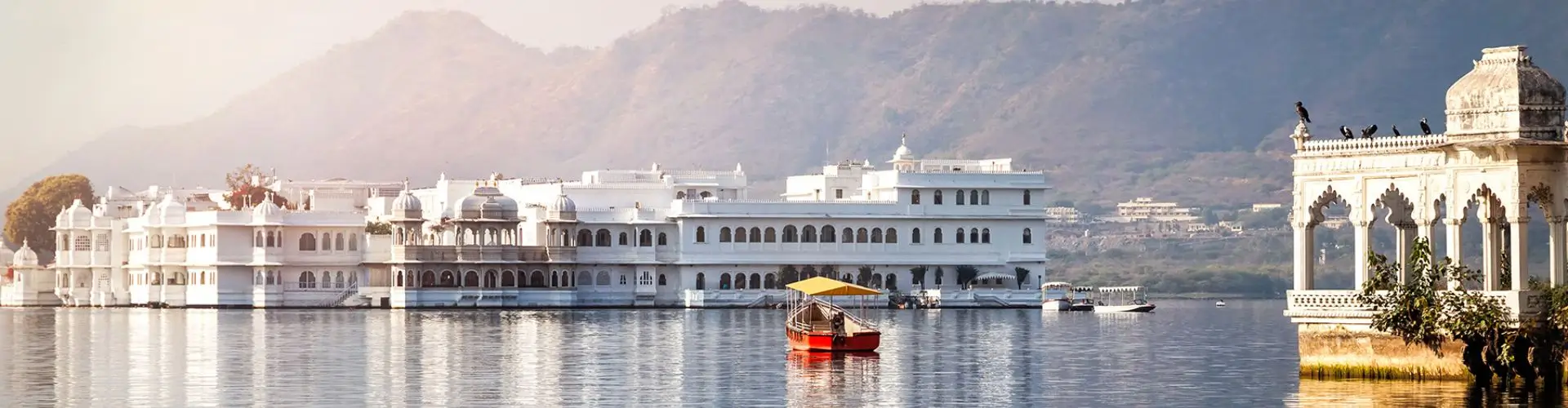
The number of days available in India should determine far more than the number of cities on an itinerary. Ten days can produce an excellent private holiday when the route is geographically sensible. Fourteen days creates room for Rajasthan, wildlife or a slower pace. Twenty-one days allows travellers to connect contrasting regions without turning airports, highways and hotel check-ins into the dominant memory of the trip.
For international travellers considering a luxury India tour itinerary, the most important decision is often what to leave out. India is large enough that Delhi, Rajasthan, Varanasi, central Indian wildlife reserves, the Himalayas and Kerala cannot all be treated as neighbouring stops. A route that looks impressive on paper can become exhausting when every second day involves packing, checking out and travelling somewhere new.
High-end private travel works differently. A chauffeur-driven road sector should be used where it makes geographical sense. Domestic flights should remove unnecessary distances rather than create additional airport days. A remarkable palace hotel deserves enough time to enjoy. A wildlife lodge requires sufficient safari opportunities. Cities such as Jaipur, Udaipur and Delhi deserve selective sightseeing rather than a race through every monument.
The following routes are intended as realistic frameworks for private tours of India, with accommodation and pacing appropriate for travellers who value comfort, individual attention and strong hotels. Exact arrangements should always reflect season, flight schedules, hotel availability and personal interests.
A 10-Day Luxury India Itinerary: Delhi, Agra, Jaipur and Udaipur
Ten days requires discipline. It is enough time for a sophisticated first visit to northern India, but not enough time to attach every famous destination to the route. Delhi, Agra, Jaipur and Udaipur form a particularly strong 10-day luxury India itinerary because they offer substantial contrast without attempting to cover the entire country.
Delhi deserves approximately two nights. International arrivals can occur after a long flight, and beginning major sightseeing immediately after landing rarely improves a premium holiday. A well-positioned five-star hotel provides a comfortable introduction before a privately guided day covering selected parts of Old and New Delhi.
Rather than trying to see every landmark, a private day can concentrate on places that match the traveller's interests. Mughal architecture, colonial-era New Delhi, markets, places of worship and food can all feature, but the day should retain enough breathing room for lunch and a sensible return to the hotel.
From Delhi, Agra is naturally reached by road. One night is often sufficient for travellers whose principal reason for visiting is the Taj Mahal, although two nights can suit those who prefer a slower schedule.
The Taj Mahal should dictate the Agra timetable rather than being squeezed between road transfers. Opening arrangements vary by day and season, and the monument is normally closed to general visitors on Fridays. Foreign visitor admission has generally been priced around INR 1,100, with an additional charge for entry to the main mausoleum; official rates should be checked before travel because admission policies can change.
A premium itinerary should also consider the hotel location. Travellers who have invested in a room with a memorable Taj-facing setting may reasonably want time to enjoy it instead of spending every available hour sightseeing.
Jaipur deserves at least two nights and preferably three when the ten-day schedule allows it. A private Golden Triangle tour traditionally concludes here, but Jaipur should not feel like merely the third point of a triangle. Amber Fort, the City Palace and the historic city each warrant attention, while Jaipur's craft traditions and hotel scene can justify a more selective day away from conventional sightseeing.
For high-end travellers, Jaipur is also one of the first places where accommodation can substantially alter the character of the route. A palace-style stay, historic property or exceptional contemporary hotel can make the evening as important as the day's visits. Premium rooms in leading Jaipur hotels can run from several hundred dollars to well above USD 1,000 per night, particularly for suites and during strong-demand periods.
Udaipur makes an excellent final stop. Flying from Jaipur, where suitable schedules operate, can avoid an unnecessarily long road day. Two or three nights in Udaipur give the itinerary a noticeably calmer finish.
The city works particularly well for travellers interested in a luxury Rajasthan itinerary because its lake setting and celebrated hotels encourage time away from structured sightseeing. The City Palace deserves a privately guided visit, but a free afternoon, an unhurried meal and time at the hotel can be equally valuable.
A premium 10-day route for two guests could reasonably sit around USD 5,000–10,000+ per person, excluding international flights, depending primarily on hotel selection and room categories. Using landmark palace hotels and high suites can take the cost significantly higher.
A sensible outline would be:
Delhi — 2 nights
Agra — 1 night
Jaipur — 3 nights
Udaipur — 3 nights
This route gives first-time visitors Mughal architecture, Rajasthan, private road touring and strong palace-hotel opportunities without making ten days feel like a transport exercise.
A 14-Day Luxury India Itinerary: Rajasthan with Ranthambore
Fourteen days changes what is possible. Those extra nights should not automatically mean adding four more cities. They are better used to introduce a different type of experience and lengthen stays in places where two nights would otherwise feel rushed.
A particularly rewarding 14-day luxury India itinerary combines Delhi, Agra, Ranthambore, Jaipur, Jodhpur and Udaipur. It introduces wildlife between the architectural centres of northern India and Rajasthan while retaining a coherent geographical progression.
Delhi again works well with two nights. A private transfer to Agra follows, with one night sufficient for many travellers. From Agra, the route towards Ranthambore introduces the first substantial change in atmosphere.
Ranthambore is not simply another sightseeing stop. It needs to be treated as a wildlife stay. Two or preferably three nights allow several safari drives rather than placing all expectations on a single outing.
A luxury Ranthambore safari should be approached realistically. Tigers are wild animals, and no responsible itinerary should promise a sighting. The value of the reserve also lies in its landscape, birdlife and wider wildlife. Safari timings are controlled by the relevant authorities and vary seasonally, so departure times should be confirmed for the actual travel dates rather than hard-coded into a long-term itinerary.
For premium travellers, the lodge matters. A strong wildlife property provides a comfortable counterpoint to early safari departures and dusty drives. Depending on lodge level, season and inclusions, premium wildlife accommodation can cost several hundred to well over USD 1,000 per room per night. Top accommodation categories can cost more.
Jaipur follows naturally. Three nights allow a full privately guided sightseeing day without consuming the entire stay. The additional time can be used for specialist interests, shopping with informed assistance, dining or simply enjoying the property.
From Jaipur, Jodhpur adds a different architectural and geographic character. Mehrangarh Fort dominates the city's historic identity and merits a substantial visit with a knowledgeable guide. Two nights usually work well, although three may appeal to travellers staying at a particularly strong hotel or wanting a quieter pace.
The road between Jaipur and Jodhpur is substantial enough that the journey needs to be treated as part of the day. Premium private transport improves comfort, but no vehicle removes the distance. A well-designed chauffeur-driven Rajasthan tour therefore avoids scheduling an elaborate sightseeing programme immediately after every long road transfer.
Udaipur makes a natural final Rajasthan stop. Three nights are particularly valuable after several cities and safari mornings. A private visit to the City Palace, time around the lake and carefully selected dining can sit alongside substantial free time.
The financial range becomes wider at fourteen days. For a premium private trip using excellent five-star and heritage hotels, private guides, chauffeured transport and a quality wildlife lodge, approximately USD 9,000–15,000+ per person is a realistic higher-side framework. A route centred on prestigious palace hotels, leading safari accommodation and suites could reach USD 15,000–25,000+ per person.
A comfortable sequence is:
Delhi — 2 nights
Agra — 1 night
Ranthambore — 2 nights
Jaipur — 3 nights
Jodhpur — 2 nights
Udaipur — 3 nights
The value of this route is contrast. The traveller is not seeing six versions of the same destination. Imperial Delhi, Mughal Agra, a wildlife reserve, Jaipur's historic core, Jodhpur's fort and Udaipur's lakes each contribute something distinct.
A 21-Day Luxury India Itinerary: North India, Varanasi and Kerala
Twenty-one days makes a multi-region journey genuinely viable, but only if the geography is handled intelligently. A 21-day luxury India itinerary can combine northern India with Varanasi and Kerala without requiring travellers to spend half the holiday in transit.
The strongest approach is to create distinct chapters rather than a continuous chain of one- and two-night stops.
Begin with Delhi for two nights. Continue to Agra for the Taj Mahal and then Jaipur for approximately three nights. Udaipur can follow, giving the Rajasthan portion a calmer finish before the itinerary changes direction.
Varanasi is geographically separate enough that air connections should be considered rather than forcing it into an overland Rajasthan route. Flight schedules can change, and some combinations may require connections, so the exact order should be based on viable services for the travel dates.
Varanasi is also a destination where a knowledgeable private guide is particularly valuable. Its religious importance, old-city geography and riverfront activity benefit from context. A private Varanasi tour should be handled sensitively rather than presented as a collection of photographic attractions.
Two nights can provide an introduction, while three offers greater flexibility. River activities and religious ceremonies depend on local conditions and circumstances, and respectful behaviour around worship and cremation areas is essential.
After northern India, Kerala provides a substantial shift in climate, landscape, cuisine and hotel style. Flying south is essential for a three-week itinerary of this type.
Cochin, or Kochi, makes a practical entry point. Two nights give time for privately guided historical sightseeing and a gentler adjustment to southern India. The itinerary can then move inland towards the hills or continue towards Kerala's waterways, depending on traveller interests.
For a premium route, Kumarakom can work particularly well as a base for experiencing the backwaters without requiring the entire stay to be spent aboard a boat. A high-quality lakeside resort gives travellers greater privacy, facilities and flexibility. A private day cruise or carefully selected overnight vessel can then be incorporated where appropriate.
The final nights should be deliberately easy. A luxury Kerala holiday benefits from resorts where guests can slow down rather than treating the state as another checklist. Depending on season and interests, the final stay could focus on the backwaters, a coastal resort or a wellness-oriented property.
One workable three-week sequence is:
Delhi — 2 nights
Agra — 1 night
Jaipur — 3 nights
Udaipur — 3 nights
Varanasi — 2 nights
Kochi — 2 nights
Kerala Backwaters — 3 nights
Kerala Resort Stay — 4 nights
The routing requires domestic flights, and those flights need to be treated as genuine travel days rather than invisible lines on an itinerary. Airport transfers, check-in requirements and possible connections all consume time.
For two guests travelling privately at a high standard, a 21-day journey of this nature could reasonably require approximately USD 15,000–25,000+ per person, excluding international flights. Using India's finest palace hotels, exceptional suites, premium resorts and extensive private arrangements can take the total to USD 25,000–40,000+ per person.
The important advantage of twenty-one days is not simply seeing more. It is being able to experience northern architecture, Rajasthan hospitality, Varanasi and southern India without asking every destination to justify itself in forty-eight hours.
Choosing the Right Itinerary Length for the Way You Travel
The difference between ten, fourteen and twenty-one days should ultimately be measured in pace rather than destination count.
A ten-day private India itinerary is best suited to travellers who want a focused first visit. Delhi, Agra, Jaipur and Udaipur offer enough variety to make the trip substantial while keeping the geography manageable. Trying to add Varanasi, Ranthambore and Jodhpur to the same ten days would technically be possible in certain combinations, but it would undermine the comfort that high-end private travel is supposed to provide.
Fourteen days is arguably the most versatile duration. It gives travellers room to retain the classic northern India highlights while adding wildlife or a deeper Rajasthan route. Three-night stays become possible, and road journeys no longer need to be followed immediately by compressed sightseeing sessions.
Twenty-one days suits travellers who genuinely want to see contrasting regions. It becomes reasonable to fly between north and south, spend several nights at destination hotels and keep some days deliberately light.
The traveller's personality matters just as much as the calendar. Someone who enjoys being active from breakfast until evening may comfortably cover more. Another traveller may regard a morning with a private guide followed by lunch and an afternoon beside the hotel pool as the ideal day. Neither approach is inherently better.
Accommodation also influences the appropriate pace. If you are paying USD 800, USD 1,200 or considerably more per night for an exceptional palace or resort, arriving late in the evening and leaving early the following morning rarely represents sensible use of either time or money.
The same principle applies to luxury honeymoon tours in India. Honeymooners often benefit from fewer hotel changes, stronger room categories and longer stays. A honeymoon itinerary does not need to prove its value by filling every day with activities. Udaipur, Rajasthan's palace hotels, Kerala resorts and selected wildlife lodges can all justify time simply because the accommodation and surroundings are part of the reason for being there.
Families need another approach. Travelling with younger children or several generations usually warrants longer stays and fewer early departures. Larger vehicles, suitable room configurations and practical meal times can matter more than adding another monument.
Affluent mature travellers may similarly prefer a route with limited one-night stays. In this case, a tailor-made India tour can replace an ambitious city count with three-night bases and privately guided sightseeing scheduled around comfortable start times.
There is also no requirement to use all available days for touring. A traveller with fourteen nights could spend ten nights moving through Delhi, Agra, Jaipur and Udaipur and reserve the remaining four for a single resort. A 21-night traveller might deliberately spend five nights in Kerala doing very little.
This is one of the most important distinctions between a pre-designed package and a genuinely private itinerary. The route should respond to the traveller rather than expecting the traveller to keep pace with the route.
For international visitors uncertain about duration, a useful benchmark is simple: choose 10 days for a concentrated northern India introduction, 14 days for a deeper Rajasthan or wildlife combination, and 21 days when combining substantially different regions.
Then adjust the itinerary according to what matters most. Architecture may justify more time in Delhi and Rajasthan. Wildlife may justify three nights around a reserve. Hotels may be important enough to justify entire free days. Food, photography, textiles or wellness may change which cities deserve additional nights.
A premium itinerary becomes successful when there is enough time to appreciate the choices being paid for.
Ask The Author
Not sure your dates are the right ones?
Send them over and we will tell you honestly what those weeks look like in the places you want to see.