
Luxury Golden Triangle Tour: Best Hotels, Route & Private Experiences
Not the usual “October to March” answer. What each month actually looks like in Rajasthan, Kerala, the Himalayan foothills and the tiger parks - including the two months we quietly steer people away from.
Delhi, Agra and Jaipur sit at the centre of many first visits to northern India, but the quality of a luxury Golden Triangle tour depends less on connecting three famous cities and more on what happens between arrival and departure. Hotel location, room category, private transport, the quality of local guides and the amount of time assigned to each city can turn the same geographical route into two completely different holidays.
The distances are manageable enough for private road travel, which is one reason the Golden Triangle works particularly well for international visitors with limited time. Delhi introduces several periods of Indian history within one metropolitan area. Agra places Mughal architecture at the centre of the trip. Jaipur brings Rajasthan's forts, royal residences, craft traditions and palace accommodation into the route.
A premium version should normally have at least six nights, although seven to nine nights produces a far better rhythm. Travellers paying for excellent hotels should not spend every morning checking out. Two or three nights in Delhi, one or two in Agra and three in Jaipur gives enough time for private sightseeing while protecting evenings and selected afternoons from unnecessary scheduling.
For two travellers sharing, a realistic higher-side budget for a private Golden Triangle tour of India can begin around USD 500–800 per person per day and move towards USD 800–1,500+ per person per day when leading palace hotels, superior suites, premium vehicles and individually arranged experiences become important. International flights would normally be additional.
The Golden Triangle can be done cheaply. That is not the version considered here. The focus is on travellers who want strong hotels, private touring and enough control over the itinerary to experience Delhi, Agra and Jaipur properly rather than simply confirming that they have visited them.
Delhi Deserves More Than an Arrival Night Before the Road to Agra
Delhi is sometimes treated as the logistical beginning of a Golden Triangle circuit rather than a destination. For a high-end itinerary, that is a mistake. Two nights should be considered a practical minimum, while three nights are worthwhile for travellers arriving after a long international flight or those with serious interests in architecture, history, food or contemporary India.
The first night should normally remain uncomplicated. International arrivals can be tiring, immigration and baggage collection take time, and traffic conditions vary. A pre-arranged private airport transfer in Delhi and a strong hotel are more useful on arrival day than an ambitious sightseeing programme.
Hotel choice depends on what the traveller wants from Delhi. The Imperial is one of the city's historic luxury names and suits travellers who appreciate a strong sense of period character. The Oberoi, New Delhi offers a contemporary high-end base close to several important areas of the capital. Taj Mahal, New Delhi and The Leela Palace New Delhi provide other established luxury options with different locations and styles.
For higher-side budgeting, approximately USD 400–900+ per room per night is sensible for leading Delhi hotels, depending on date and category. Suites and premium rooms can rise beyond USD 1,000 per night. Hotel prices fluctuate substantially, so the exact travel date matters more than a generic annual average.
The sightseeing day should be selective.
Old Delhi can occupy a substantial part of the morning when visited with a knowledgeable private guide. Jama Masjid, the lanes around Chandni Chowk and the wider historical context of Shahjahanabad give a very different impression from New Delhi's broad avenues and government architecture.
Humayun's Tomb is another important stop for travellers interested in Mughal architecture, particularly because it provides useful historical context before Agra. The complex is generally open from sunrise to sunset. Foreign visitor admission has commonly been around INR 600, although official ticket prices should always be reconfirmed before the visit.
Qutub Minar can be incorporated according to the available time. The complex contains much more than the famous tower, and a private guide can place its structures within Delhi's earlier political history. International visitor admission has generally been around INR 600, subject to current official rates.
Trying to complete Old Delhi, Humayun's Tomb, Qutub Minar, India Gate, major places of worship, shopping and a long lunch on the same day produces exactly the kind of schedule a premium holiday should avoid.
A private Delhi sightseeing tour has value because the guide can prioritise. A traveller interested in architecture may spend considerably longer at Humayun's Tomb. Someone interested in food may give more time to Old Delhi. A returning visitor may skip several famous monuments entirely.
Private guiding can reasonably be budgeted at approximately USD 75–150+ per day for premium travel, depending on duration, language and specialist requirements. The actual guide fee is a relatively small part of a high-value trip, yet the guide can have a disproportionate effect on how much the traveller gains from a historical site.
Transport matters as well. Delhi traffic can make unrealistic schedules frustrating. A comfortable private vehicle allows travellers to move between geographically separated sites without waiting for a group coach. For premium transport across the Golden Triangle, approximately USD 120–300+ per vehicle per day is a sensible higher-side working allowance depending on vehicle category, mileage and inclusions.
The second or third evening in Delhi should not automatically be filled with another organised activity. A good restaurant, drinks at the hotel or an early night before the drive to Agra may be the better use of time.
Delhi sets the tone for the entire luxury India Golden Triangle itinerary. Starting with exhaustion and an overloaded sightseeing list is difficult to recover from. Starting with an excellent room, a private guide and one intelligently structured day makes the transition into India considerably more comfortable.
Agra Should Be Timed Around the Taj Mahal, Not Treated as a Road Stop
Agra often receives the shortest stay on the Golden Triangle, yet it contains the monument many international travellers have travelled furthest to see. One night can work when the itinerary is carefully timed. Two nights are preferable for travellers who dislike rushed transfers, want more architectural depth or have selected an exceptional hotel.
The road from Delhi to Agra is straightforward by Indian touring standards, making a private Delhi to Agra transfer practical. Rather than arriving, racing through several monuments and leaving immediately, the itinerary should be constructed around the Taj Mahal.
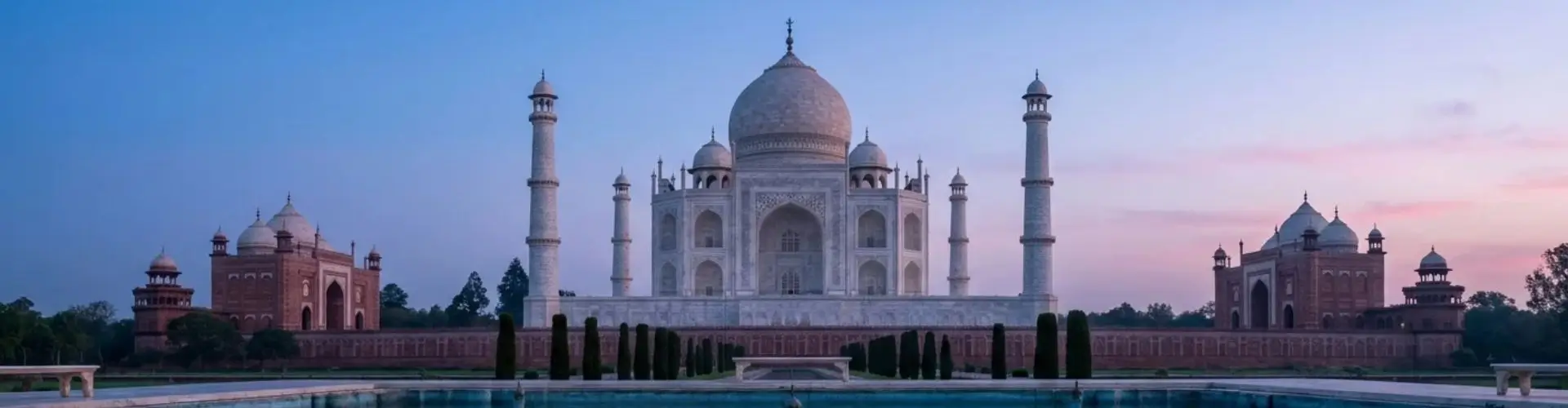
The Taj Mahal is normally open from sunrise to sunset and is closed to general visitors on Fridays. Foreign visitor admission has generally been around INR 1,100, with an additional charge for entry to the main mausoleum. Ticket structures and access arrangements can change, so the current official tariff should be checked for the actual date.
Timing matters more than the relatively modest admission price.
An early visit can provide cooler conditions during appropriate seasons and a different quality of light. It does not guarantee an empty monument. The Taj Mahal is one of India's most visited attractions, and a private tour does not provide the right to bypass official regulations or ordinary visitor conditions unless a legitimate authorised arrangement specifically permits something different.
This distinction is important in luxury travel in India. Premium service should mean excellent logistics, appropriate timing, a knowledgeable guide and comfort. It should not depend on invented claims of secret entrances or unrestricted access.
Agra Fort deserves inclusion for travellers interested in Mughal history. It is not simply an additional monument to fill the afternoon. The fort provides political and architectural context that complements the Taj Mahal, particularly when the visit is led by a guide capable of connecting the two sites rather than reciting unrelated dates.
Hotel choice can materially affect the Agra stay.
The Oberoi Amarvilas is the most obvious high-end reference point because of its proximity to the Taj Mahal and the views available from the property. For travellers who have chosen Agra specifically around the Taj and have a substantial accommodation budget, the hotel can become part of the reason for staying overnight rather than returning immediately to Delhi or continuing to Jaipur.
Premium Agra accommodation can range from several hundred dollars per room to USD 1,000+ per night, with stronger suites and high-demand dates potentially costing considerably more. Travellers should compare the actual room category rather than assuming every room within a famous hotel delivers an identical experience.
This is particularly relevant when a view is important. A room marketed within a luxury property does not automatically mean it has the exact outlook a traveller imagines. Room descriptions and confirmed categories should be checked carefully.
A private dinner can be considered for couples or special occasions, but it should not be added automatically to every itinerary. Some travellers would rather spend the evening quietly at their hotel after a full day. Others may value a carefully arranged dinner with the Taj Mahal forming part of the setting where the hotel genuinely offers such an arrangement.
Two nights allow a much calmer luxury Agra tour. Guests can arrive from Delhi, visit Agra Fort later in the day, see the Taj Mahal the following morning and retain substantial time at their hotel. One night remains perfectly viable when the wider trip is shorter.
The common mistake is treating Agra as an obstacle between Delhi and Jaipur. The stronger approach is to give the Taj Mahal the timing it deserves and remove secondary sightseeing that adds little value.
Jaipur Turns the Golden Triangle Into a Rajasthan Journey
The transition from Agra to Jaipur is where the route begins to feel substantially different. Jaipur should receive at least two nights, but three nights is the stronger choice for a luxury Golden Triangle itinerary.
The road journey can be completed privately, and the day should be paced according to the chosen stops and actual road conditions. A premium vehicle improves comfort, but it does not make a long transfer disappear. Scheduling an intensive Jaipur sightseeing programme immediately after arrival is rarely necessary.
Amber Palace is one of the city's essential historical visits. Rajasthan Tourism has listed visitor hours at approximately 8:00 AM to 5:30 PM, with foreign visitor admission around INR 500. These details should be reconfirmed close to travel because operating arrangements can change.
The fort deserves enough time for its courtyards, defensive setting and palace spaces. A knowledgeable private guide can also explain the relationship between Amber and Jaipur rather than presenting them as unrelated attractions.
The City Palace provides a different type of visit. Its official museum information has listed daytime opening from approximately 9:30 AM to 6:30 PM, and different ticket categories provide different levels of access. The higher-priced Chandra Mahal Royal Tour has been listed around INR 4,000 for an international adult, including access to selected areas, a personal guide and refreshments.
This is a useful example of how private luxury travel in Jaipur should be approached. The most expensive admission option is not automatically essential. Travellers strongly interested in palace interiors and royal architecture may value it. Someone whose main interests are textiles or jewellery may prefer to spend those hours differently.
Jantar Mantar can be particularly rewarding with a guide who can explain how the instruments function. Without context, visitors can easily walk through the site seeing monumental shapes without appreciating their purpose.
Hawa Mahal is another Jaipur landmark, but the itinerary should distinguish between seeing its famous façade and spending significant time inside. A traveller interested primarily in photography may approach it differently from someone studying Jaipur's architectural history.
The real advantage of three nights is the day beyond the standard monuments.
Jaipur has long-standing traditions associated with jewellery, textiles, block printing and decorative arts. Travellers with serious interests can spend time with appropriate local specialists rather than being taken to generic commission-led shopping stops. The distinction matters. Premium touring should protect the guest's time rather than filling it with compulsory retail visits disguised as cultural experiences.
Accommodation is another reason Jaipur deserves time.
Rambagh Palace is one of the city's best-known palace hotels. The Oberoi Rajvilas offers a resort-style alternative outside the dense urban core, while other high-end properties provide different combinations of heritage character, location and contemporary comfort.
For leading Jaipur accommodation, USD 500–1,200+ per room per night is a sensible premium working range on many dates, while distinguished suites can cost considerably more. The highest categories at celebrated properties may move into several thousand dollars per night.
This creates an obvious scheduling question. If a couple is spending heavily on a palace suite, should the itinerary remove them from the hotel at 8:00 AM and return them after dinner every day? Usually not.
A well-balanced luxury Jaipur tour can include one substantial historical sightseeing day, one lighter specialist-interest day and enough hotel time to justify the accommodation choice.
Dining can also carry more weight in Jaipur than on a hurried group circuit. Leading hotels offer refined Indian dining, while selected restaurants around the city provide opportunities to engage with regional cuisine. For premium travellers, approximately USD 75–200+ per person for a high-end dinner is a useful broad allowance, with private dining, tasting formats and alcoholic beverages capable of pushing the total higher.
Jaipur is where a six-night Golden Triangle trip can begin to feel rushed. Give the city three nights and the route becomes substantially more convincing.
The Best Golden Triangle Route, Hotels and Budget for a High-End Private Trip
For travellers with seven nights, a strong allocation is Delhi for three nights, Agra for one night and Jaipur for three nights. Eight nights allows Agra to receive a second night or Jaipur and Delhi to retain more free time. Nine nights creates an even calmer first visit.
The route can usually operate largely by private chauffeur, removing the need for domestic flights between the three principal cities. This is one of the Golden Triangle's practical advantages compared with wider luxury tours of India involving Rajasthan, Varanasi, central India or Kerala.
A seven-night premium trip might look like this:
Delhi — 3 nights
Arrival, private historical sightseeing and a lighter day based on individual interests.
Agra — 1 night
Private road transfer, Agra Fort where appropriate, Taj Mahal timed carefully around official opening arrangements.
Jaipur — 3 nights
Amber Palace, City Palace and selected historical sites, followed by time for specialist interests and the hotel.
For travellers wanting a more relaxed Agra stay:
Delhi — 3 nights
Agra — 2 nights
Jaipur — 3 nights
This eight-night structure is particularly attractive for couples who have chosen a high-end Taj-facing hotel and do not want the stay reduced to one hurried evening.
Cost should be assessed in layers.
For a refined private trip using strong five-star hotels, a comfortable private vehicle, local guides and major sightseeing, approximately USD 4,000–6,500+ per person for seven to eight nights is a sensible higher-side starting range for two guests sharing.
Move into leading palace and landmark hotels, superior room categories and more elaborate private arrangements, and USD 6,500–10,000+ per person becomes realistic.
A highly indulgent itinerary using top suites, premium chauffeured vehicles and individually arranged dining can exceed USD 10,000–15,000+ per person even though the route contains only three cities.
The hotel allocation might reasonably account for USD 400–1,200+ per room per night at a strong luxury level, with top suites far exceeding that figure. Private transport can be budgeted around USD 120–300+ per vehicle per day, depending on vehicle class and route. Individual guides may add around USD 75–150+ per day where required.
Meals require another allowance. Breakfast is frequently included in premium hotel rates, but lunches, dinners and beverages vary enormously. Approximately USD 100–200+ per person per day for meals outside included arrangements gives travellers substantial flexibility at the premium end. Special private dinners can cost more.
Monument tickets are generally a relatively small portion of the overall Golden Triangle tour cost. Spending intelligently on guides, hotels and pacing is likely to make a greater difference than attempting to save a few dollars on admission.
The route also provides excellent extensions.
Ranthambore can add wildlife for travellers with another two or three nights. Jodhpur and Udaipur can turn the Golden Triangle into a broader private Rajasthan tour when a further week is available. Varanasi creates a completely different cultural chapter but normally requires air travel and additional time.
The extension should not be chosen simply because the traveller has spare nights. It should reflect an actual interest.
A couple interested primarily in architecture and palace hotels might continue to Jodhpur and Udaipur. Wildlife enthusiasts may obtain more value from Ranthambore. Travellers with only seven nights should resist adding anything at all.
The strongest Golden Triangle trip is therefore surprisingly simple: three cities, excellent hotels, private transport, knowledgeable guides and enough time to stop treating every hour as inventory that must be filled.
That simplicity is what allows Delhi, Agra and Jaipur to feel like three destinations rather than three entries on a tour checklist.
Ask The Author
Not sure your dates are the right ones?
Send them over and we will tell you honestly what those weeks look like in the places you want to see.